




The Albanese government has come under fire after rejecting key United Nations recommendations aimed at improving the lives of Aboriginal and Torres Strait Islander people, with the Australian Human Rights Commission warning the decision will leave important rights and protections out of reach.
Australia accepted just 128 of 332 recommendations in its response this week to the fourth Universal Periodic Review (UPR) before the UN Human Rights Council — fewer than 40 per cent and well below the global average acceptance rate of between 73 and 76 per cent. It also marks a decline from the previous review in 2021, when the former Coalition government accepted 51 per cent of recommendations.
Among the recommendations Australia rejected were calls from Germany, Norway and France to raise the age of criminal responsibility, introduce a national Human Rights Act and develop a national plan to implement the UN Declaration on the Rights of Indigenous Peoples (UNDRIP).
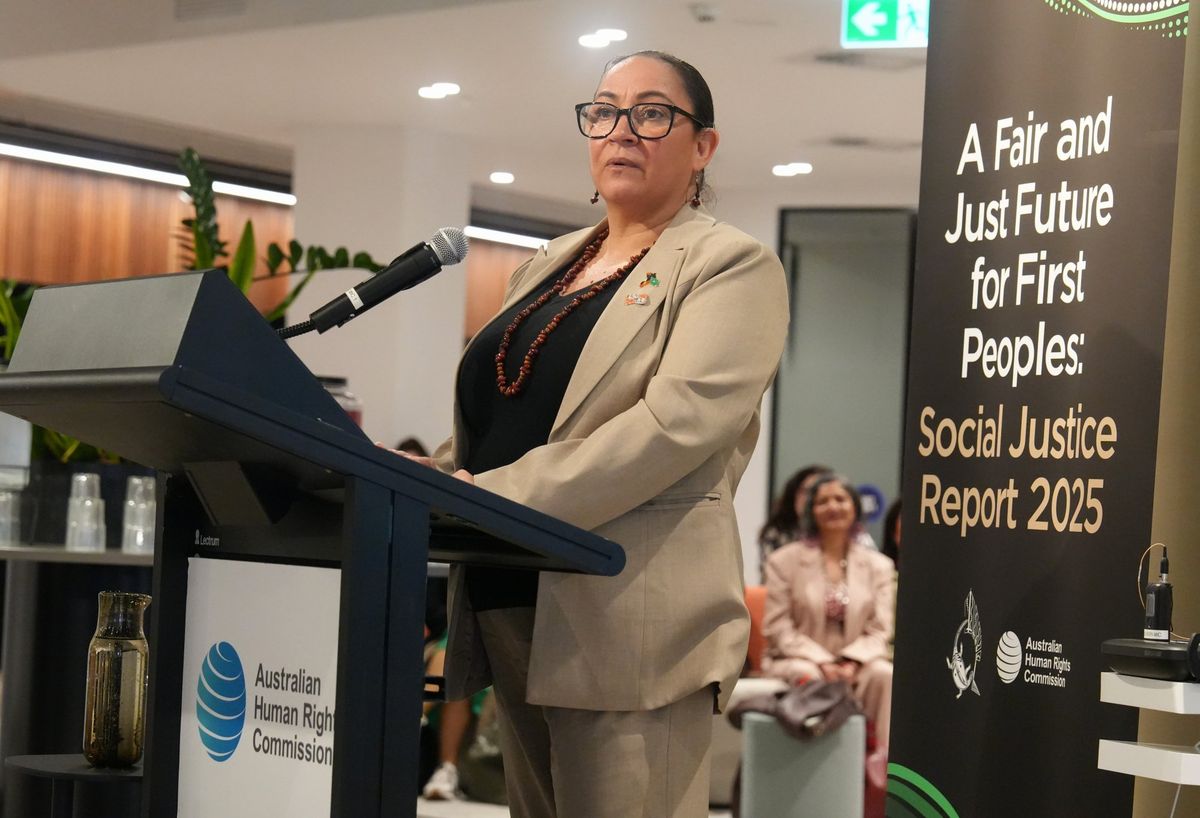
In response, Aboriginal and Torres Strait Islander Social Justice Commissioner Katie Kiss said the government's refusal to commit to implementing UNDRIP was particularly concerning.
Calls for its implementation — backed by the Joint Standing Committee on Aboriginal and Torres Strait Islander Affairs — were made with the aim of "significantly improve all kinds of outcomes for First Peoples in this country, including those under the Closing the Gap National Agreement".
"This recommendation was ignored," Commissioner Kiss said. "It's incredibly disappointing that this government is denying us important rights and protections that would help Indigenous Australians to be safe and strong."
Youth justice remains a sticking point
The government also rejected repeated international calls to raise the age of criminal responsibility nationally.
In its written response to the UPR, the government acknowledged it "must do more to address the overrepresentation of Aboriginal and Torres Strait Islander peoples in the criminal justice system" and said it remained "committed to improving youth justice outcomes".
However, it declined to support raising the age of criminal responsibility. In all but two Australian jurisdictions, children as young as 10 can still be imprisoned, a fact various human rights bodies have outright condemned.
Last week, National Indigenous Times revealed internal federal government documents detailing talking points used to resist calls to raise the age of criminal responsibility, despite legal advice concluding the Commonwealth has constitutional power to legislate in the area.
Prime Minister Anthony Albanese also appeared to endorse the tougher approach adopted by some jurisdictions during his Closing the Gap address in February, saying they "have every right to put the safety of their communities first".
Aboriginal and Torres Strait Islander children continue to be dramatically over-represented in youth detention, with incarceration rates more than 25 times higher than those of non-Indigenous children. On an average day in 2025, 734 children were detained across Australia, with almost 62 per cent identifying as Indigenous.
The Productivity Commission's latest Report on Government Services found youth detention costs an average of $1.3 million per child each year — more than $3,600 a day — a figure previously described by the former National Children's Commissioner as a "devastating policy failure".
"Other recommendations," Commissioner Kiss said, "which would address First Peoples' deaths in custody, as well as improve the health and safety of our children and young people, were also ignored, further compounding the distress that First Peoples have about the lack of priority being given to our rights and wellbeing by this government".
Reforms ignored
Acting Australian Human Rights Commission President Dr Anna Cody said the government's response largely endorsed reforms that were already underway while failing to act on more than 200 recommendations.
"The government has only agreed to recommendations for reforms that are already in place or underway, essentially ignoring over 200 recommendations for new reforms which would markedly improve the rights, health and safety of our First Peoples, people with disability, women, children, people from diverse cultural backgrounds, LGBTIQA+ people and people in detention," she said.
"Many of the recommendations also relate to making our governments more accountable, so the lack of response to these recommendations underscores growing concerns around the commitments of our national, state and territory governments to transparency and accountability."
The government defended its approach to Indigenous affairs in its submission to the UPR.
"Our approach is built on partnership, accountability, and respect for the inherent rights of Aboriginal and Torres Strait Islander peoples," it said.
"The National Agreement on Closing the Gap, designed in partnership with Aboriginal and Torres Strait Islander representatives, is a landmark commitment to work side by side, guided by trust and mutual respect, to overcome inequality."
There are currently no penalties for states and territories that fail to meet their commitments under the National Agreement on Closing the Gap, with several jurisdictions having enacted legislation that critics argue undermines its objectives.



