


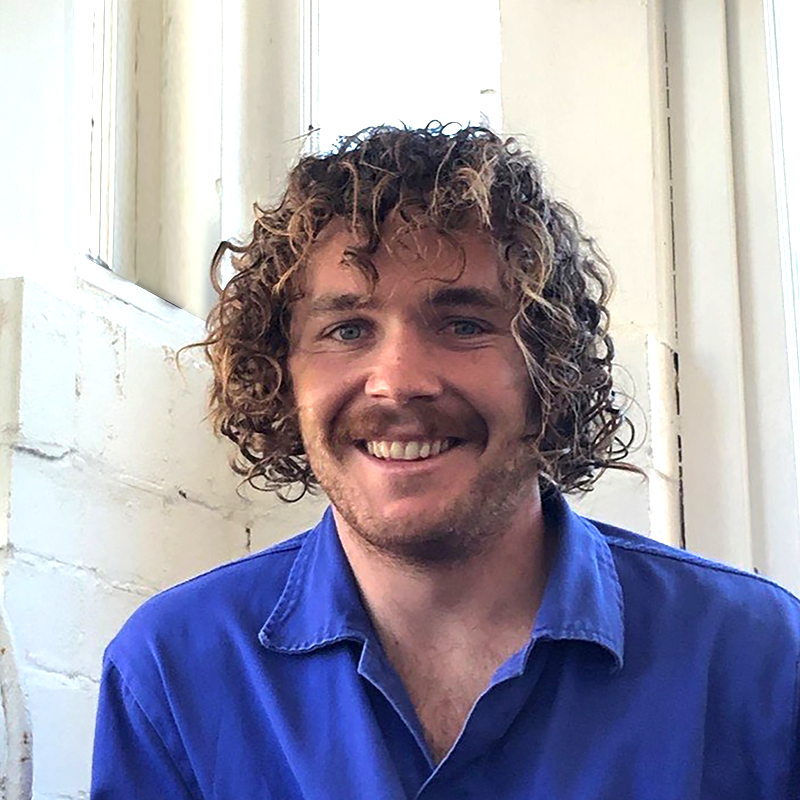

South coast-based Bundjalung Elder John Bolt knows the benefits of community-led, on-Country solutions in the criminal justice system better than most.
His son was the first person in New South Wales to go through circle-sentencing; an alternative approach involving Elders, other respected community members, victims, and local magistrates to meet appropriate sentencing for offenders.
In the two decades since, Uncle John has seen a reduction in reoffending and incarceration rates, with self-determination and a collaborative approach make a real difference.
Former Nowra local court magistrate Doug Dick was the first judge to meet with the Indigenous community on Yuin country to reach a practical solution when he sat with Uncle John's son.
On Monday the NSW government announced a $4.2 million investment into circle sentencing across 12-20 regions across the state as part of a larger injection into justice reinvestment.
NSW Attorney General Mark Speakman highlighted staged commencements of circle sentencing programs in Campbelltown, Wollongong, Batemans Bay, Penrith and Inner-Sydney within the year, some as early as next month. Programs in Broken Hill and Wagga Wagga have already begun.
Uncle John welcomed the news and positive outcomes the funding promises.
"(Circle sentencing) has benefited the community, local community over the journey," he said.
"A lot of our guys now that have offended, and then came sat in the circle haven't offended. It is really a positive."
The funding will also see the expansion of specialised justice reinvestment strategies in both Nowra and Kempsey on the state's mid-north coast with $9.8 million committed towards the pilot programs.
The approach was first implemented in 2012 with the government-backed Maranguka initiative in Bourke.
In the time since, other regions have engaged with justice reinvestment.
The additions also include $5.8 million to expand the Youth Koori Court to the Children's Court at Dubbo, funding for Aboriginal Legal Services, Legal Aid NSW and a specialist children's magistrate to oversee the Youth Koori Courts at Surry Hills and Parramatta.
At World Pride Sydney's Human Rights Conference on Wednesday, the support to flexible approach was called a positive re-think of the justice structure.
Malyangapa and Barkindji man Keith Quayle believes in community-led solutions following his first-hand experience with the courts.
Mr Quayle has spent time away, now looking to change the lives of others as founder of organisation, NSW Community Advocates for People in Prisons (NSWCAPP).
"I know that if I was in a traditional court, we wouldn't have had the opportunity for the judge, the lawyers, or the prosecutor to see me as an actual person," he said.
"(Community-led approach and justice reinvestment) allows not only for the offender to feel culturally safe in a white structure that doesn't traditionally see you as a person. It's more the offence that you've done. That's how they judge you."
Criminal lawyer Nicholas Stewart, who has worked with Mr Quayle, shared a similar opinion - which he says is across the board.
"Criminal lawyers across NSW would welcome that (announcement).
"First Nations people are over represented in the judicial system and we need courts that understand the trauma that affects them and the reasons that sometimes they find themselves in trouble."
The National Indigenous Times approached Nowra and Kempsey NSW Aboriginal Legal Services for comment.



