



From the remote communities of the Northern Territory to the global stage of the Women Deliver Conference in Melbourne, the women of the Thamarrurr Aboriginal Women's Council have carried more than just their stories; they have carried the weight of their communities, their families and generations of experience.
Travelling thousands of kilometers from places like Wadeye, Palumpa, Peppimenarti and surrounding homelands, these women stood on the unceded lands of the Wurundjeri Woi Wurrung people with a clear and urgent message:Their basic human rights are being overlooked.
Their journey to Melbourne was not easy. It reflects the very challenges they spoke about. In their own communities, a lack of sealed roads means they are cut off for up to six months of the year. Access to services, affordable food and opportunities is unreliable. Simply leaving community requires navigating barriers many Australians never have to think about.
But still, they came. They came to stand alongside women from across the world. They came to make sure their voices are not left out of global conversations about gender equality, justice and human rights.
Speaking collectively, the women shared that being part of the global gathering was both powerful and deeply affirming.
"Being in the same space as women from all over the world, each with their own struggles, some like ours and some very different, reminded us that we are not alone," they said.
"Sharing our stories, and hearing others, gave us strength and confidence. It showed us that our voices matter."
They described returning home with a renewed sense of purpose.
"Coming together like this build's courage, connection and a shared purpose. We go back stronger, ready to make waves of change for our people and our future."
At the centre of their message is the need for immediate, practical action. While many issues demand attention, the women were clear that sealing Port Keats Road would create the most immediate impact. They described it as an achievable step that would unlock opportunity across the region.
"Year-round access would allow trades and essential services to come in more easily, reduce the high cost of freight, and improve access to food, health care and supplies," they said.
"It would also support people to return to their homelands and help ease overcrowding."
Housing remains a critical pressure point, with around 200 additional homes needed to reduce overcrowding. But the women emphasised that infrastructure must come first.
"The road is the first step. It will help speed up housing, open the region for economic activity and create real opportunities for our people."
They spoke candidly about the daily realities facing women and young people. Overcrowded homes mean lack of sleep, heightened stress and rising tension within families.
"When you are tired, it is hard to go to school, focus or keep a job," they said. "This pressure can lead to conflict and violence. Women and children feel this most."
Despite these challenges, culture remains their foundation.
"Our culture keeps us connected to Country, which we see as our mother, and guides how we live, lead and care for each other," they said.
"Strong culture builds strong people, strong families and strong communities."
Their call for partnership with government was direct and unapologetic.
"Real partnership means sitting with us, listening to us and taking action. It is not just consultation. It is respect, trust and follow-through," they said.
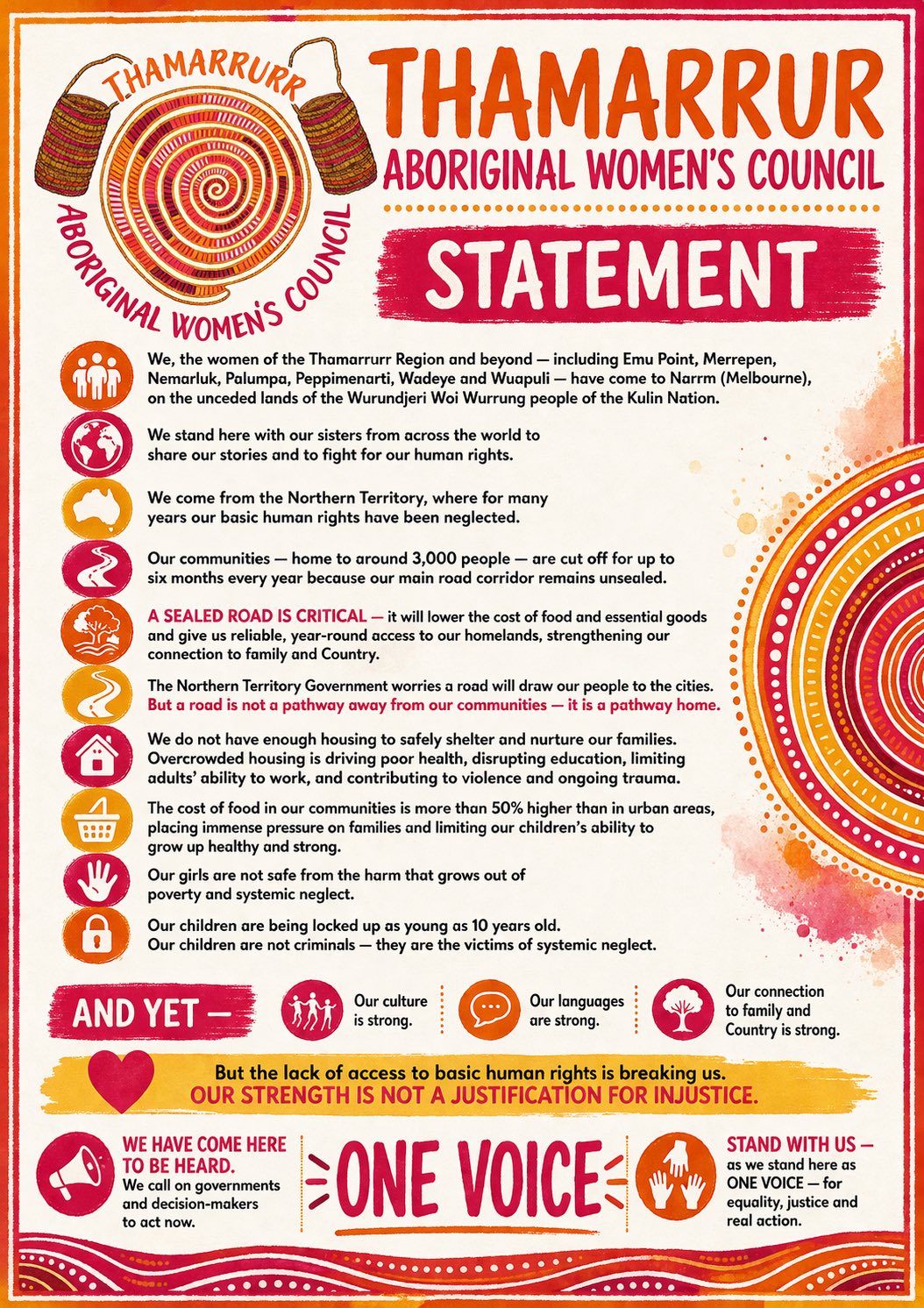
With no minister visiting Wadeye since the election, the women questioned what genuine engagement looks like. They pointed to decades of ignored advice from Elders and the ongoing consequences now being lived in their communities.
"The solutions are there. The technology exists to deliver health and education on homelands. What is missing is the political will to listen and act."
These women travelled far to be heard. Their message now sits firmly with those in positions of power.
This is a call that cannot be ignored. Stand with them. Not in words, but in action. Commit to sealing the road. Invest in safe, adequate housing. Ensure access to affordable food, education and healthcare. Listen to the voices of Elders who have been calling for change for more than 20 years.
Because this is not just about infrastructure. It is about dignity, safety and the right to live well on Country.
Their message is clear. They have come here to be heard.
Now it is time for governments, leaders and all Australians to respond with urgency, respect and accountability.
One voice. Real action. No more delay.



