


Domestic, family and sexual violence remains one of the most urgent challenges in Australia. Yet despite strong community leadership, Aboriginal and Torres Strait Islander communities too often lack the funding and support needed to tackle this devastating issue.
The scale of the challenge is confronting. While there is a lack of current, accurate data on family, domestic and sexual violence, the data we do have shows Aboriginal and Torres Strait Islander women are 27 times more likely to be hospitalised due to family violence than non-Indigenous women.
This is not because our people are more violent. It reflects the ongoing impacts of colonisation, systemic inequities, and government responses and systems that are not working as effectively as they should for our people. In fact, these systems often widen the inequity we experience.
This is not a new problem — but it demands a new way of working.
We often hear about the importance of closing the gap across health, justice and education, but family, domestic and sexual violence often slips through the cracks, leaving our people behind.
For decades, Aboriginal and Torres Strait Islander community-controlled organisations have been doing the hard work of supporting families, healing communities and addressing the drivers of violence. They have done this work quietly, consistently and often without the recognition or resources they deserve.
Last week marked an important shift.
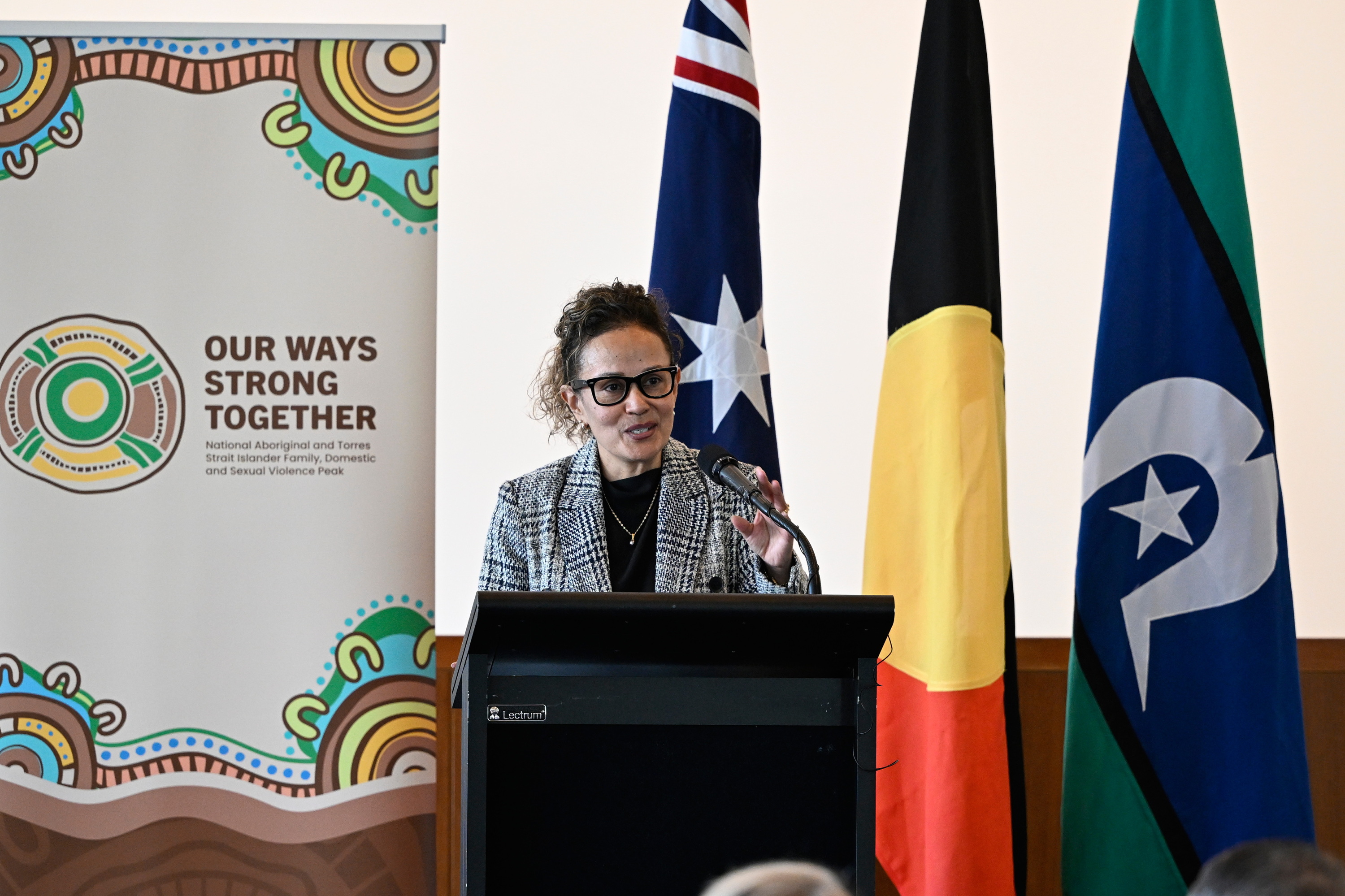
The launch of Our Ways Strong Together — the new national peak body specifically for Aboriginal and Torres Strait Islander domestic, family and sexual violence services — brings these frontline organisations together under a unified national platform. It is grounded in culture, shaped by communities and built on the experience of those who have been leading this work for generations.
For the first time, instead of treating family, domestic and sexual violence as a standalone issue, a national, integrated approach will connect specialist services across family, domestic and sexual violence, health, education, law and healing —strengthening community responses and pushing for the funding, system and legal reform that will better serve our communities.
This is an important step toward improving outcomes for Aboriginal and Torres Strait Islander people and communities impacted by violence.
It also reflects the commitments made under the National Agreement on Closing the Gap, where all Australian Governments committed to working in genuine partnership with Aboriginal and Torres Strait Islander people and strengthening the community-controlled sector.
Our Ways Strong Together creates a mechanism to make that partnership real. It gives our organisations and our communities a seat at the table, ensuring decision-making is built on our decades of community leadership expertise and experience, and allows us to shape the decisions that impact our lives.
Across Australia, Aboriginal and Torres Strait Islander communities respond with strength, resilience and innovation — often in the face of under‑resourcing and fragmented systems. Nearly three-quarters of hospitalisations of First Nations people for assault are related to family violence.
We also know that this is not unique to our communities. It is a national issue, affecting people across all backgrounds with 2 in 5 homicides across the board in Australia being the result of family, domestic and sexual violence.
But in First Nations communities, violence is often under-reported and under resourced, and the impacts are compounded by historical and structural inequities. Estimates suggest around 90% of violence against First Nations women — and most cases of sexual abuse of First Nations children — go undisclosed, meaning the true scale of the issue is likely much greater.
These realities point to where the real work — and the real opportunity — lies: strengthening and properly resourcing Aboriginal and Torres Strait Islander community‑controlled responses that are already preventing violence on the ground.
Because violence in our communities is not inevitable. It is linked to systemic inequities, intergenerational trauma and the ongoing impacts of colonisation. Addressing these drivers requires long-term commitment, systemic reform and sustained investment in prevention, healing and community support.
This year the Australian Government released a 10-year National Aboriginal and Torres Strait Islander Plan to End Family, Domestic and Sexual Violence backed by $218.3 million in new funding over four years. This is a welcome commitment from the Australian Government that must be invested into community solutions.
Our frontline services already know what works. Aboriginal and Torres Strait Islander community-controlled organisations are delivering culturally grounded programs that support families, prevent violence and promote healing. They run early intervention programs for young people, provide men's services, support women and children in crisis and work with communities to rebuild safety and trust.
These services are trusted because they are embedded in community. We understand the complex realities families face — their struggles, their stories and their strengths. We are uniquely placed to support prevention, early intervention and healing.
I have worked across health, advocacy and community services for many years. One thing has always been clear to me: real change happens when communities are trusted to lead.
That principle sits at the heart of Our Ways Strong Together.
As this work moves forward, we invite Aboriginal and Torres Strait Islander community-controlled organisations to be part of Our Ways Strong Together. We are building a national network to strengthen our sector, connect our services and ensure our voices continue to shape the decisions that affect our communities.
Ending family, domestic and sexual violence requires national leadership — but it must be leadership that centres the voices, knowledge and cultural authority of our communities.
Governments, institutions and the broader Australian community all have a role to play. But when communities are empowered to lead, when culture is recognised as a source of strength and when frontline services are properly resourced and supported, real change becomes possible.
The launch of Our Ways Strong Together is the beginning of a new chapter where Aboriginal and Torres Strait Islander communities are central to shaping the national response to family, domestic and sexual violence.
Because the future of ending violence in this country must be community-led. Together, we are taking a powerful step toward that future.
Donnella Mills is the interim chair of Our Ways Strong Together, the national Aboriginal and Torres Strait Islander domestic, family and sexual violence peak body.



