




The following article contains the name and images of an Indigenous person who has died.
Just days before he died in police custody, Jeffrey Winmar made a call to his father with a simple plea: "Dad, I need you."
His father, Jeffrey Anderson, said he was unable to travel from Western Australia to Victoria after the call because he was injured and had recently become unemployed.
"It broke my heart that I couldn't help him right away when he needed it," he said via a statement read by his son's sister, Rosie Anderson, on the opening day of an inquest into Jeffrey's death.
"What happened to Jeff is not right. Jeff didn't die on his own. There needs to be accountability."
Jeffrey, a proud Noongar man, was only 28 when he died after multiple police units, including the canine unit, attended his home on November 9, 2023, to arrest him. He lost consciousness following a police pursuit and died two days later.
At the time, it was reported he was handcuffed as he first lost consciousness, briefly regained consciousness, and then collapsed again before an ambulance — initially cancelled — was called a second time.
He is one of at least 626 First Nations people to have died in custody since the 1991 Royal Commission into Aboriginal Deaths in Custody.
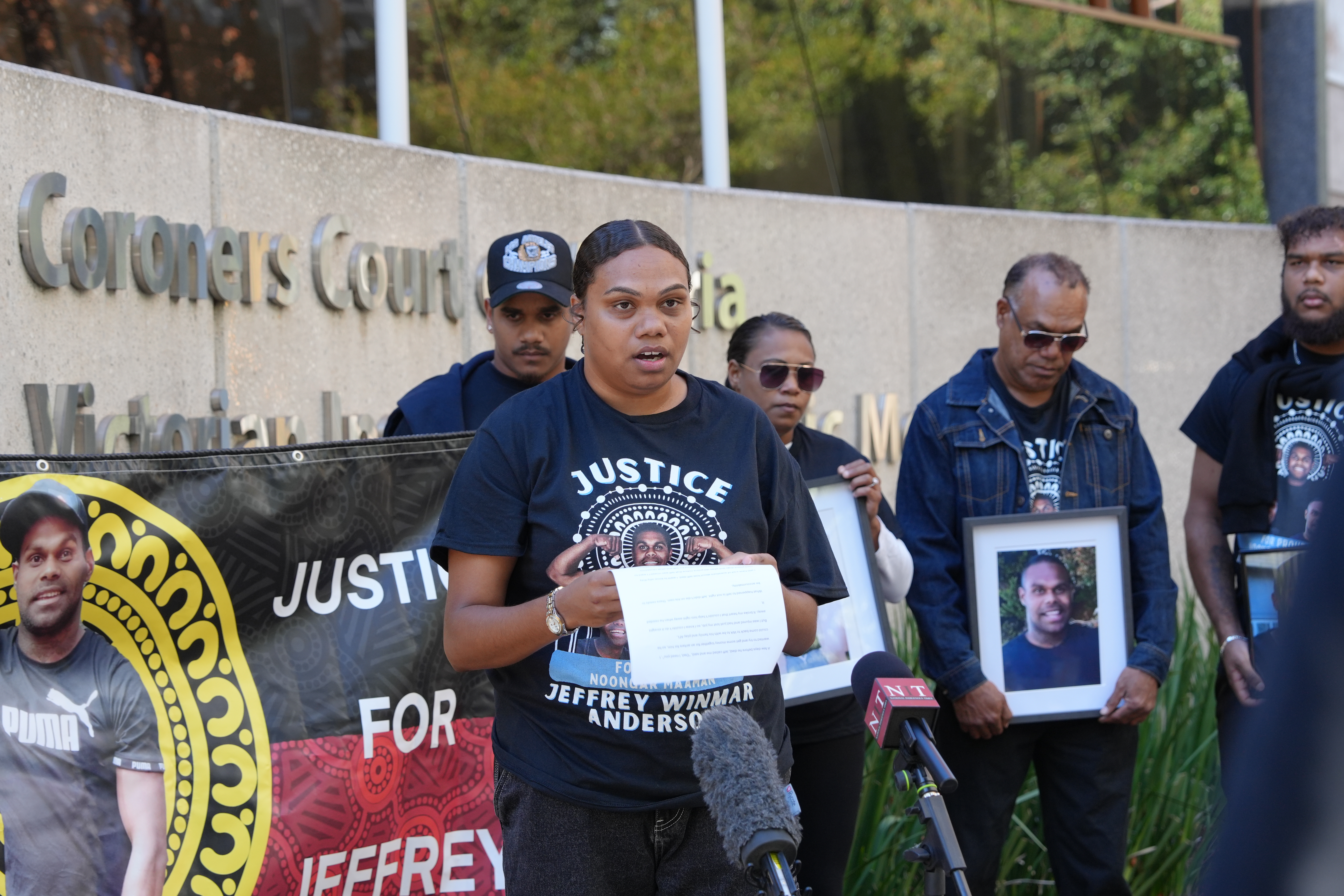
Outside the Melbourne's Coroners Court on Monday, family members who had travelled from Western Australia stood in front of a banner bearing photos of the smiling young man while Jeffrey's sister, Margaret Winmar, read a statement on behalf of his mother, Ursulla Winmar, who said she had been "robbed of my son".
"How will we continue to live with this pain?" she asked.
She painted a picture of a man deeply connected to family, describing his "profound" love for his own child and the way he would regularly call relatives, "checking in on all of us, showing up for people who needed him".
"He had so much love to give," she said. "In recent years, he had started working on himself and reconnecting with his faith and ringing me more often. He spoke to me about learning humbleness, patience - about becoming the best version of himself he knew he could be."
More than two years on, Ms Winmar said the family remained "still in the dark about how he ended up in hospital with internal bleeding and organ failure".
"I am looking for justice for my son. I want people to be accountable for what happened to him. We should not have had to come this far to seek the truth," she said.
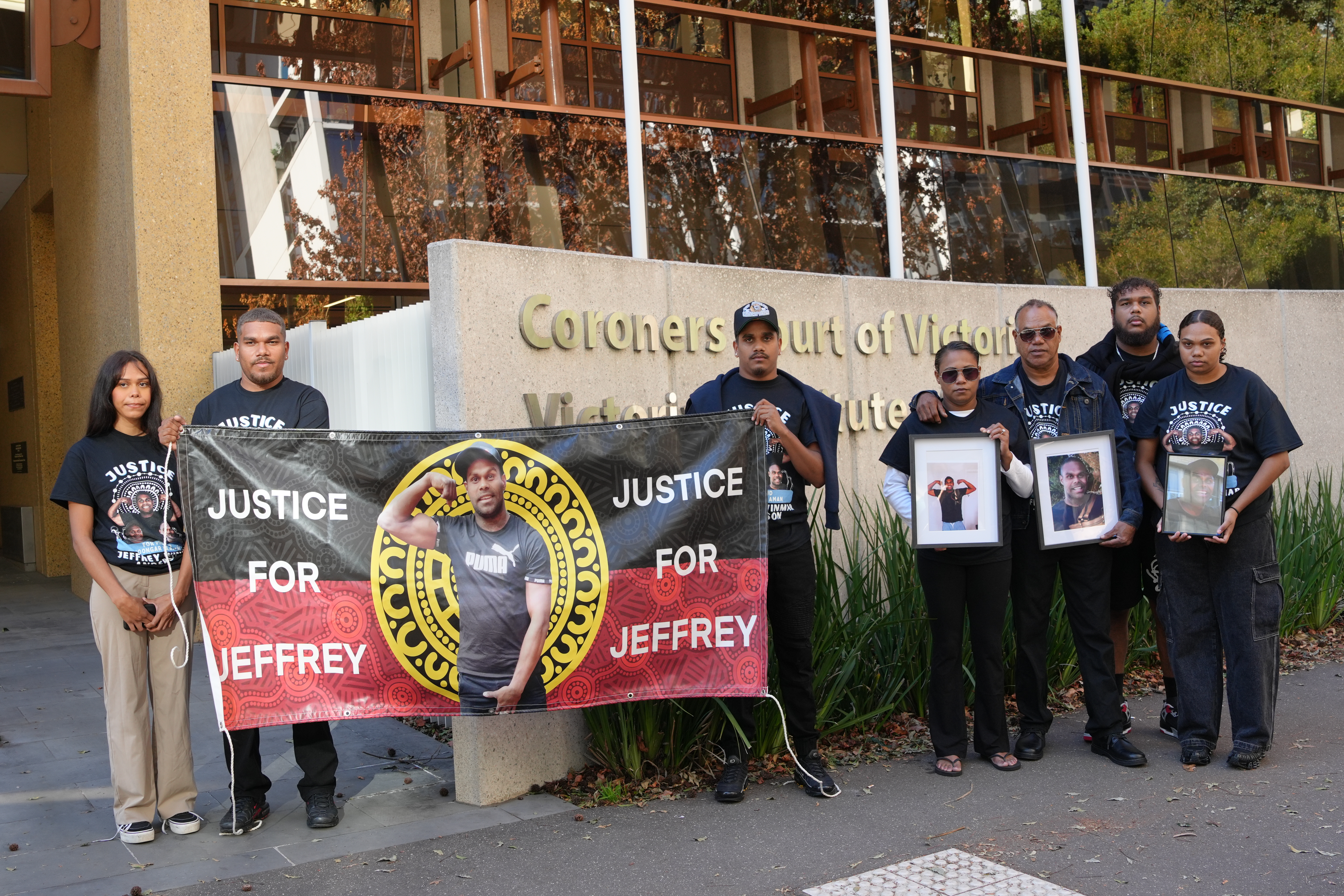
Mr Anderson said his son had moved to Melbourne to "start over", stressing he was not a "nobody".
"He was my boy."
He said the inquest was an opportunity to finally answer long-standing questions surrounding the arrest and police response.
"I still have a lot of questions about how Jeff died," he said.
"I want to know why they used police dogs and when did police notice that Jeff was unwell? I want to know why police cancelled an ambulance for Jeff and what caused his injuries? I was shocked to find out that only one police officer had their body-worn camera on, and I want to know why more of them didn't."
Victorian Aboriginal Legal Service chief executive Nerita Waight, whose organisation is representing Mr Anderson in the inquest, said the death was "devastating".
"I wish I could promise families that a coronial inquest means that what happened to their loved ones will never again happen to anyone else, but tragically, this is not the case," she said. "Time and time again, we see people dying in similar circumstances."
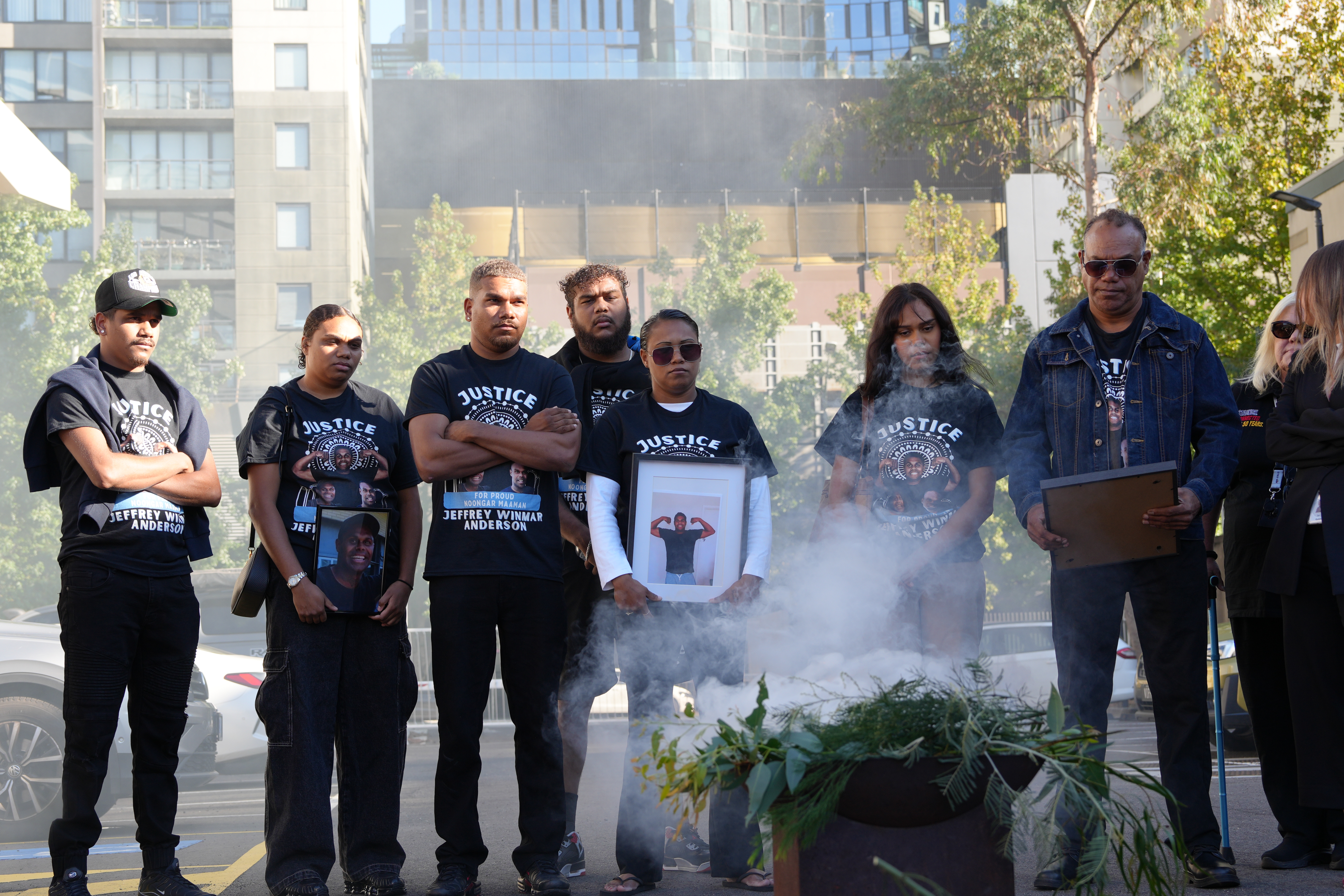
The inquest will run over the next two weeks before Coroner Sarah Gebert.
It is set to examine the planning of the arrest by Victoria Police, the events during and after the arrest — including police responses to Jeffrey's medical deterioration and the decision to cancel the ambulance — the use of body-worn cameras, and the healthcare Jeffrey received at Box Hill Hospital and whether it materially affected his clinical outcome.
On the opening day of the hearing, Coroner Gebert heard an application from Victorian Police officers, objecting to giving evidence unless they are granted a certificate to protect them against civil penalties. Without the certificate, officers may not give "fulsome" evidence, counsel for the Police Commissioner said.
"The application from Victoria Police to shield themselves from self-incrimination makes it clear that their priority is protecting themselves, not delivering accountability, said founding EO of the Dhadjowa Foundation, Apryl Day.
"The fact that the Canine Unit Officer was granted that protection without resistance shows just how far the coronial process is from delivering truth, justice, or accountability for families whose loved ones have died in police custody."
Ms Winmar said no mother should have to navigate the coronial process, but the family had come to Melbourne because the systems meant to protect First Peoples had again failed.
"Until this country properly accounts for First Nations deaths in custody - and until those responsible for their care are genuinely held to account - there will be more Jeffreys. More mothers like me. More broken homes like ours," she said.
"We placed our trust in a system supposed to protect us. But systems protect themselves first - the way a family closes ranks when one of its own is questioned. I understand that instinct, but I cannot accept it when it comes at the cost of my son's life."
13YARN 13 92 76
Lifeline 13 11 14



