




Tasmania's newest dedicated Aboriginal ranger base was officially opened in the state's far north-east on Friday.
A joint venture of Melaythenner Teeackana Warrana Aboriginal Corporation (MTWAC) and the Indigenous Land and Sea Corporation (ILSC), the Tebrakunna Multifunctional Ranger Base, known colloquially as 'the big shed,' was built to support the activities of MTWAC's Tebrakunna Rangers on the 200-acre Cape Portland property and across the broader region.
The ranger base's opening commenced with a moving Welcome to Country from Elder Aunty Patsy Cameron, who explained the cultural importance of Tebrakunna Country to the area's Aboriginal people.
"Tebrakunna Country is where the eagles fly. It is the country of our ancestral grandmothers of Trouwerner," Aunty Patsy said.
"Trouwerner is our traditional homelands. It is a place where our revered ancestor, bungunna Mannalargenna, was born [in] about 1775.
"Tebrakunna holds the memory of our ancestors, and we come to Country to hear, to feel, and to immerse ourselves in the timeless essence of culture, land, sea, sky and our waterways."
The ancestral grandfather of many Tasmanian Aboriginal people, Mannalargenna, chief of the Trawlwoolway clan, lived and hunted on Tebrakunna Country until late 1830.
Aunty Patsy said due to the pressures of colonisation, he then became one of a small group of Tasmanian Aboriginal people to leave his Country.
"He was among a group of 21 clanspeople from three nations to become the first in Van Diemen's land to leave their homelands to go into exile," she said.
Aunty Patsy said nowadays the Tebrakunna Rangers are playing a vital role in restoring the former cattle property to the way their revered ancestor would have seen it.
"We are slowly restoring its beating heart to be our homeland once more [and] our rangers are the most important part of this restoration," she said.
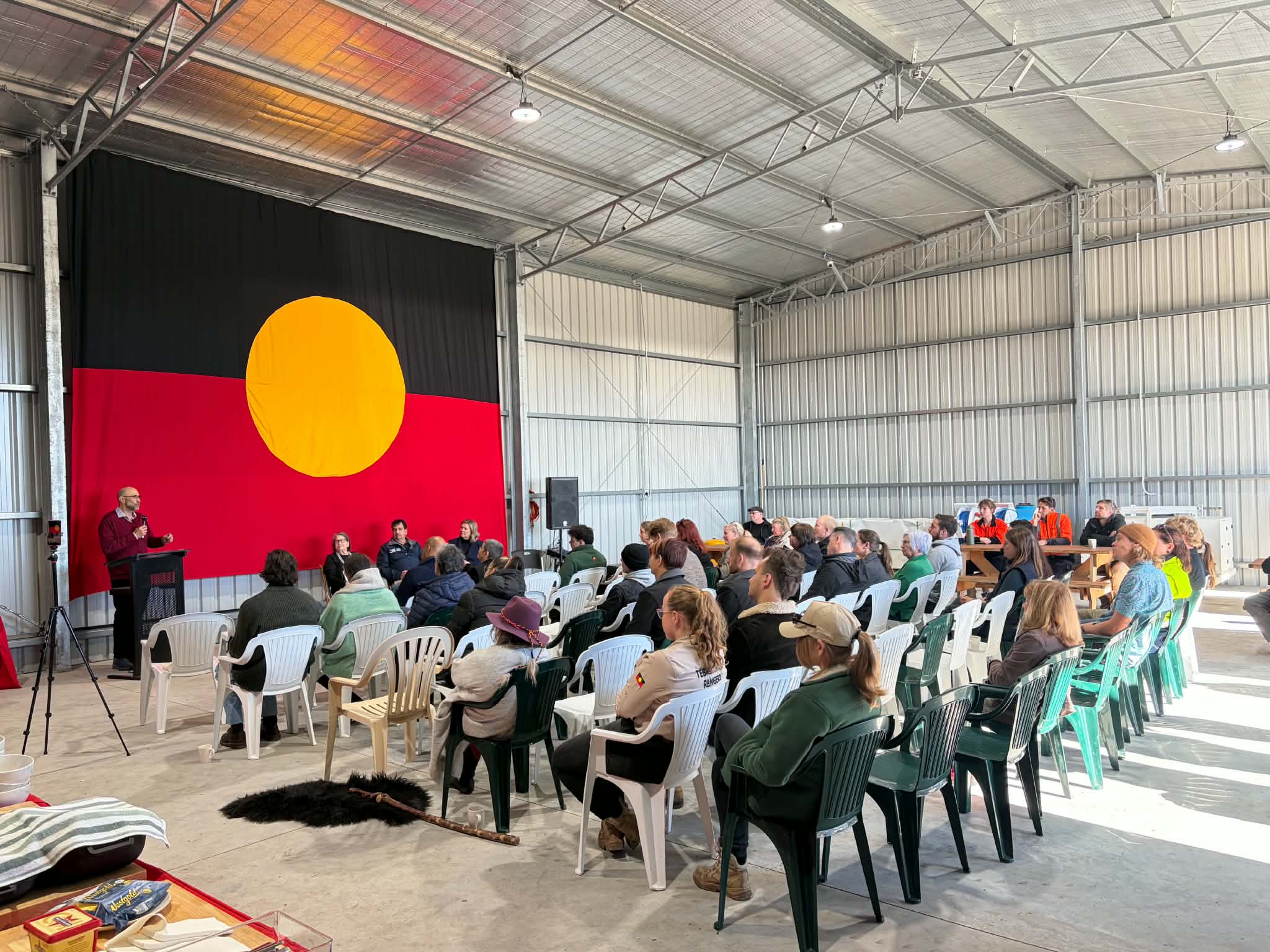
The facility forms part of MTWAC's Cape Portland masterplan, which includes a planned cultural centre overlooking the southern tip of Bass Strait's Furneaux Islands, as well as accommodation pods for rangers and visitors.
The ranger base was made possibly by a near $700,000 grant from the Indigenous Land and Sea Corporation, with MTWAC contributing close to $50,000.
ILSC chief executive officer Joe Morrison and chairperson Ian Hamm were in attendance for Friday's opening.
Discussing the ILSC and MTWAC's partnership, Mr Hamm said the his organisation is "always privileged to be able to support communities do the things that they want to do".
"I've been told that your Country covers... over two million hectares, the whole of Northeast Tasmania, with at least 159 cultural heritage sites," Mr Hamm said.
"Not 150, but at least 150, because there will be much that we do not know, there will be much yet to be discovered. And that's why this event today and this program is incredibly important.
"Because you'll be the ones who are following that, bringing that to the rest of the community, the 300 plus strong of the Traditional Owners of this part of Tasmania, to further enhance and reclaim who you are on your Country as we reclaim who we are as a people across the whole country."
MTWAC's ranger program began with a two-year traineeship program funded through the Tasmanian Community Fund in partnership with a philanthropic group.
Through various forms of support it has since grown to employ 11 rangers until 2028, with MTWAC holding plans to self-fund the ranger program in the future.
Following the facility's official opening, MTWAC chef executive officer, Nick Cameron, described the facility as a "game changer".
"It gives us a fully functional ranger base... to operate, to store our equipment, to undertake cultural events like our cultural awareness training sessions," Mr Cameron told National Indigenous Times.
"But importantly, it demonstrates the commitment MTWAC has got to the north-east, and to manage our cultural lands, both on Country and on Sea Country."
Mr Cameron said the Tebrakunna Rangers show great pride in managing their traditional Country.
"They're very proud of it. It's a pretty hostile environment to work sometimes [and] it can be pretty ugly," he said, referring to north-east Tasmania's harsh winter weather.
Mr Cameron said the remote location requires a significant commitment from Tebrakunna Rangers staff, which hail from across the state.
"We've got ranges from as far away as Burnie and Hobart, so it's a pretty big commitment for them to be up there," he said.
"They're really enjoying the fact that we've got really nice facilities. They've got a really solid platform to work on now."
Tebrakunna Rangers program coordinator Camilla Wheatley said support from ILSC will assist rangers engage in meaningful operations with partner organisations.
"We're going to do a firebreak for the [adjacent] wind farm, so we've been given fee for service for that," she said.
"We're also working with IMAS [the Institute for Marine and Antarctic Studies] on a kelp research project, and also catching fish and tagging flathead."
Ms Wheatley said it was fulfilling to complete land management and conservation work on Country using equipment and facilities supported through the ILSC grant.
"I think we're incredibly lucky to have these facilities to help us complete the work," she said.
"It's really healing to be on Country and work, and help heal Country as well."
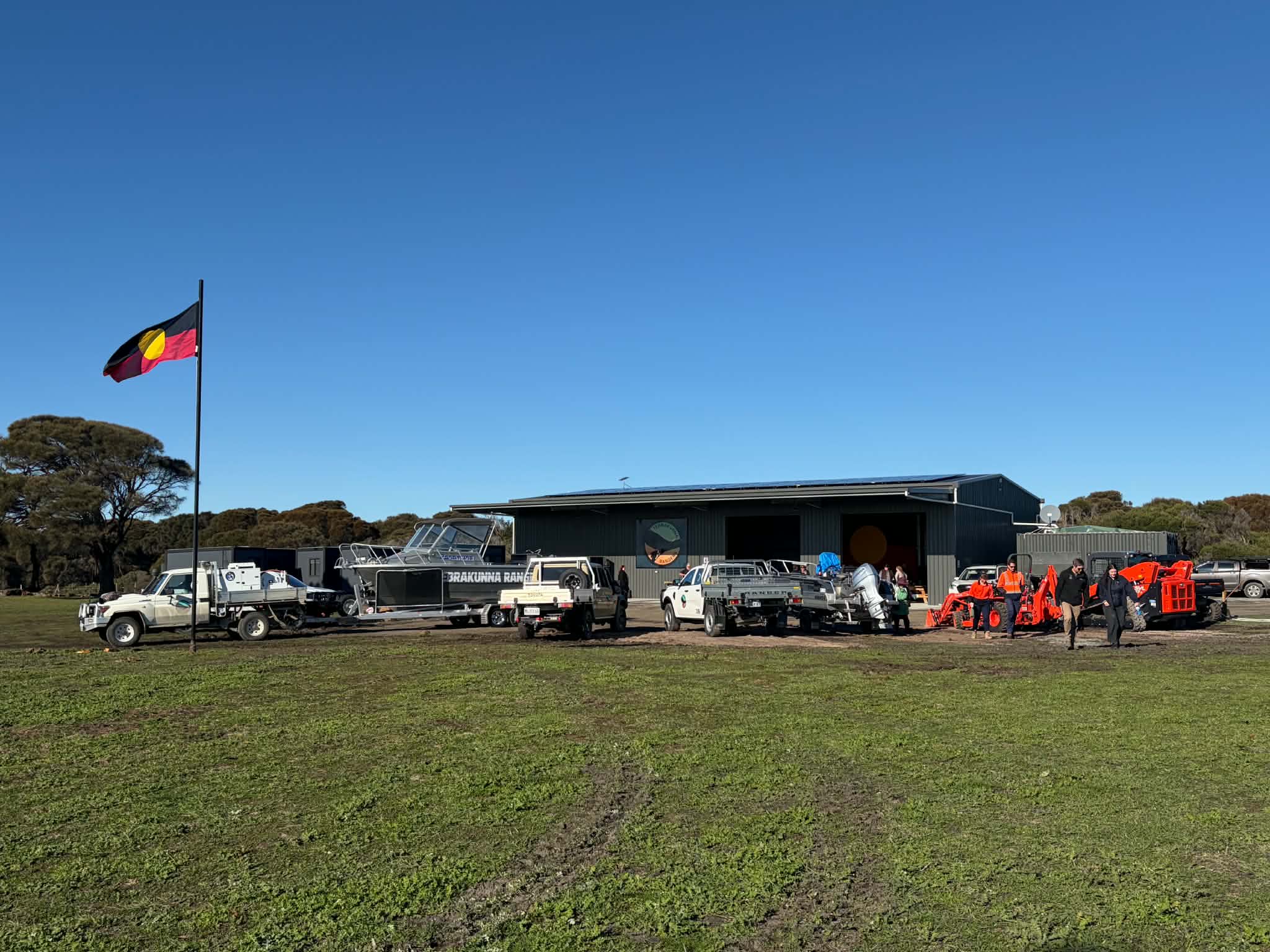
During the ranger base's opening ceremony Tasmanian Minister for Aboriginal Affairs, Bridget Archer, told attendees investment in the ranger base shows what can be achieved when Aboriginal communities are supported to lead work on their own Country.
"Over the past few years it's been been very encouraging to see the Tebrakunna Rangers program flourish, especially through the expansion of the rangers program to include additional full-time roles, the Junior Rangers program, and increasing gate number of Aboriginal women rangers," Ms Archer said.
"Programs like the Tebrakuma Rangers are vital for protecting Tasmania's natural and cultural heritage, and for helping Aboriginal people to learn from Elders, stay connected to culture, and build meaningful careers and sustainable futures, and to help build strong, empowered, and connected young people here in the north-east.
"This space can support that work for many years ahead and provides a practical space for training, operations, education, and community connection, sustainably power off-grid, and design to support work on country.
"Congratulations to everyone involved in bringing this project to life, and thank you for the important work that you continue to do for Country and for community."



