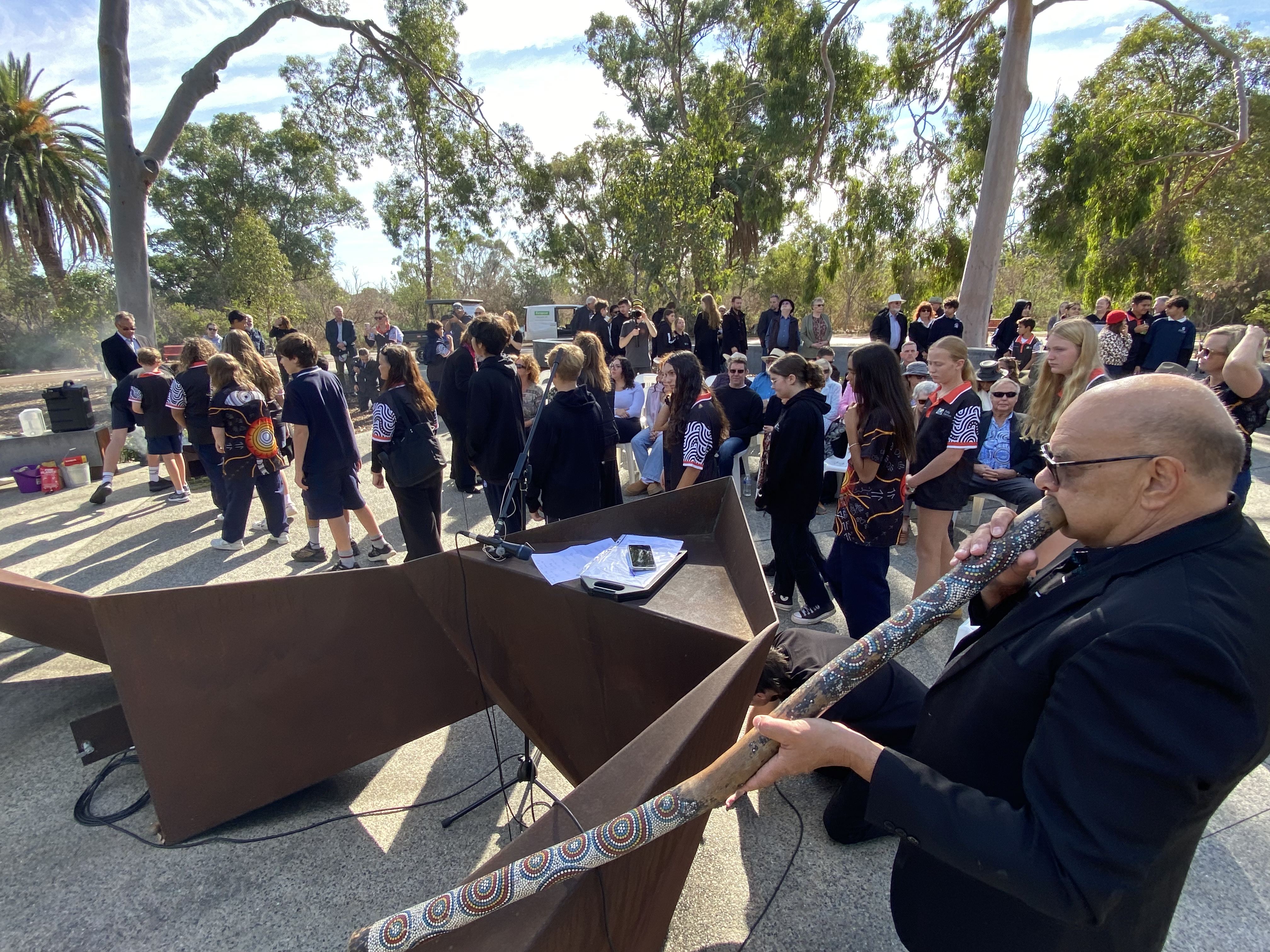

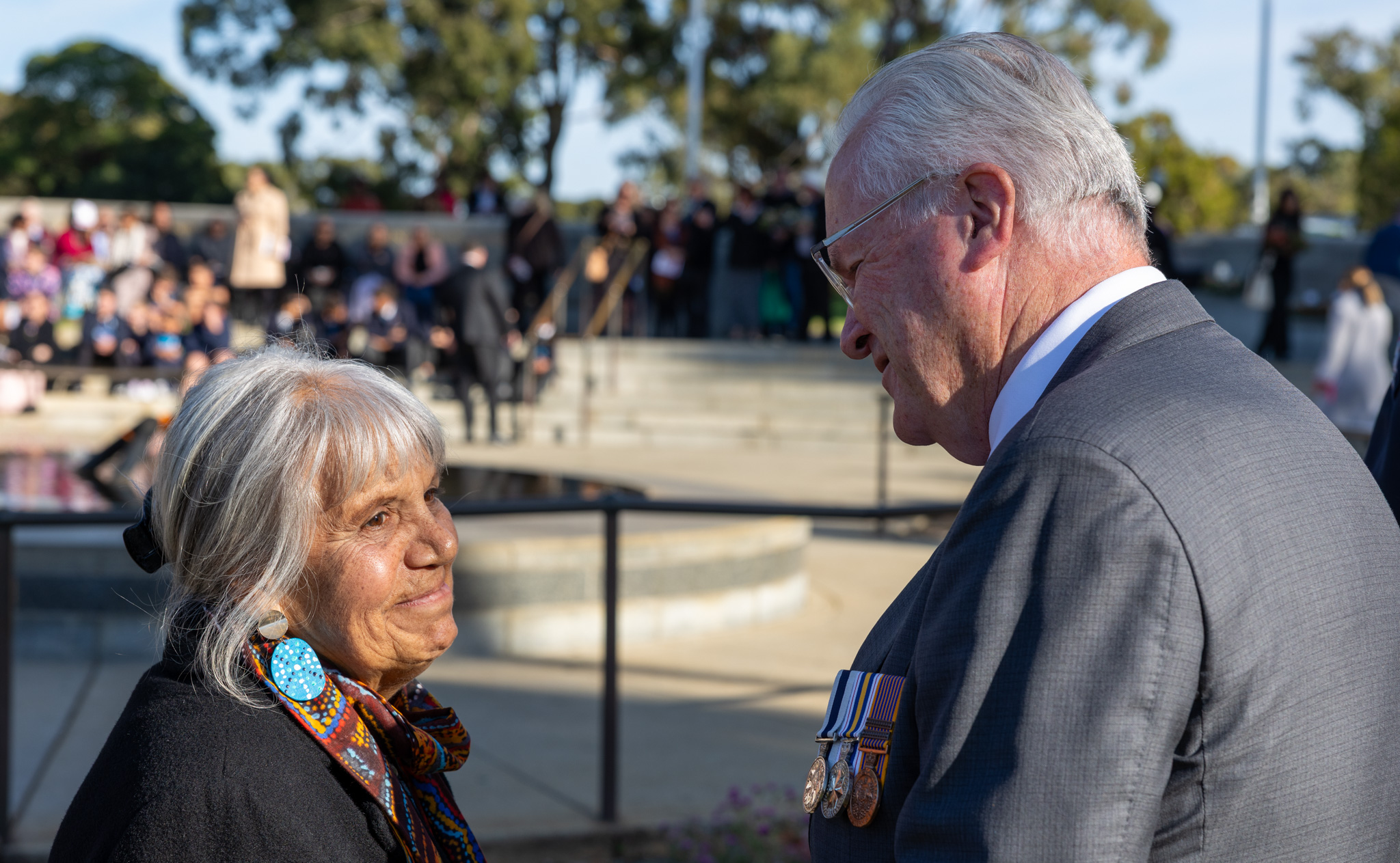
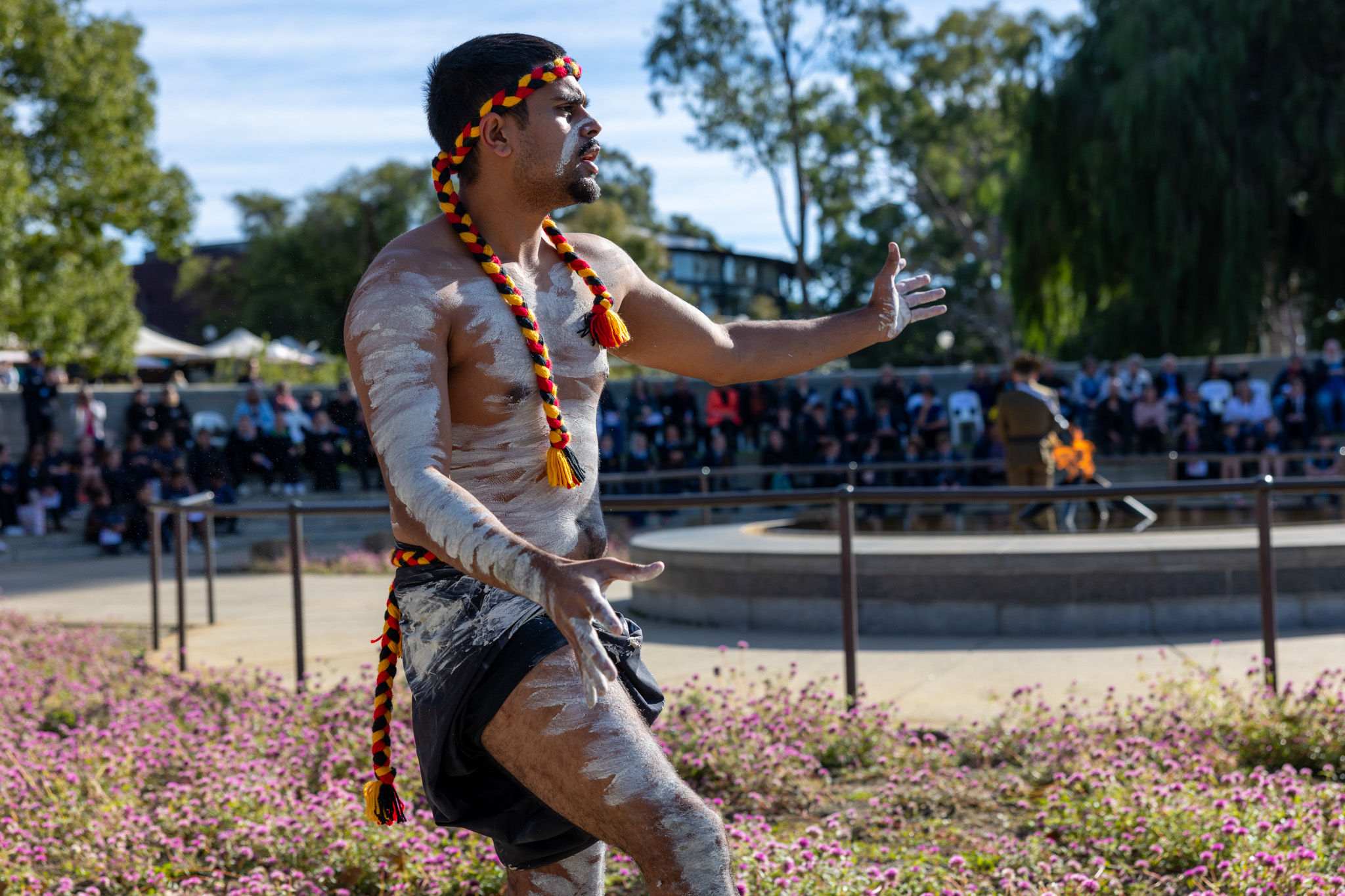
Indigenous veterans, including those who made the ultimate sacrifice in the First World War, were honoured on Wednesday with two special ceremonies at Kings Park in Boorloo.
Since 2006, the Aboriginal and Torres Strait Islander Veterans & Services Association of WA (ATSIVSAWA) has held the Indigenous Veterans Commemoration Service, which honours and pays respects to the contribution and commitment of Aboriginal and Torres Strait Islander Veterans, and Serving men and women, from the Boer War to the present.
The Service was held Wednesday morning at the Flame of Remembrance, The State War Memorial, Kings Park.
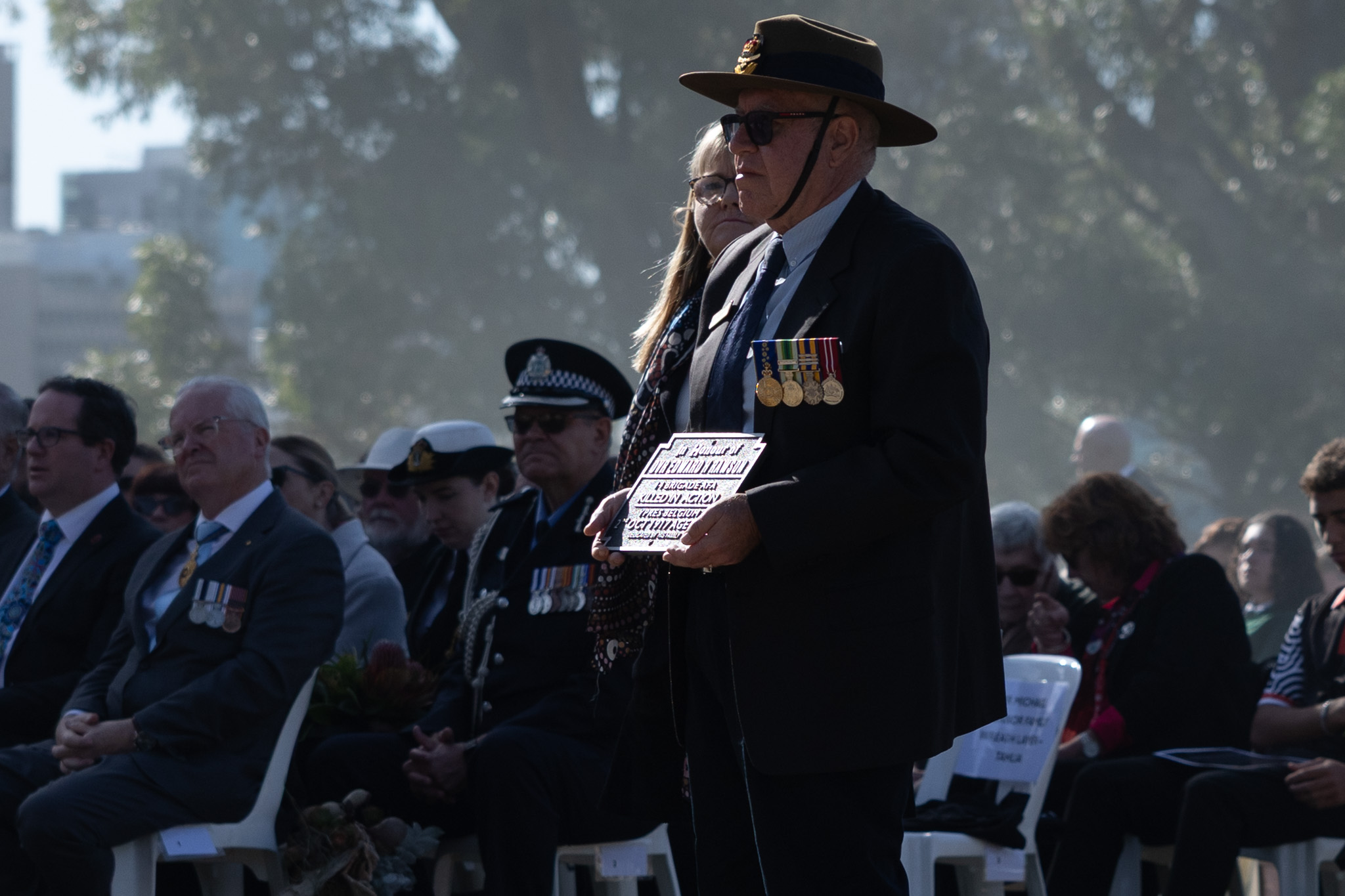
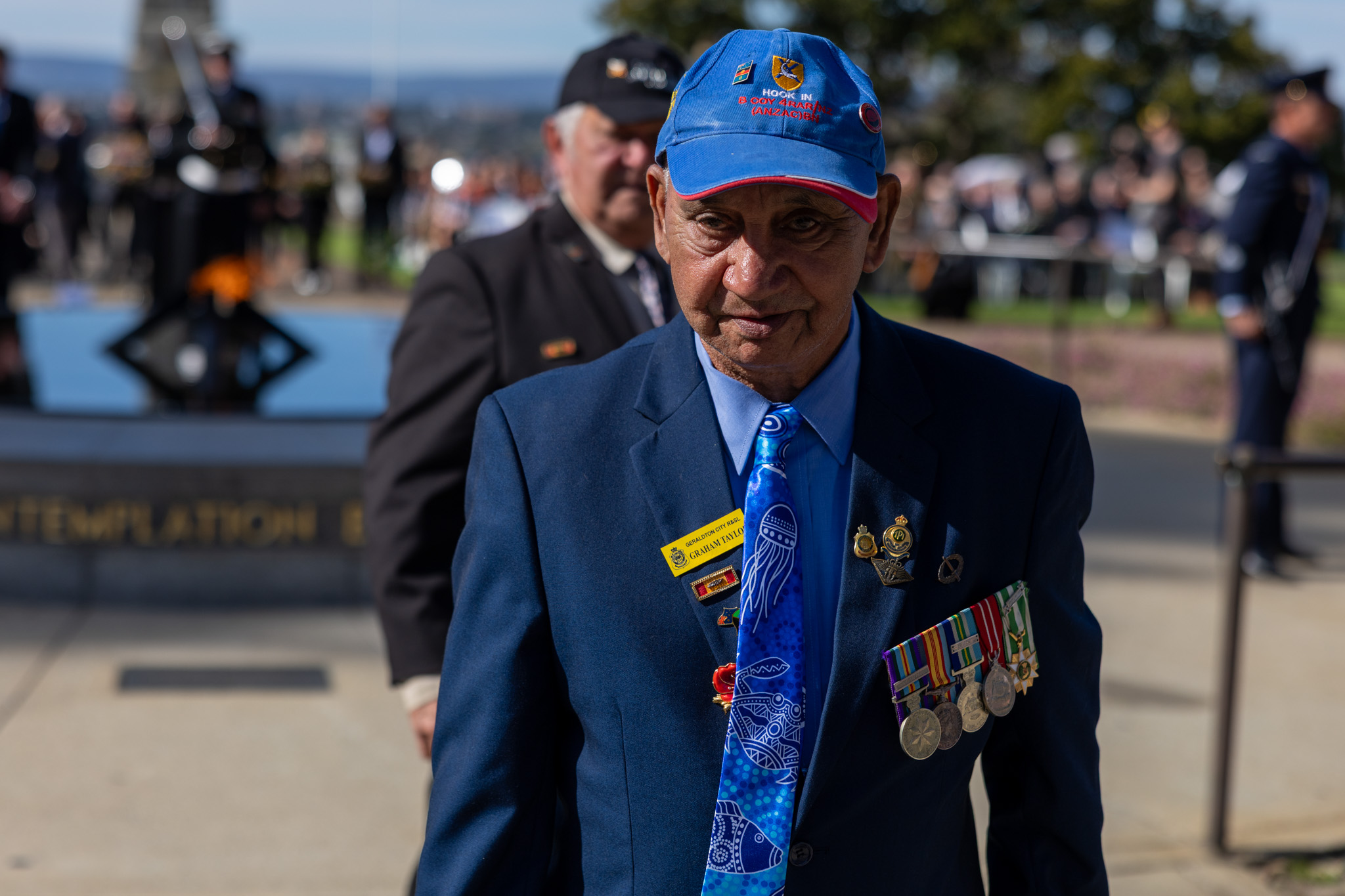
Association President and Indigenous veteran Di Ryder has worked for many years to honour Aboriginal and Torres Strait Islander servicemen and women.
Following the Service and a morning tea, the Association, along with the Polly Farmer Foundation "Follow the Dream" Program, held an additional event in the early afternoon, acknowledging and honouring nine Aboriginal soldiers from Western Australia who gave their lives in the First World War.
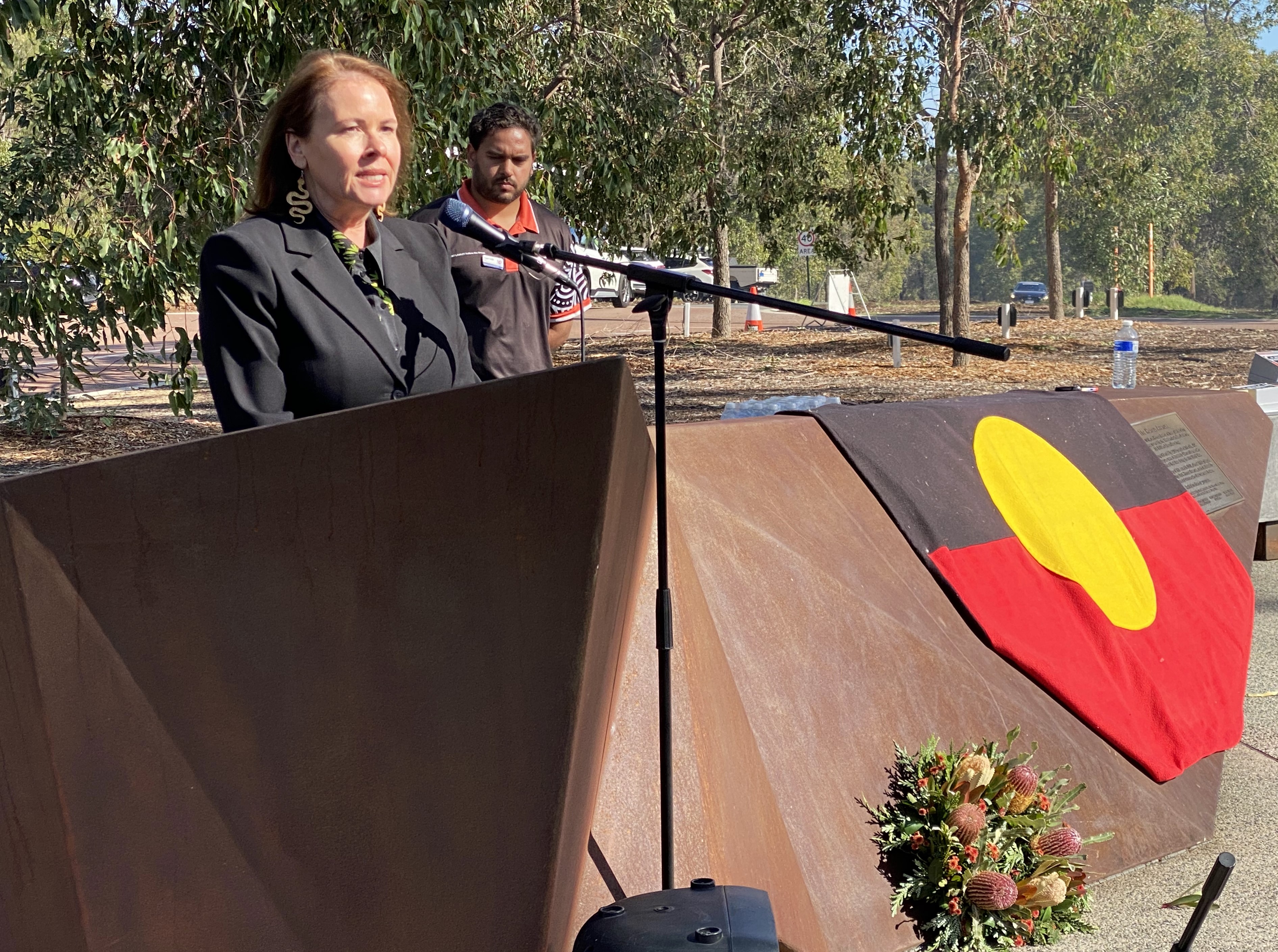
In his address at the earlier ceremony, WA Governor Chris Dawson paid his own tribute to the nine fallen heroes – as well as the thousands more like them who have fought in every conflict since the Boer War.
"Since the Great War, Aboriginal and Torres Strait Islander people have served in every conflict and commitment involving Australian defence contingents since Federation, as well as during the intervals of peace since the Second World War," the Governor said.
"They have served and continue today to serve in defence activities and operations around the nation and internationally.
"And so, we must continue to honour their service – while also continuing to speak truthfully about the discrimination of the past so that we may honour those who have helped shape the present."All nine we honour today can be regarded as heroes. They felt it was their duty, to their country – even though when those indigenous fighters returned, the country did not return the respect."
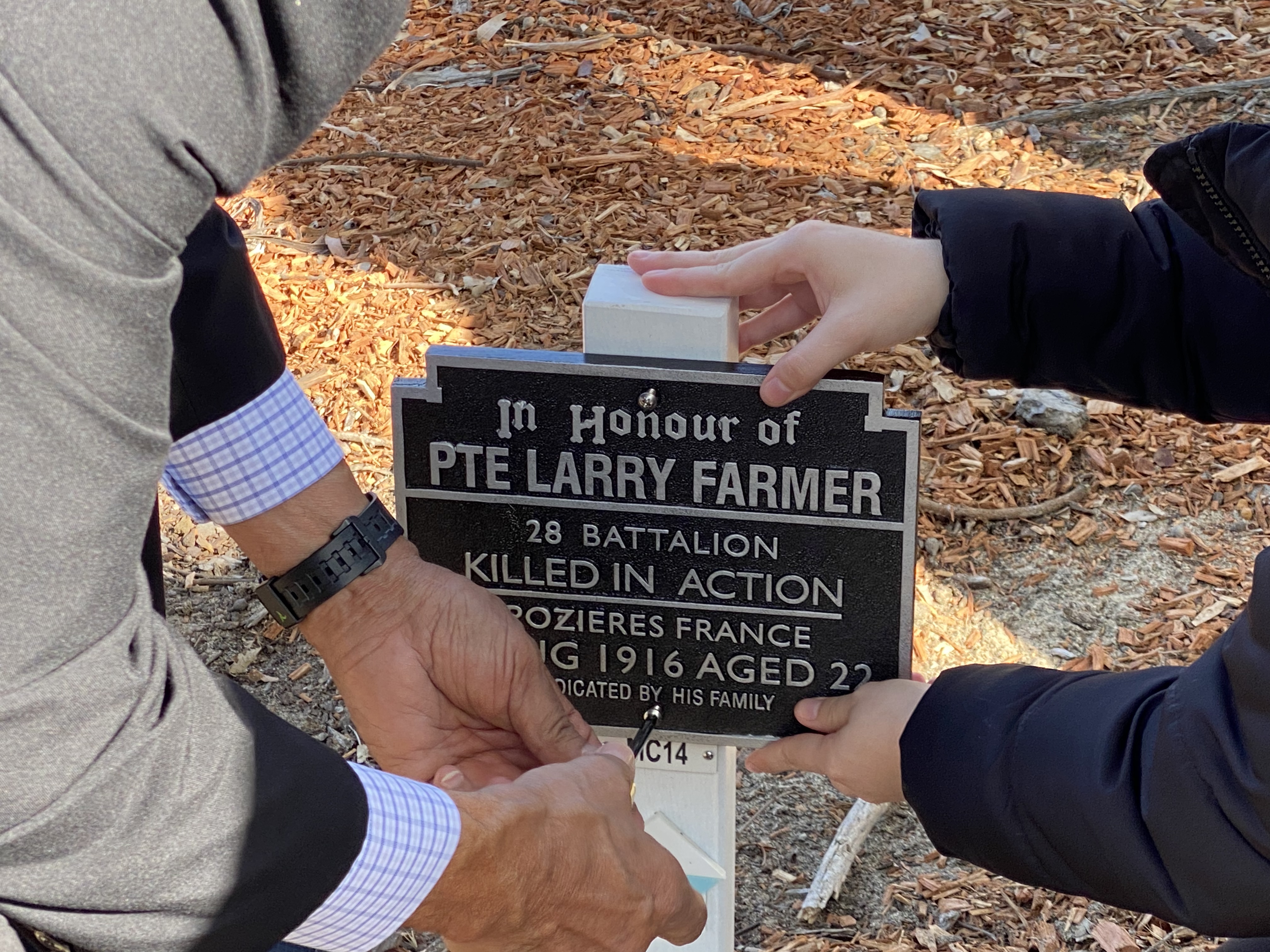
Kings Park has long been home to plaques along The Avenue of Honour. The nine Indigenous soldiers included among them on Wednesday were:
Private Thomas Henry Ford, who fell at Polygon Wood in Belgium in 1917, aged 23; Private Larry Farmer, who was killed in action at Pozieres, France, in 1916 aged 22; Corporal Augustus P. Farmer, who fell at Mericourt, France, in 1918 aged 32; Corporal Stanley Hedley, who died in battle at Villers Bretonneux, France, 1918, aged 23; Private Charles Latwood, killed in action at Lihons, France, 1918, at age 22; Private William J. Jackson, who fell at Flers, France, aged 34 in 1916; Private Michael Connor, who died of illness in France in 1916, age 22; Private Henry Mason, who was killed in action at Messines, Belgium, aged 36 in 1916; and Driver Edward Henry Rawson, who fell in battle at Ypres, Belgium, in 1917 aged 22. (Driver was a rank equivalent to Private, but used in artillery.)
The plaque dedication ceremony took place on the May Circle. The moving ceremonies were attended by large gatherings including family members of the fallen soldiers.
Young people from schools affiliated with the Polly Farmer Foundation conducted extensive research on each of the soldiers. The students attended the ceremony, and the families of the fallen soldiers received replica plaques for them to retain – identical to those now fixed in place on The Honour Avenues.
Among the family members present was Bill Hayward, who spoke.
"Together with my brother Ken and nephew Glen, we stand here before you as descendants of Uncle Augustus and Larry Farmer. We also stand with the families of the other Aboriginal soldiers who were killed in action in the First World War," he said.
"There were four of our uncles who are listed for duty in the First World War. Uncle Gus and Uncle Larry were killed in action. Uncle Lewis and Uncle Ken they returned home to the same life they live, but due to physical trauma and stress, their lives are never the same.
"It's interesting to note that Uncle Ken was 15 when he went to war. He got repatriated back with after he contracted meningitis, and then he went back as a 16 year-old. So, I don't know, life must have been pretty tough in Katanning. That's all I can say.
"Unfortunately, they never received the recognition and respect they deserved. So, it's fitting for all the fallen indigenous soldiers and their families to be recognised in this manner today, here, today and this morning, that was a beautiful ceremony. It touched everyone.
"I'd like to take this opportunity to say thank you to Sandra Down and the students of the Shenton College in particular from the farmer line, Jordan Pickett, Zoe Latham, Jacob and Sam, hopefully I've got that right, who wrote the biographies for Lance Corporal Augustus Farmer and Private Larry Farmer. We would also like to thank Di Ryder and the Aboriginal Torres Strait Veterans Association of WA and the Polly Farmer Follow the Dream Foundation."
Mr Hayward noted that he and Glen travelled to Villers Bretonneux in 2013.
"When you see the photos and the footage of the war, it was like hell on earth. But when we went there - with beautiful rolling hills, grey and green grass, poppies, poppies growing everywhere," he said.
"They've got the big tower, and they had the Australian flag and the French flag flying. And we happened to have an Aboriginal flag, so I climbed up there and we flew that.
"When we were at the memorial there… an older lady, come up to Glen initially, and in my presence, said, 'Oh, Australia, Australia. Thank you, thank you.' So, they still remember. When you look out across the school from the museum, there's a big sign that says 'Do not forget Australia'. We felt quite proud while we're there.
"I'd just like to say, it's an honour to be here today and to be part of the student project to recognise fallen Aboriginal soldiers and their contributions."
Kim Farmer of the Polly Farmer Foundation said she felt "quite emotional and overwhelmed" with the many family connections at the events.
Ms Farmer, the daughter of Graham Polly Farmer, is also a descendant of "Uncle Larry and Uncle Augustus and the other brothers".
"When dad was growing up at Sister Kate's, he didn't grow up with his family. Didn't know a lot about his family, but the brothers were well documented, so they weren't forgotten. They just weren't commemorated as is happening today. But it was really important information for me to know about Uncle Larry and Uncle Augustus and the other brothers, because it was pieces of my history that I was putting together," she said.
Ms Farmer acknowledged her relatives in the audience and the other families present, and thanked her nephew Dr Glen Stasiuk, who also spoke at the event.
"Glen has been the legacy carrier and the story teller of these long stories of the farmers and the extended family's history. And Glen, we are indebted to you for the way that you have done this over the years, and then I'm still feeling emotional, because I've got these connections with the young people here through the Foundation, and that these young people through Tina and Sandra Down from Shenton College, who stirred something inside the young people to be able to want to do a project like this. How incredible is that? They have worked really tirelessly."
She said the students represent the theme of reconciliation week – Bridging Now to Next.
"It is about carrying the legacies of past generations, of our heroes, of the people that have worked really hard and mostly untold, to be able to bring it to life today, to make it a better future," she said. "They're doing it for future generations."
Proud Whadjuk Noongar woman Dr Libby Jackson-Barrett spoke on behalf of the families present, noting the family connections between those gathered.
"To all you mob at the back here, thank you for such a wonderful job that you have done on researching all the Indigenous servicemen," she said.
"It was a fantastic job. And in particular, to our patron, James... and Tina and Sandra. Thank you for taking up the whole charge of understanding the importance of infusing Aboriginal perspectives across the curriculum and to put that into your school's work.
"I think all of our all of our men that went to war, they enlisted and answered the call of duty, despite the fact they had no legal status in this country that they were defending. Here they are. They stood shoulder to shoulder in the trenches of Gallipoli. They bled on the fields of France. They endured the same horrors, fought the same enemy and carried the same flag.
"They weren't citizens. When they enlisted, they couldn't own property, they couldn't vote. Their children were taken and yet, when it came time, they donned that khaki uniform and placed a slouch had hat sporting the rising sun upon their head. And we heard today that most of them lied about their heritage. They said they were Italian, Indian, Pakistani, Maori, anything but Indigenous, because those that were doing the enlisting, if they knew they were Indigenous and were too dark skinned, they weren't going to serve. And if you have a look on the war records, particularly our family. I think ours reads "dark". Not sure what that actually means. So, why did they fight? … I think they all fought for a deep sense of connection to country, a connection that predates a colonial flag by thousands of years, they fought for their ancestral homelands. In fact, they fought for each and every one of us that stand here today."
Dr Jackson-Barrett noted that many of these brave Indigenous warriors did not return.
"I think the bitter irony of it all is that they fought and died for a country that where they couldn't live as equals. So, it's not about special recognition. It's about truth. To acknowledge that Indigenous soldiers served valiantly on the fields despite the fact that they had experienced unimaginable discrimination.
"Their service was not just to a foreign king, but to country, to their ancestors… to their children."
Many other family members spoke, and their words were warmly received by the audience who were deeply moved by the dignified and powerful ceremony.