




Nazi apologists and antisemites, scores of racists, and the first professor of zoology who called for measures to restrict the breeding of "mentally deficient" Australians — including "full-blood" Aboriginals - were among individuals highly influential across the history of Melbourne University, according to its own research, detailed in a new book which hopes to examine and tell the truth about the fabled institution and its duplicitous and often racist dealings with Aboriginal people.
Dhoombak Goobgoowana: A History of Indigenous Australia and the University of Melbourne is a 500-page examination of the university's colonial history, and its complicity in scientific racism and eugenics.
The book includes chapters detailing some of the Australia's most celebrated scientists and researchers, along with doctors, historians, and anthropologists, some of whom advocated to "restrict the breeding of less able ('mentally deficient') Australians" - particularly Aboriginal people - whilst others robbed graves and exhumed bodies, keeping - and later concealing - their collections.
It makes up one of two volumes of truth-telling by the university and has been handed to the Yoorrook Justice Commission for are creating a document of the "real" history of Victoria.
One of the authors, Professor Marcia Langton, said in her close to 25 years at the university, she has heard in the corridors the "whispered asides about aspects of the history of the institution" detailed in volume one of Dhoombak Goobgoowana.
"For too long, those of us whose academic professions require that we understand the impacts of our scholarship on Aboriginal and Torres Strait Islander peoples have wanted our colleagues and students to be aware of the events, people, and intellectual forces of the nineteenth and twentieth centuries that shaped our modern university," Professor Langton said.
University of Melbourne Vice-Chancellor Professor Duncan Maskell said the institution could no longer "look away" from its difficult history and legacy.
"It is crucial we listen to the Indigenous community and work with them to better understand what the University needs to do to acknowledge our past, change our culture and make the University a place that encompasses its history, acknowledges past wrongs and provides a welcoming environment in which to thrive," Professor Maskell said.
The book includes an account of veterinary scientist graduate Daniel Murane, who was present during a series of massacres near Wyndham in north-western Western Australia in 1926, which resulted in pastoralists and other colonisers "killing at least eleven Aboriginal people and burning their bodies".
Until March of this year, Mr Murane's name graced a veterinarian scholarship at the University, and the story has been absent from any official biography of the institution.
His colleague and research compatriot, Alfred Ewart, was a professor of botany at the University from 1906 to 1937, where he enjoyed an "international research reputation" and was considered to have expertise on genetics, despite often being "frustrated by University protocols".
Defending the pastoralists in Wyndham, Mr Ewart wrote in the Sun newspaper in 1927: "Many apologists for blacks hold very erroneous ideas as to their mental and intellectual characteristics.
"The average mental capacity of the adults is certainly below that of a white child of ten or twelve years of age … their ideas are so few that it is very difficult to carry on even the most limited conversation with those who know English."
The now discredited study of Eugenics also played a key role throughout the University up until the 1970s, with Professor Langton stating: "The profound influence of false scientism, eugenics and racism on our disciplines and public attitudes is poorly understood."
Professor and geneticist Wilfred Agar still has a plaque at the zoology building at the University, along with a lecture hall named after him.
He was also president of the Eugenics Society of Victoria, which the book notes, "was effectively an offspring of the University of Melbourne," and argued to enact "measures to restrict the breeding of less able ('mentally deficient') Australians".
Worried about the future of the Australian "race," he also suggested a combination of sterilisation of the 'unfit' and the immigration of 'acceptable' foreigners, citing sterilisation programs in Germany for special favour.
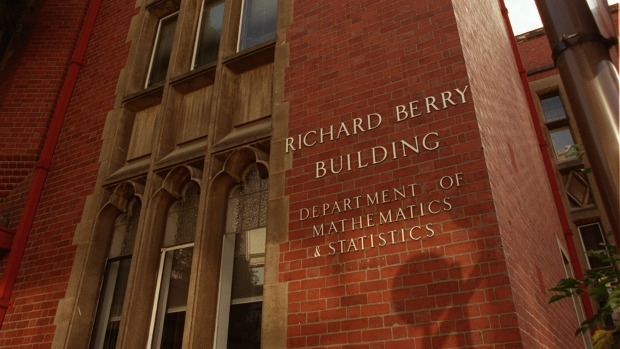
His predecessor at the Eugenics society, fellow Melbourne University professor, Richard Berry, claimed, "most criminals, slum dwellers, 'full blood' Aboriginal people and other 'coloured races' were mentally and racially deficient".
Mr Berry collected skulls from across a wide-range of races and encouraged students to send Indigenous remains for his "collection" — some of which are still being repatriated as of 2024.
In her appearance before the Yoorrook truth-telling inquiry, Professor Langton noted the Murray Black and Berry collections at the University of Melbourne alone comprised over 1,600 ancestral remains, many that came about from grave robbing.
Other academics with appalling views included Augustin Lodewyckx, who taught Teutonic studies and languages at the University, and called himself a "proud Aryan" whilst espousing the values of Adolf Hitler as a German hero, and Professor W.A. Osborne, who gave public support to the Nazi government in Germany and its antisemitic policies.
Fellow author Dr James Waghorne said the stories of the University have long been skewed, and by "admitting biases, past failures, expressions of intolerance or violence," the institution can renew and grow.
"The project has parallels with the legacies of slavery projects undertaken by universities across the western world, particularly in its analysis of race, but the issues that inform the history of the Indigenous peoples of Australia are different, as is the contributions of Indigenous knowledge," Dr Waghorne said.
Professor Langton argued: "Like me, many have wanted to rid the academy of racism, and in particular, recognise Indigenous knowledge and contributions to human knowledge by incorporating Indigenous knowledge into the academy."
The book, published by Melbourne University publishing, is free to download online.



