




Animal welfare and environmental concerns have been raised following reports of incapacitated kangaroos and dead birds found within Alcoa's Pinjarra refinery.
The Animal Justice Party is calling for an urgent independent investigation, including appropriate veterinary examination and environmental testing, to determine the cause.
Advocates say three kangaroos were reportedly found paralysed during an Aboriginal cultural survey project within the Alcoa Pinjarra refinery area. The animals were allegedly discovered by survey participants, including Gnaala Karla Booja Aboriginal Corporation member and Cultural Advisory Committee member Roger Ugle.
According to veterinarian Dr Josie Sherlock members of the survey group were able to walk up to the kangaroos because the animals were unable to move.
The advocates said concerns were raised with Alcoa representatives at the site and requests were made for the kangaroos to be humanely euthanised and undergo veterinary examination and testing, including for possible heavy metal exposure.
Dr Sherlock said she offered to undertake a post-mortem examination, and Alcoa representatives "subsequently advised survey participants that another veterinarian had examined the kangaroos and determined they had been struck by a vehicle".
Mr Ugle has raised concerns about that explanation and is seeking further information about what examinations were undertaken, whether post-mortems and toxicology testing were conducted and what ultimately happened to the animals.
"When we approached the three kangaroos, it was clear they were in serious distress and unable to hop away. I was less than a metre from one when it fell to the ground and could not get back up. It just lay there looking at us which was incredibly distressing to witness," Mr Ugle said.
"As a Traditional Owner and Gnaala Karla Booja Cultural Advisory Committee member, I'm deeply concerned about what we saw and what may be affecting wildlife in this area. We need proper independent testing to determine what caused these animals to become so sick and whether there is an ongoing risk to other wildlife.
"We need answers about what is happening because seeing animals suffering like this is heartbreaking and unacceptable."
Mr Ugle said survey participants also observed a nearby body of water and raised concerns about water moving through the refinery area and into the surrounding environment.
He noted that the Federal Government's National Pollutant Inventory records the emissions of a range of substances associated with the Pinjarra alumina refinery, and concerns have been previously raised about the potential for local wildlife to be exposed to contaminants through water and sediment.
No evidence has yet established the cause of the kangaroos' condition, the advocates said. However, WA's Animal Justice Party believes the circumstances warrant independent testing to establish whether environmental exposure played any role and whether other wildlife is at risk.
An Alcoa spokesperson told National Indigenous Times on Thursday that following a report of several visibly distressed kangaroos on Alcoa property on 24 August, Alcoa personnel attended the location and found one kangaroo in a distressed state.
"A thorough search of surrounding areas failed to locate any other animals. The kangaroo was on Alcoa property near Pinjarra but not within the refinery or residue areas," they said.
"The kangaroo was humanely euthanised by a licensed contractor in accordance with protocols and licence conditions approved by the Department of Biodiversity, Conservation and Attractions.
"A local veterinarian conducted an autopsy on the same day the kangaroo was euthanised and concluded through physical and laboratory tests that the animal had shown symptoms of capture or stress myopathy, a metabolic disorder that occurs when animals experience extreme stress, exertion, or struggle."
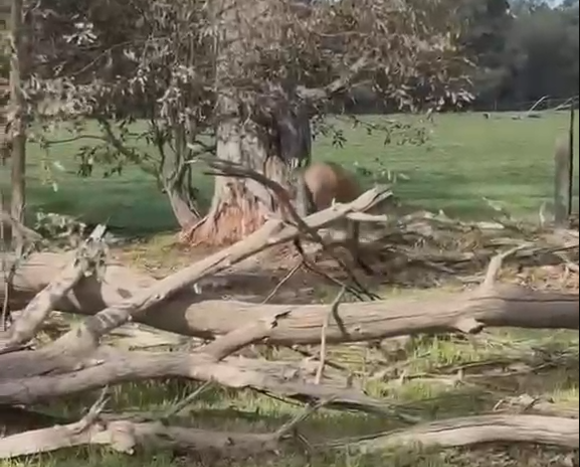
Dr Sherlock also reported dead birds being "regularly observed within the Alcoa refinery area" and believes they should be examined to determine their cause of death, particularly given the current H5N1 avian influenza risk.
"Local community members have raised concerns about the health of native animals around the Pinjarra refinery for decades, including possible exposure to contaminants through residue areas and environmental run-off," Dr Sherlock said.
"Heavy metal poisoning can occur following long-term chemical exposure and can cause symptoms consistent with some of those observed in these kangaroos. However, the cause can't be determined without testing, and toxicology results can take several weeks.
"It is concerning that the Noongar survey participants have not been provided with the veterinary examination results or confirmation of what testing was undertaken. An independent investigation is needed to determine what happened to these animals and whether other wildlife may be at risk."
The company spokesperson said animal welfare is "of utmost importance to Alcoa" and "we maintain strict controls across all of our operations including our farmlands".
"We are not aware of any reports of bird deaths in or around the Pinjarra refinery."
Animal Justice Party MLC Amanda Dorn said it was unacceptable that, despite "more than 50 years of residue storage at the Pinjarra refinery", there had been no independent assessment of the potential impacts of environmental contamination on local wildlife.
"Whatever the cause, these kangaroos were clearly suffering and we need to know what happened to them and whether other wildlife in the area could be at risk," Ms Dorn said.
"Wild animals have no choice about the water they drink. Given the reports of sick kangaroos and dead birds, any potential environmental exposure must be independently investigated."



