




A new Northern Territory report has found buffel grass poses a threat of economic loss almost 60 times greater than any benefit.
Buffel grass was declared a weed in the Territory in 2024, having been given the same classification in South Australia almost a decade earlier.
Traditional Owners have been heavily involved in growing calls for it to be declared a Weed of National Significance, a trigger for nationally coordinated management and reduction plans.
An economic assessment of buffel grass in the NT, prepared for the Territory Government by Charles Darwin University, was released Thursday.
Invasive Species Council's Voice of Country Lead and Kalkadoon woman Taigen Ryan said the report "blows apart the argument that the economic benefits of buffel grass justify allowing it to keep spreading", and "Traditional Owners and the wider community are being left to carry those costs".
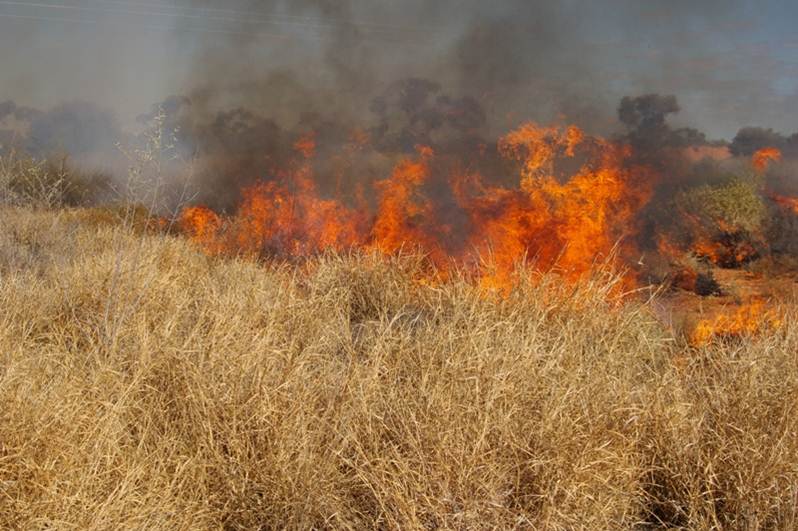
A popular cattle feed and erosion mitigator for pastoralists, buffel grass is described by opponents as an invasive weed causing major impacts to the landscape. A dry plant, it's also a major fire risk.
The report prepared for the NT Government did not centre its research on "whether allowing further spread or deliberate establishment of buffel grass creates net economic benefits for the NT once broader public, ecological, cultural and economic costs are factored".
It found: "Incremental buffel grass expansion is expected to result in large net economic losses for the NT, with costs approximately sixty times greater than benefits."
Forage provision and erosion-control benefits were estimated at $112.3 per hectare, each year.
In comparison, external costs were found to be at $6,328 (per hectare, each year), "driven predominantly by biodiversity loss, cultural-site degradation, fire-regime intensification, buffel grass management burdens, and scenic amenity decline".
"These findings constitute a market failure that provides a direct economic justification for the 2024 weed declaration and for the effective implementation of the Buffel Grass Weed Management Plan 2026-2036."
The NT Government announced its 10-year management plan earlier this year.
At the time, Central Land Council general manager Mischa Cartwright told National Indigenous Times the plan and it's provisions "leaves the door open for buffel grass to keep spreading across Aboriginal land".
The report added potential impacts, via qualitative data, extend beyond those ecological and economic, and into the social and cultural - "as respondents described restricted access to Country, reduced availability of bush foods, health effects from smoke and pollens, and increased operational burdens for community and government organisations and land managers".
"While pastoral participants confirmed that buffel grass improves carrying capacity and drought resilience in their context. The overall pattern of evidence supports the report's conclusion that the broader public, cultural, and environmental costs of further buffel grass expansion far outweigh its private production benefits," it continues.
Report-makers engaged in consultation with First Peoples, though acknowledged limitations to this as relying heaving on online surveys, with six additional "semi-structured expert interviews selected to capture perspectives closely connected to Country, land management, and community well-being".
Broader consultations were not feasible within their available timeframe, the report states.
It also acknowledges First Peoples often experience "some of the most severe impacts of buffel grass".
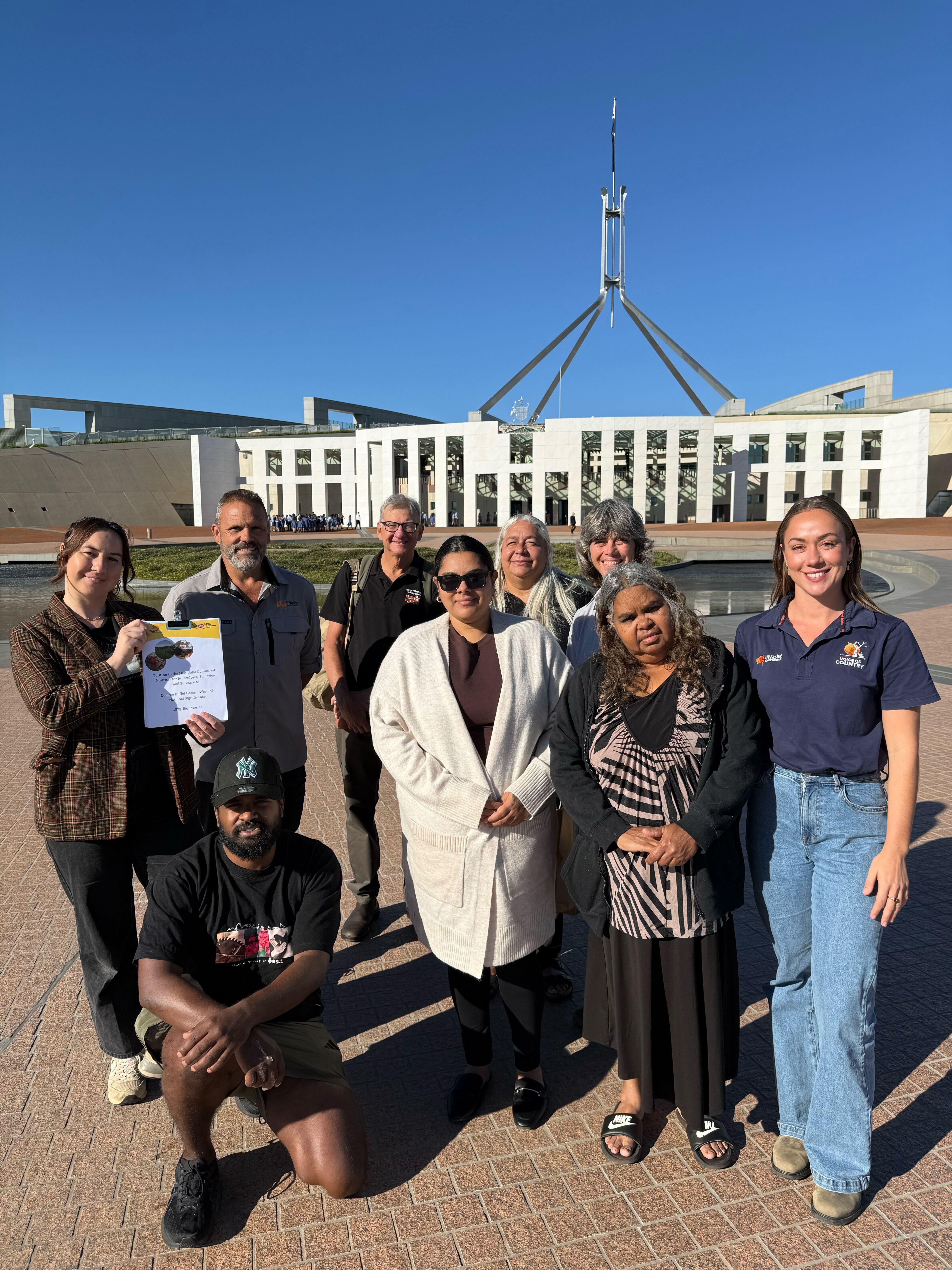
In March, a delegation of Traditional Owners from APY Lands and central Australia travelled to Canberra urging for action on the declared weed.
Delegation member, Wiradjuri man and Invasive Species Council Indigenous Ambassador Richard Swain at the time called buffel grass a "silent creeping killer" and a "boom for the cattle industry, and a bust for Country".
Off the back of the report, Ms Ryan said: "For years Traditional Owners have been warning that buffel grass is destroying Country. Now we have a dollar figure showing just how costly it is to keep letting it spread."
The Invasive Species Council's Voice of Country lead clarified that no one is denying the value buffel grass can have in existing pastoral systems, however, as outlined in the report, its further spreading has costs far exceeding any benefit.
"This report blows apart the argument that the economic benefits of buffel grass justify allowing it to keep spreading," Ms Ryan said.
"For every dollar of benefit from further buffel grass spread, the costs to the rest of the community are around 60 times greater.
"Traditional Owners and the wider community are being left to carry those costs - through hotter and more dangerous fires, damaged cultural sites, declining native wildlife and the enormous task of trying to protect Country from this invasive grass."
Ms Ryan also said the cost to benefit disparity is why a national approach to reducing buffel grass' spread is needed.
This includes measures to protect "where buffel grass does the greatest damage - including Indigenous Protected Areas, national parks, culturally significant places and other high-value Country".
"'Australia needs a national buffel grass response that respects its use in pastoral systems while stopping it from continuing to invade and transform Country," Ms Ryan said.
"Traditional Owners, scientists and land managers have been raising the alarm for years. The evidence for national action is getting stronger, not weaker. Governments now need to act on it."



