


Australia stands at a turning point.
The defeat of the 2023 Voice Referendum did not simply end a debate; it exposed how uncomfortable many Australians still are with the truth. As Galarrwuy Yunupingu AM taught, truth burns, and many chose to look away from its flame. Yet truth‑telling is not something we can avoid. It is a human right, and Australia has a legal and moral responsibility to make it happen.
I felt this tension personally during the Referendum campaign. I shared evidence and facts, only to see them dismissed. I learned how readily truth is rejected when it disrupts national narratives or causes discomfort.
For me, truth‑telling means listening deeply, showing understanding, being humble, and having the courage to sit with discomfort. Without truth, there can be no real healing — only half‑stories that protect national pride instead of delivering justice.
International law already tells Australia what it must do. Australia has committed itself to major human rights instruments, including the International Convention on the Elimination of All Forms of Racial Discrimination (ICERD), the International Covenant on Civil and Political Rights (ICCPR), and the United Nations Declaration on the Rights of Indigenous Peoples (UNDRIP). These agreements create clear obligations directly linked to truth‑telling. Australia's binding legal obligations arise from the human rights treaties it has ratified, while UNDRIP guides how those obligations are understood and applied in Indigenous contexts.
Those obligations include the right to truth, the right to effective remedies, protection of culture, meaningful participation in decision‑making, and guarantees that serious harms will not be repeated. These are not abstract principles. They are binding commitments Australia has freely accepted.
Yet Australia's actions do not match its promises. The country often presents itself internationally as a defender of human rights, but its failure to confront ongoing colonial harm reveals a deep gap between image and reality. United Nations experts and monitoring bodies have repeatedly warned that Australia is falling short of its obligations. For a nation that values its global reputation, this inconsistency undermines credibility.
The Referendum brought this failure into sharp focus. Emeritus Professor Mark McKenna has described the "ignorance" and "wilful blindness" that misinformation campaigns were able to exploit. Many non‑Indigenous Australians did not understand what the Uluru Statement called for, and some preferred not to know. A population shielded from truth cannot meaningfully engage with justice or respect the cultural rights protected by ICCPR Article 27 and UNDRIP Articles 11 and 12.
This is not a new problem. Inquiries such as the Royal Commission into Aboriginal Deaths in Custody and the Bringing Them Home report exposed serious harm decades ago. Yet many of their key recommendations were ignored or weakened. Scholars including Dr Anne Maree Payne and Dr Jeremie Bracka have shown how these incomplete, piecemeal responses failed to dismantle discriminatory systems or provide proper redress. These failures fall short of Australia's duties under ICERD Article 2 and UNDRIP Article 28.
This is why the Yoorrook Justice Commission matters. Victoria established Australia's first comprehensive truth‑telling process, grounded in international transitional justice standards. It was Indigenous‑led, had the powers of a Royal Commission, and examined both historical and ongoing harm. Its findings are clear: colonisation is not confined to the past. It continues to shape systems of justice, child protection, health, housing, and education today.
Yoorrook's design is equally important. It was built on community leadership, Elders' authority, cultural legitimacy, and Indigenous control over stories and data. It reflects what UNDRIP Article 27 requires: fair and independent processes that recognise Indigenous law, culture, and authority.
Yet even this promising model exposes a serious problem. The Federal Government stepped away from its commitment to establish a national truth‑telling process. Queensland repealed its Path to Treaty Act. Other states retreated. Only Victoria and South Australia continue their work. Fragmented approaches cannot meet Australia's human rights obligations, including treaty‑making (UNDRIP Article 37), effective remedies (ICERD Article 6 and ICCPR Article 2(3)), and protection of cultural rights. Human rights do not stop at state borders.
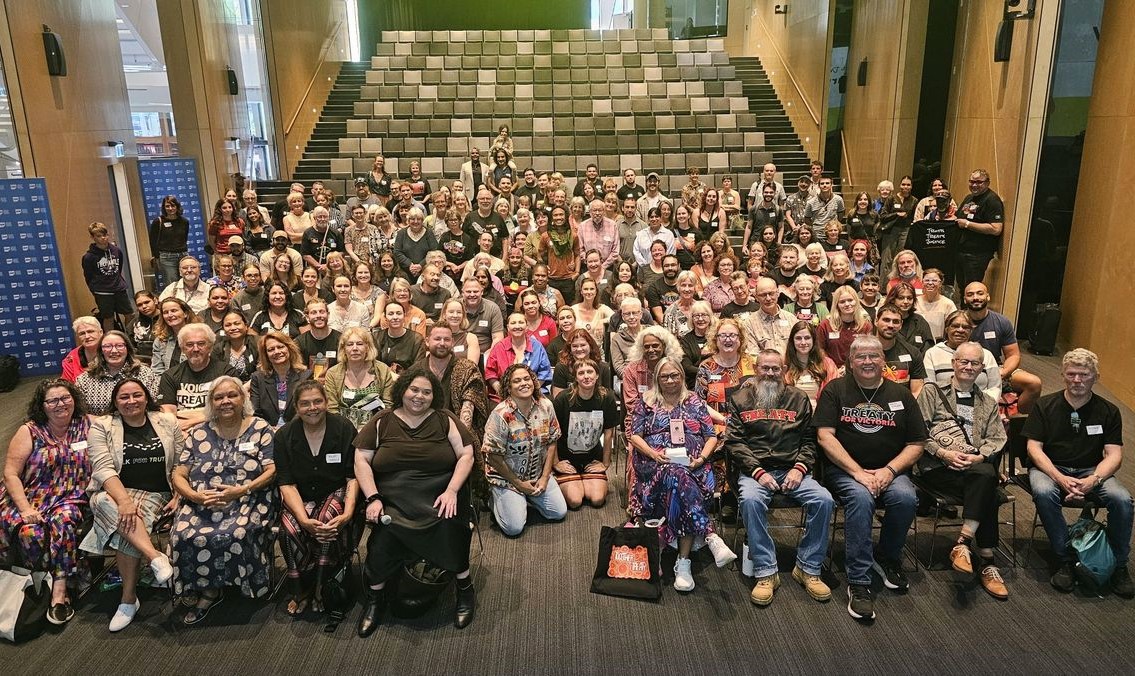
Research shows that meaningful truth‑telling must be Indigenous‑led and culturally grounded. First Nations people strongly support it, while many non‑Indigenous Australians remain unsure how to engage. Scholars warn that symbolic gestures without structural reform risk reinforcing denial rather than addressing injustice. Truth‑telling can support Indigenous self‑determination, but only if it leads to real change.
This is why a national process is essential. Only the Commonwealth can embed truth‑telling into federal policy, uphold cultural and collective rights under ICCPR Article 27, and guarantee the remedies required by ICERD and the ICCPR. Australia's failure to act after Bringing Them Home shows how quickly truth fades when it lacks institutional support.
Truth‑telling remains essential because, as Yunupingu taught, truth burns. It forces Australia to face what it would rather avoid. It challenges stories that comfort some but harm others. But it also opens the possibility of becoming a more honest nation; one that acknowledges harm, repairs relationships, and builds a better future.
Australia must legislate a national truth‑telling commission. Truth‑telling is not only a moral responsibility, it is a human right. And it is not merely important; it is a legal duty Australia has already accepted.
Scottie Campbell is a Wiradjuri and Ngunnawal man, born on Wiradjuri Country in Cowra and now living on Kulin Country in Naarm/Melbourne.
Mr Campbell's work has taken him across law, justice, community engagement, oversight, education, project management, and strategy. At the tertiary level, he has studied legal studies, business, and leadership.



