




The passengers on seven commercial flights to Adelaide last week looked slightly different to your usual airline customers.
The flights contained seventy-three brush-tailed bettongs, known as yalgiri to the Narungga people, who had flown more than 2,000 kilometres from Western Australia to be re-homed in Dhilba Guuranda-Innes National Park in South Australia.
The project, Marna Banggara, aims to re-home these animals back on Country in an attempt to keep the endangered species from going extinct.
Once residing on Yorke Peninsula, the yalgiri disappeared over half a century ago due to habitat destruction and the spread of introduced predators such as feral cats and foxes.
Representatives from the Narungga Nation travelled to WA where 49 male and 24 female bettongs were collected from Dryandra National Park.
It took a translocation team from Zoos SA, Northern and Yorke Landscape Board, DEW, WWF Australia and the WA Department of Biodiversity Conservation and Attraction to capture the yalgiris.
Narungga Elder and Dhilba Guuranda-Innes National Park Co Management Board member Cyril Kartinyeri said the native animals had a purpose on Narungga Country.
"For me, it's about the Country, the yalgiri have a purpose on this Country," he said.
"They've got a purpose here, just as every other animal, bird and reptile does, and that's to look after Country.
"So them being reintroduced here brought us better for a healthy Country."
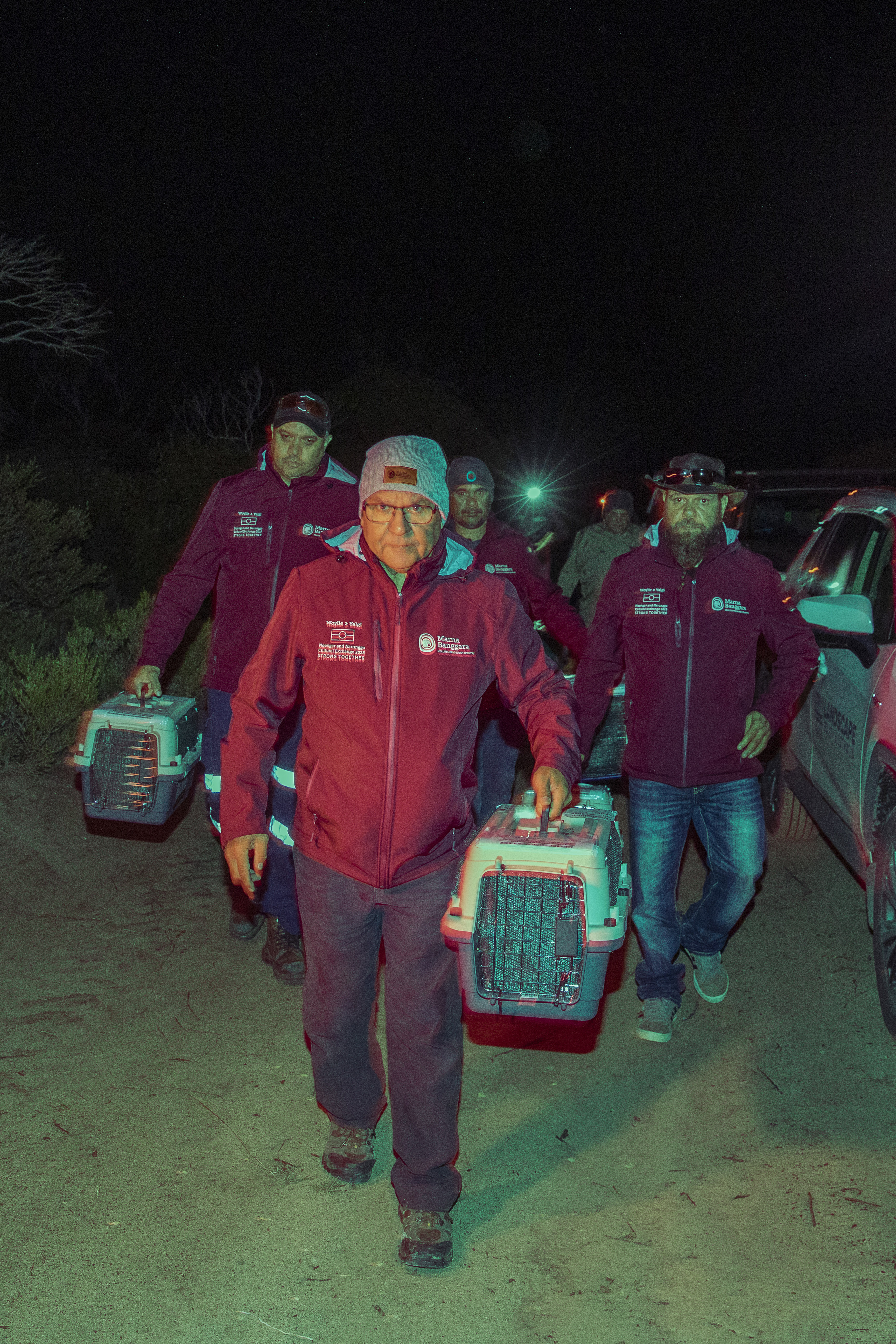
The yalgiri enjoyed an in-flight meal of sweet potato and mushroom before arriving in Adelaide.
Kartinyeri said working with the Noongar people ensured a seamless transition for the yalgiri.
"Working with the Noongar (people) has really brought us together and strengthened our relationship across the border," he said.
"From a personal point of view it's what we as Aboriginal people want to highlight and give to the community.
"That's what is really important for us to move forward as a nation."
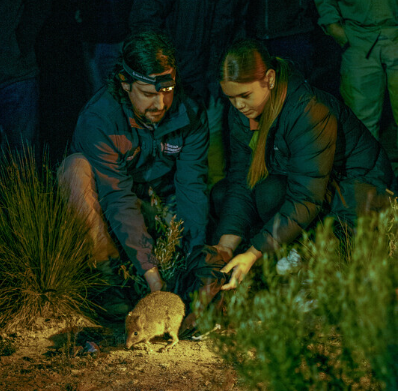
Recent monitoring by WFF saw the yalgiri breeding and thriving in their new home. Almost half of the 85 yalgiri caught by researchers were born on Yorke Peninsula, and nearly every female was carrying pouch young.
Previous releases have included two cohorts of animals from Wedge Island in SA, and one group from the Upper Warren region of WA.
The species was selected as the first to be reintroduced to Yorke Peninsula due to the important role it plays as an ecosystem engineer.
One yalgiri can turn over up to six tonnes of soil per year, which allows native seeds to germinate and disperse.



