


Bunuba woman and longtime justice advocate June Oscar AO spoke with National Indigenous Times this week about her life's work, her memoirs, Reconciliation Week and the journey ahead.
"I come from Fitzroy Crossing in the central Kimberley... I've been living and working in Fitzroy Crossing, and which is where most of my people live," she said.
"I've worked in community services all my life... for women's issues, for community development, for law and language and culture and land in our organisations in the Kimberley.
"In 2017 I moved to Sydney to take up the position of the Aboriginal and Torres Strait Islander Social Justice Commissioner at the Australian Human Rights Commission. After my seven years of occupying that role, I moved to lead the Wiyi Yani U Thangani Institute for First Nations Gender Justice and Equality, housed at the ANU in Canberra, and I have a team of people working with me. We're all living in different parts of the country, but we remain in contact daily and continue the work with women and girls and gender diverse peoples across the country."
Ms Oscar touched on her own journey from Fitzroy Crossing to working for and representing First Nations people nationally and internationally, including at the United Nations.
"Wherever I travel, I carry the voices of all of the women that have influenced and shaped my thinking on the issues that matter for Aboriginal and Torres Strait Islander women and girls and gender diverse people, and I help to convey their messages of truth and the challenges and the solutions they hold to the issues that impact them on a daily basis, which is their lived realities in their communities across Australia," she said.
"I feel those opportunities of being in places such as the UN and at various events and committees I'm able to bring their voices into those spaces and share their stories and to seek opportunities to make connections with others around similar issues, and to be heard and to have people who have influence and authority, and can work with our women and girls in our country to help make those connections."
Ms Oscar said the decision to publish her memoirs came "after much deliberation and convincing".
"Again, the opportunity I saw was to bring the voices of the countless women that have influenced and shaped my life and my thinking, and to have them present, and to remember and honour them," she said.
"These are women that are often not visible and have made invisible by processes and systems, and the ways that others have interacted with Aboriginal and Torre Strait Islander women and girls. So, the memoir, my memoir is an opportunity to bring visibility to those women."
Ms Oscar noted "we all have legacies and stories to share".
"For me it was important that I saw this opportunity (sharing her story) of being not just about the role of Aboriginal and Torre Strait Islander Social Justice Commissioner and bringing the voices of women and girls and gender diverse peoples into those spaces, but to help inform and educate others who have no real understanding of the lived realities of all of our people in our communities," she said.
"If I could position myself as a conduit to helping others understand, so that they make decisions with and alongside of our peoples, that can only be a good thing."
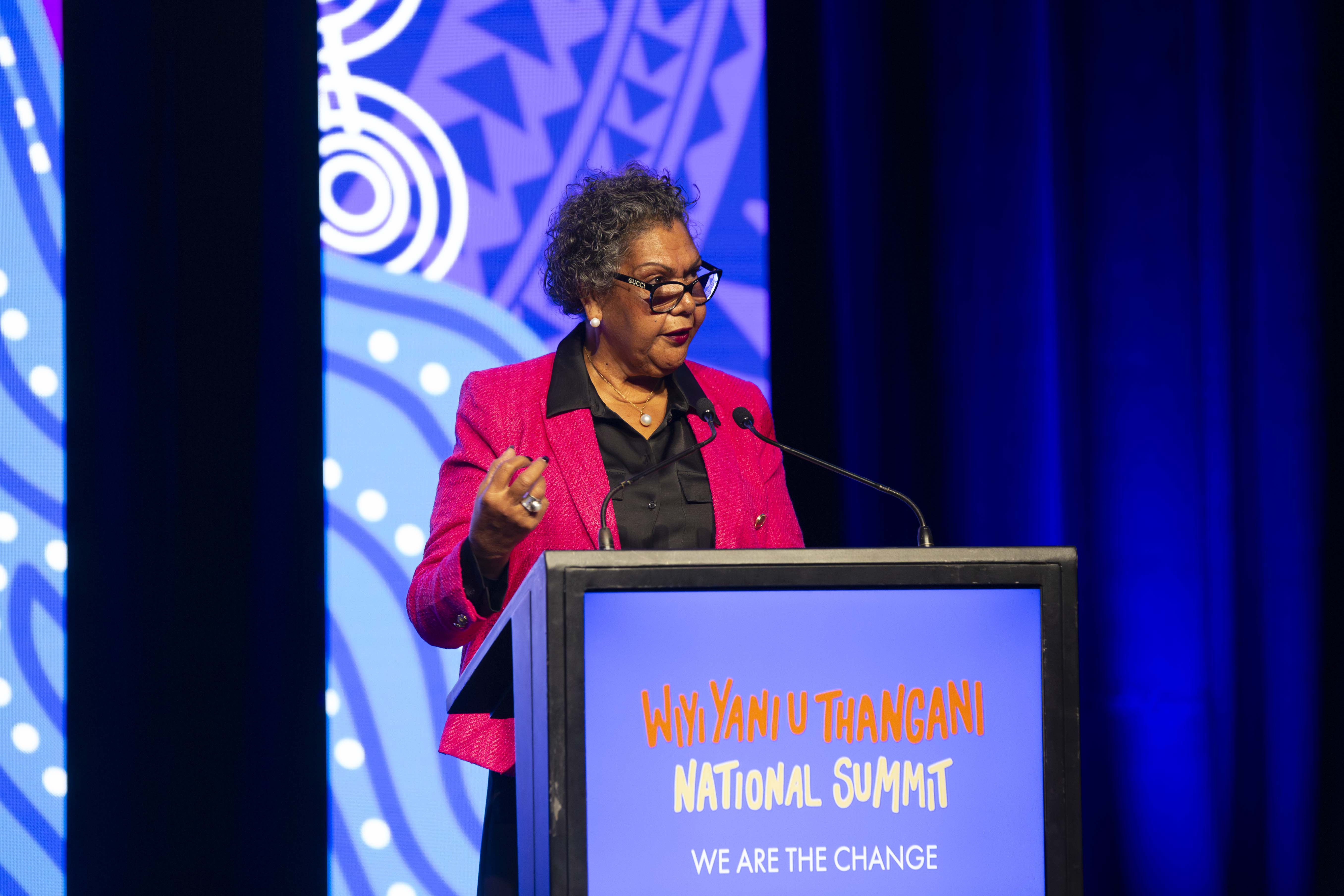
Ms Oscar said she also wanted to help young Indigenous women "to be able to see themselves in this role".
"I'm a community worker, I'm an advocate for the things that matter for us as indigenous peoples, the rights to our languages, the rights to our identity, the rights to our knowledge systems," she said.
"I could help to create spaces where our voices are at the table in designing effective policy and laws that impact us and all of those things that are important to us as indigenous peoples and so I wanted to see those spaces created, and I wanted to make it visible for young people to be able to see themselves in these roles."
On the theme of this year's National Reconciliation Week, 'All In', Ms Oscar described it as "a call to action on all of the things that are important that need to be considered to be heard".
"It is about deep listening and listening to all of the issues that impact us, that we need to give voice to," she said.
"'All in' isn't about being selective around what we want to hear, it's our preparedness to hear all of the issues that we wish to raise and to hear our solutions to those issues."
Ms Oscar noted that it is important voice from across the country are heard, including remote communities.
"There are many stories that regional and remote communities hold around all facets of life, and the experiences of Aboriginal people in our communities, and how the role of our leadership, our cultural authority, and the learnings of young people are ready to engage with others," she said.
"So, the onus is upon those who hold positions of influence to create safe spaces for our people to be sitting at the table and being part of the conversations in designing the solutions to these challenges that impact us, so to see us in our totality and see our strengths and not see us through a deficit lens."



