




A quiet but powerful shift is happening in the heart of Australia, where medicine is being shaped not just by textbooks and training wards, but by culture, community and connection to Country.
Seven third year medical students have arrived in Central Australia to begin their clinical placements through Flinders University's Northern Territory Medical Program, stepping into a model of care that is drawing attention for all the right reasons.
This is not your standard hospital placement.
Here, learning begins long before a stethoscope is lifted. It starts with listening.
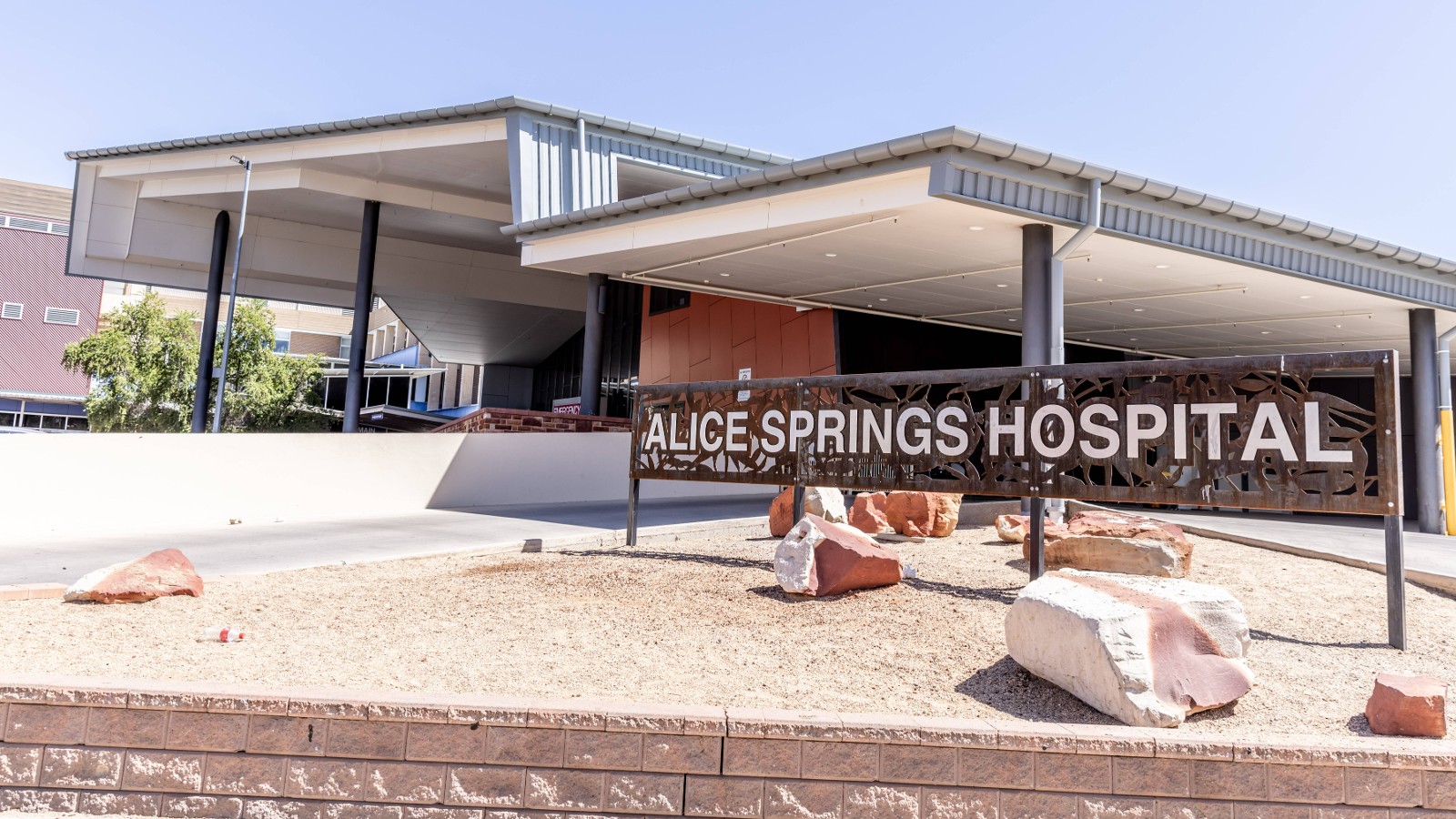
At Alice Springs Hospital, Aboriginal Cultural Coordinator Patrick Torres, a proud man from Utopia in the Sandover region, is helping shape the way future doctors understand care. Alongside Dr Wakinya Tabart, a long standing GP with Central Australian Aboriginal Congress, he is guiding students through cultural education sessions that centre one simple but critical idea. Engage early, and engage properly.
"Early engagement is key to preventing patients taking their own leave from hospital and reducing the risk of serious adverse outcomes," Dr Tabart said.
It is a message grounded in lived experience, and one that speaks to a broader truth across the Northern Territory. Healthcare works best when it works with community, not around it.
For students like Sophie L'Estrange and Tiana James, this approach is more than academic.
"As a Kalkatunga and Wiradjuri woman, I appreciate the importance of these sessions early in my placement," Ms L'Estrange said. "They help me acknowledge the Country I am working on, to pass safely and lightly throughout my time here."
Ms James, a proud Darkinjung woman, sees Central Australia as a place of learning not just clinical skills, but a new way of thinking about care.
"I am particularly interested in placements such as this, which allow me to better understand how health services can work alongside communities, rather than just deliver care," she said.
That shift, from delivering care to walking alongside people, is what makes the Northern Territory model stand out.
Since launching in 2011, the Northern Territory Medical Program has focused on building a workforce from the ground up, investing in local people, local knowledge and local leadership. The results are speaking for themselves.
Out of 251 graduates, 90 per cent are Territorians, many choosing to stay and serve in the communities that raised them.
This year alone, four of the ten new interns at Alice Springs Hospital are graduates of the program, including two who grew up locally. It is a milestone that signals more than workforce growth. It signals continuity, trust and long term change.
Associate Professor Emma Kennedy AM says the program's success lies in its partnerships.
"The program employs local staff and partners to work closely with Aboriginal community leaders, to ensure our students are trained in culturally responsive, community connected care," she said.
Across the Territory, where distance, language and history have long shaped access to healthcare, this model offers something hopeful.
It invites curiosity.
What if the future of medicine is not just about clinical excellence, but cultural understanding?
What if the strongest health systems are the ones built with community, not just for them?
And what happens when young doctors arrive not as experts, but as learners, ready to listen, to respect, and to walk alongside people on their own Country?
In Central Australia, those questions are already being answered.
And the future of healthcare in the Northern Territory is looking stronger because of it.



