


Wealth Generation is a fundamental objective of colonisation, and is primarily generated through the extraction and exploitation of resources away from First Nations people's and concentrated into the hands of settlers and their corporations.
The extraction of resources in Australia is not limited to what can be blasted and dug out of the ground, it can include what grows on top of the traditional lands of Aboriginal people.
Since 1845, West Australian native sandalwood has been a significant resource for colonial governments and corporations— today, It now represents an important opportunity for financial independence for the First Nations people.
Sandalwood has very high economic value, the oils in the wood are in high demand and lots can be priced at $US15,000 to $US17,000 per tonne.
The Aboriginal-owned and run sandalwood industry is gaining momentum with investment from native title communities and enterprises, and WA Government support.
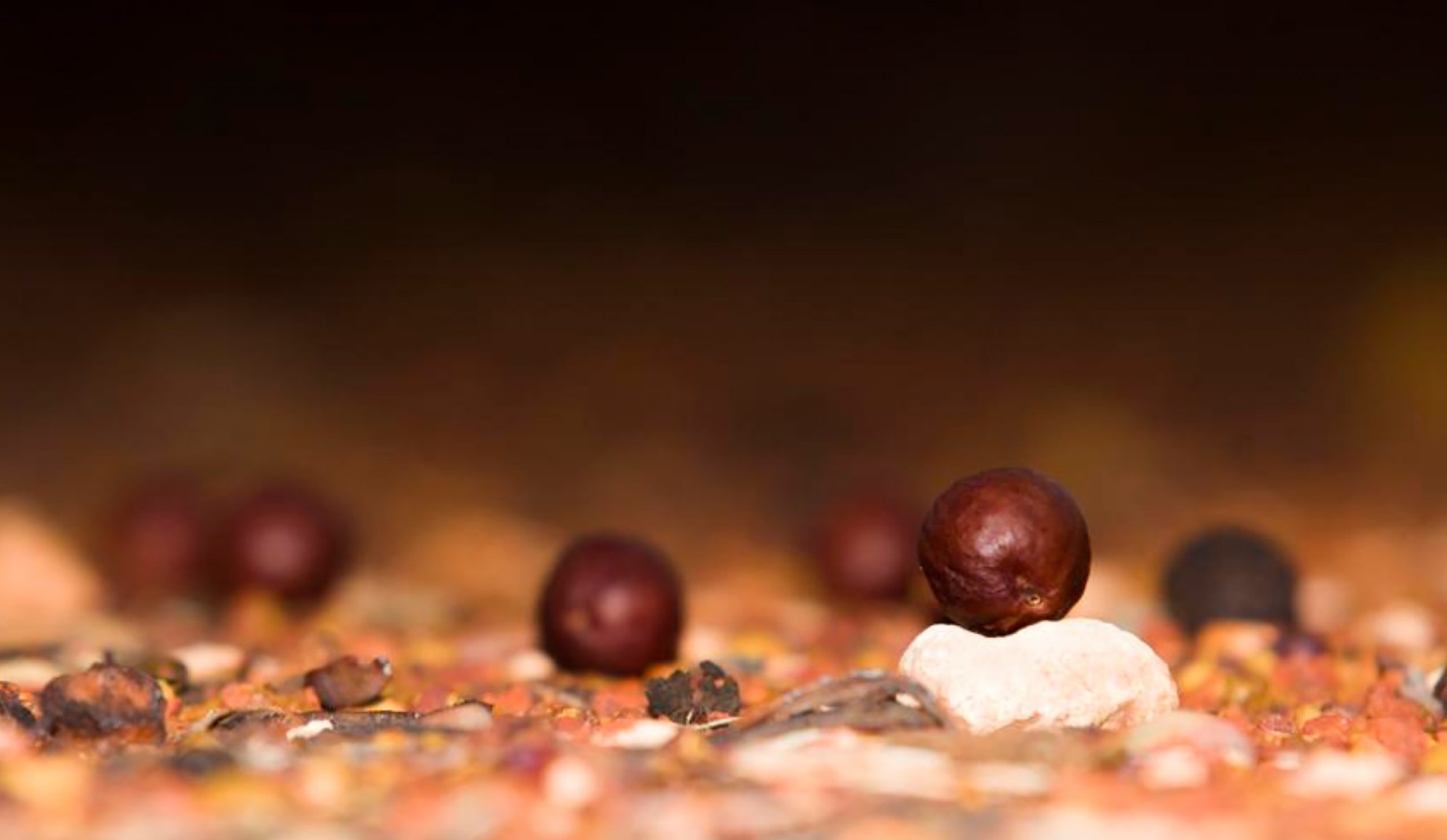 Sandalwood nuts on the ground near Kalgoorlie-Boulder.
There are calls, however, for the industry to shift to plantation grown sandalwood only and to phase-out of wild sandalwood harvesting altogether in WA.
This could severely impact this promising economic development avenue for First Nations communities on sandalwood country.
Colonial settler business and government interests for more than a century have severely depleted sandalwood populations, while in parallel these stakeholders are also investing in plantation sandalwood for further profit.
In contrast, First Nations people are being deprived of the opportunity to derive sustainable income from their lands.
Should these recommendations be followed, this would be in direct contravention of United Nations Declaration of the Rights of Indigenous People —of which Australia is a signatory.
These recommendations do not consider the sustainable sandalwood harvesting practices of traditional custodians of this highly valuable and ecologically significant resource.
Traditionally, wild sandalwood was harvested by Aboriginal custodians within spiritually defined relationships and linkages defined by the Dreaming and as an ecologically significant species offering cultural, food and medicinal properties.
Today, wild sandalwood is also harvested for commercial purposes—such as the production of fragrant oils for use in cosmetics and pharmaceuticals, and timber used in incense.
"First Nations people are being deprived of the opportunity to derive sustainable income from their lands"
The sustainable harvesting and seeding practices of wild sandalwood by First Nations enterprises are recognised and respected internationally and locally. First Nations relationship with sandalwood species is not simply about business, it is also a spiritual and cultural responsibility.
Recognising the sustainable practices of Aboriginal custodianship, the WA Sandalwood Taskforce recommended in 2020 that the annual quota of wild sandalwood harvest for Aboriginal groups be increased from 10 to 20 per cent of the annual wild sandalwood harvest.
Indeed, greater access to harvest already dead sandalwood trees on traditional lands is the ultimate sustainability story and an important value consideration for the end users of sandalwood products—such as emerging ecologically aware markets and consumers.
It has recently been estimated that the population of Australian sandalwood trees has declined by up to 90 per cent since the advent of commercial harvesting.
What is certain is that the wild sandalwood population is dwindling as a direct result of non-Aboriginal commercial harvesting.
In addition, colonial forms of agriculture have resulted in the unintended consequences for the ecosystems that sandalwood trees exist within.
Non-Aboriginal harvesting and illegal poaching has led to major vulnerability of wild sandalwood resulting in calls to restrict the harvesting of sandalwood to plantation-grown only, thus halting all wild harvest and effectively reducing the allocation afforded to Aboriginal communities to zero. It was also recently declared an endangered species by the International Union for Conservation of Nature.
While on the surface this may seem to be an apt response to this ecological crisis, we argue this response reflects age-old colonial settler inherent biases and tactics of unsustainable wealth extraction of natural resources, without reference to or respect for the sustainable harvesting and seeding methods practiced by First Nations Aboriginal communities—who are the custodians of these wild-growth sandalwood trees.
First Nations communities within the WA regions on whose lands wild sandalwood has grown, prospered, and been sustainably harvested for millennia, are also amongst the most economically impoverished in Australia.
In the shifting of all sandalwood harvesting from wild to plantation grown populations, largely non-Aboriginal interests are to benefit from the extraction of this resource, while for Aboriginal enterprises and communities this avenue for sustainable socio-economic benefit is being removed altogether.
Under Aboriginal custodianship, sandalwood thrived for thousands of years prior to European colonisation and exploitation of the tree population by non-Aboriginal interests.
Traditional Owners and native title holders argue that custodianship, development and management of wild sandalwood trees must be ceded to First Nations people for whom these trees are growing wild on their traditional lands.
- Kado Muir is a traditional owner and native title holder with interests in sustainable sandalwood business.



