


After 25 plus years of spending the Christmas holidays in the hot humid north of WA we decided to change things up and head to the cool climate of the far southwest coast.
Our destination was Nornalup (in Noongar language meaning place of the tiger snake) on the banks of the Frankland River/Kwakoorilup, amidst the giant tingles.
These extraordinary tingle forests in Bibbulman/Menang country, have been in the media spotlight in recent years with prescribed burns by the WA government's Department of Biodiversity, Conservation and Attractions (DBCA) destroying peat swamps and razing ancient trees.
In December, a tree top vigil was instrumental in DBCA abandoning plans to burn three parcels of tingle forest, albeit temporarily.
Being the wettest part of southern Western Australia the Walpole Nornalup Wilderness Area is a treasure trove of biodiversity and natural beauty encompassing the Mt Frankland (Caldyanup), Mt Roe and Walpole Nornalup National Parks. I was keen to explore from the mountains to the coast and learn a little about its flora and fauna, especially the edible kind.
My first foray was on one of the many easily accessed walk trails up steep paths through red tingles (Eucalyptus jacksonii). It was easy to pick out Djiriji (Macrozamia riedlei) the zamia palm, with large bright green leaves reminiscent of palm fronds. The bright red fruit of this plant (as are all seeds of the cycad family) are poisonous and require extensive preparation before it is edible, something early European explorers learnt the hard way.
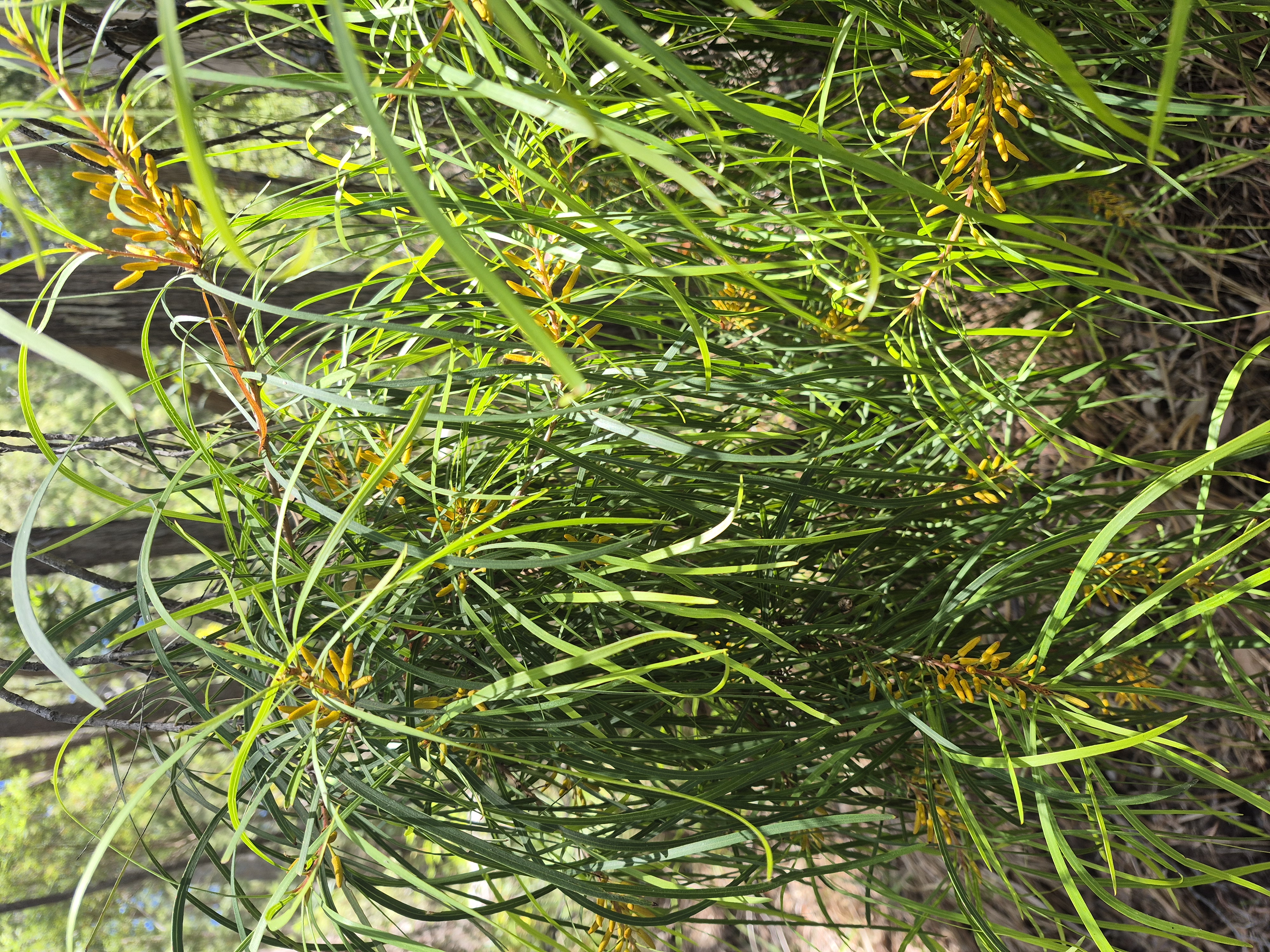
Another understory shrub I recognized by its dark flakey bark and bright yellow flowers was Persoonia longifolia known in noongar as moolyanook. It had a similar look to Persoonia falcata found across the top end of Australia. The ripe fruit of moolyanook has a soft gooey texture and a sweet flavour, again a similarity it shares with its northern cousin, the fruit which tastes a little like custard.
Another hike we embarked upon led us into an area known as the Nuyts Wilderness. We descended Mt Clare, across a swinging bridge over the Deep River and onto the coast at Aldridge Cove. After passing through tingle and karri forest we moved into peppermint woodland and heathland. Crushing the leaves of these coastal plants released some extraordinary smells, especially those in the myrtle family.
Down the coastal track leading us to the beach we spied karkalla, Carpobrotus virescens or coastal pigface covered in fruit. The fleshy fruits, the size of grapes were full and juicy and reminiscent of kiwi fruit with a delicious salty aftertaste. Growing nearby and being peppered by salt spray from the wild waves was a plant I'd never come across before, Apium prostratum. Found along the southern coastline of Australia and throughout New Zealand, sea parsley it is reputably a great addition to freshly caught whiting cooked on the coals.
With another couple of weeks before I head home, I'm looking forward to diving further into the knowledge of traditional owners of this truly remarkable area and I recommend if you get the chance, do it too. Boorda- wan.



