




100 remote community stores now part of federal scheme cutting cost of essentials
The federal government has reached a milestone in its efforts to improve food security in remote communities, with 100 stores now enrolled in the Low-Cost Essentials Subsidy Scheme.
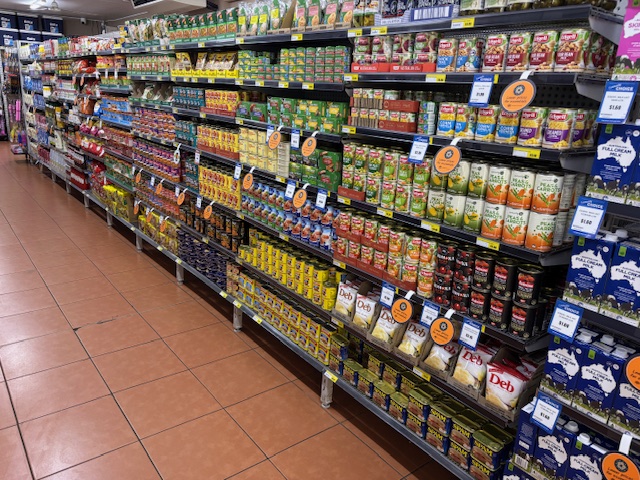
Announced in February, the subsidy reduces the cost of 30 staple items — including fresh and canned produce, nappies and toilet paper — bringing them closer to city prices. The scheme also funds warehouse upgrades to strengthen fragile supply chains.
Minister for Indigenous Australians, Malarndirri McCarthy, said the milestone means Indigenous families in remote communities across WA, the NT, Queensland and South Australia are paying fairer prices for essentials.
"Communities are telling us there is less stress at the checkout and more food on the table," she said.
The government estimates remote consumers are saving up to 50 per cent on these items. The scheme is overseen by the National Indigenous Australians Agency and implemented by the not-for-profit Commonwealth company Outback Stores.
The latest rollout covers 100 stores nationwide — from Wirrimanu to Lajamanu, Indulkana and Boigu Island — giving more communities access to cheaper groceries and household staples.
Special Envoy for Remote Communities and Member for Lingiari, Marion Scrymgour, said the government is acting on cost-of-living pressures for remote residents.
"Having 100 stores signed up to the Low-Cost Essentials Subsidy Scheme means more families can access items that they need in their everyday lives at a lower cost," she said.
"I welcome this investment into remote Australia and look forward to more stores signing up to this valuable programme."
To participate, stores must sign up to the new National Code of Practice for Remote Store Operations, which sets minimum standards for governance, operations and health outcomes. Once approved, stores can order from the list of 30 subsidised items.
"We're seeing families able to stretch their budgets further, and that's making a real difference. This is about dignity, fairness and better health outcomes for remote communities," Senator McCarthy said.
"For remote stores that haven't yet submitted an application, I encourage you to apply to join our Low-Cost Essentials Subsidy Scheme, so your community can also benefit."
Arnhem Land Progress Aboriginal Corporation (ALPA) Deputy Chair Don Wininba said lower prices were making a practical difference.
"The way I've been looking at the two ALPA shops in Galiwin'ku, it's good to have lower prices because people can save to afford bigger things like washing machines, dryers," he said.
Community Enterprise Queensland (CEQ) CEO Michael Dykes said customer feedback showed the subsidy was already easing some of the cost-of-living pressures in remote Far North Queensland.
"It's a strong step towards improving food security and aligns with CEQ's ongoing commitment to caring for our communities every day, through access to affordable, healthy food," he said.
Earlier this year, the government also launched a 10-year National Strategy on food security in remote First Nations communities and secured state and territory support for a national food pricing code. Ministers have highlighted the link between poor nutrition and issues disproportionately affecting Indigenous Australians, such as cost-of-living pressures and high rates of renal disease.
Senator McCarthy recently told National Indigenous Times she wanted to see 100 nutrition workers based in stores to help customers make healthier choices.
"They have to be based around food," she said. "It's about awareness in language; making it understandable about what foods are healthy for you, what foods are not; what's the better choice.
"So, these nutrition workers are also about assisting. If you do have Mob who come in with kidney dialysis issues or with heart issues, they have a sense of how they can guide customers as well."
Signage at stores will highlight discounted products to ensure shoppers are aware of price reductions.
"They do have to be informed," Senator McCarthy said. "Because if people haven't seen the difference [in price], there'll still be an assumption that the price is still high."
More information on the scheme and a full list of discounted items can be found online.



