




The federal government's growing focus on food security in remote communities is based on an understanding that many issues disproportionately impacting Indigenous Australians — from cost-of-living pressures to high rates of renal disease — are linked to poor nutrition, Minister for Indigenous Australians Malarndirri McCarthy says.
Speaking to National Indigenous Times as the government announced the next round of remote community stores to receive cheaper groceries, Senator McCarthy said food insecurity underpinned many of the challenges facing First Nations communities.
"At the core of many of our issues, not just with the cost-of-living, but with high rates of renal disease and diabetes...stems down to good food and healthy eating," she said.
"But, if prices are so high, no one is going to buy those good foods."
The federal subsidy scheme, first announced in February, reduces the price of 30 staple items in remote community stores — from fresh and canned produce to nappies and toilet paper — bringing them closer to city prices. Warehouse upgrades are also included to strengthen fragile supply chains.
The program is overseen by the National Indigenous Australians Agency and implemented by not-for-profit Commonwealth company Outback Stores.
Senator McCarthy said signage will highlight discounted products so shoppers can clearly see the price reductions.
"They do have to be informed," she said. "Because if people haven't seen the difference [in price], there'll still be an assumption that the price is still high."

Queensland stores to be supported
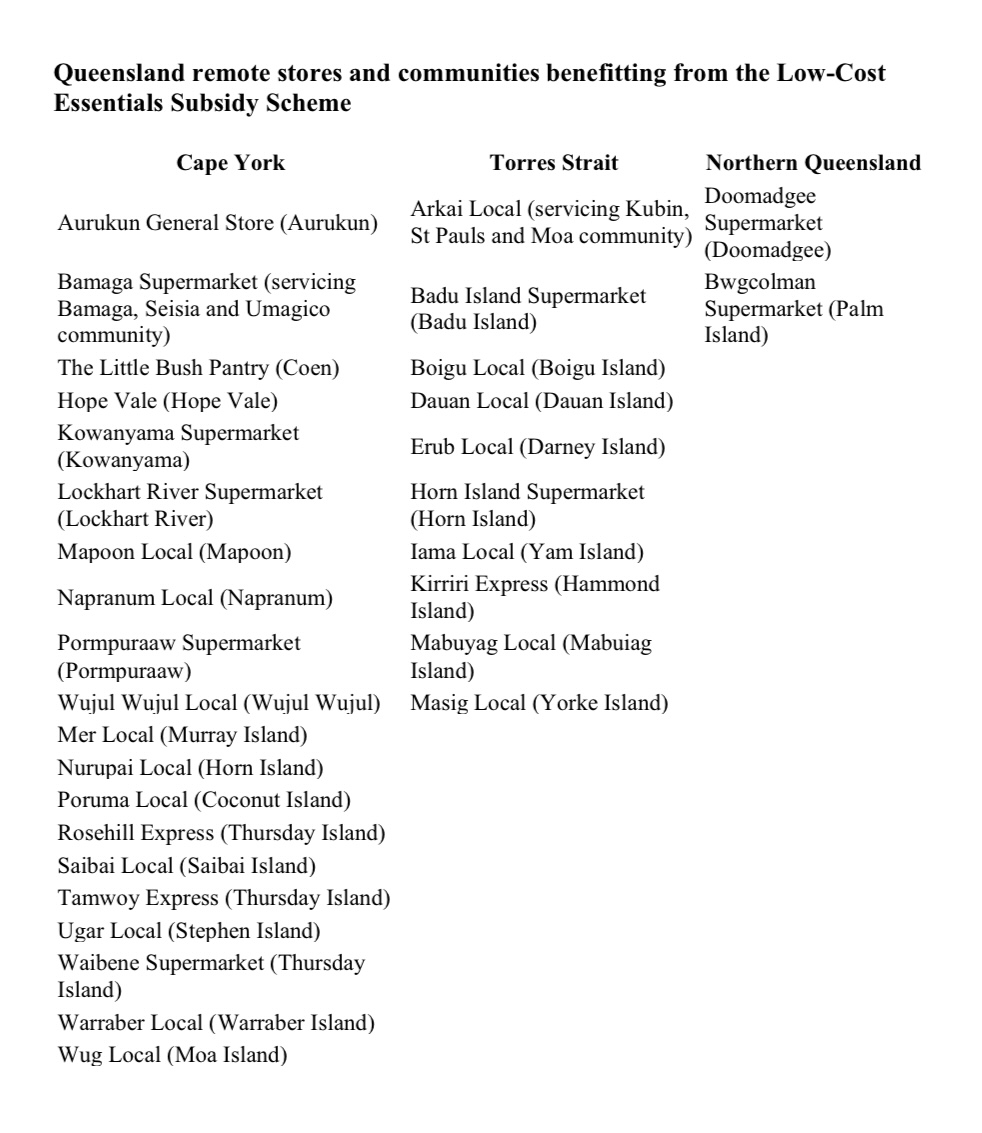
On Thursday, the program announced an additional 32 stores across Cape York, the Torres Strait Islands and far-north Queensland would be included, with the government's special envoy for remote communities, Marion Scrymgour, saying: "People in remote communities deserve to access reasonably priced groceries.
"Our government is committed to ensuring that whether you live in the big cities or out bush, you can access food and other essentials at an affordable cost."
The government estimates some items will be up to 50 per cent cheaper, with the Queensland stores taking in Doomadgee in the west to Palm Island in the east, and from Pormpuraaw in Cape York to Boigu Island in the Torres Strait.
Assistant Minister for Northern Australia Nita Green said remoteness should not dictate affordability.
"Living in remote communities shouldn't mean paying extreme prices for everyday items that would only cost a fraction of the price in the city," she said.
"This is real relief. By bringing down the costs of veggies, nappies, rice and so many other essential items, we are making life easier for First Nations communities."
Community Enterprise Queensland (CEQ) Chairperson, Joann Schmider, said they have been quick to implement the scheme across their network, noting, "we take responsibility for ensuring this support is real and immediate".
"We are proud to bring this scheme into our stores because by easing these pressures and ensuring access to affordable, healthier everyday staples, we stand alongside families in remote communities – building stronger, healthier futures," she said.
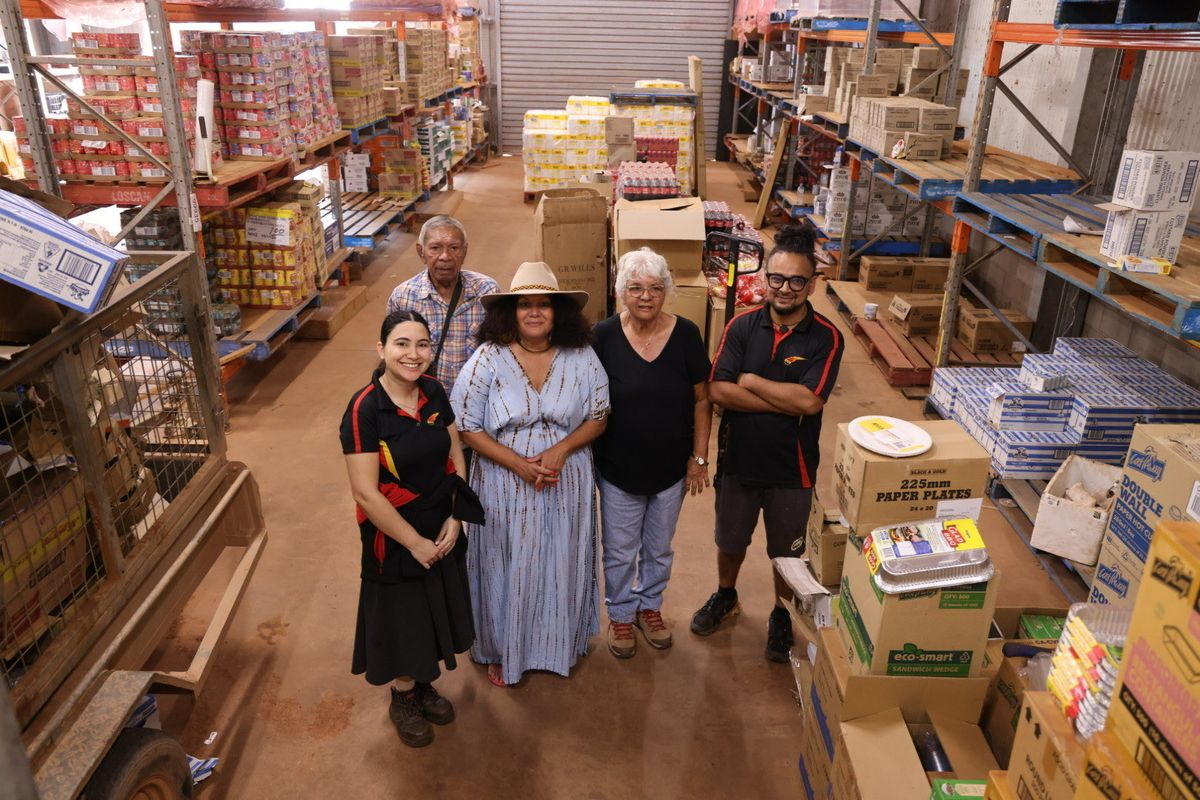
Food subsidy work
Since taking on the Assistant Indigenous Affairs portfolio in 2022, Senator McCarthy says she has prioritised food security, including refrigeration upgrades for communities isolated by long wet seasons.
Earlier this year, the government launched a 10-year National Strategy on food security in remote First Nations communities and secured state and territory support for a national code on food pricing.
"I needed the states and territories to be on board with me so that it was a collective approach to wanting to reduce the costs of food, and I was very pleased with that," she said.
To take part in the scheme, remote stores must sign up to the new National Code of Practice for Remote Store Operations, which sets minimum standards to strengthen governance, day-to-day operations and health outcomes.
"Stores who want to apply need to sign up to the national code, and that national code includes governance issues," Ms McCarthy says.
"The stores have to be properly governed. You cannot have stores that are not reaching their financial audits and not having accountability.
"It was also about health in terms of making sure there's healthy foods and all of those things. And, it was also about employment, so that we could also employ local people in these stores.
"I want jobs for our mob."
Senator McCarthy says she also wants to see 100 nutrition workers employed in stores to help customers make healthier choices.
"They have to be based around food," she said. "It's about awareness in language; making it understandable about what foods are healthy for you, what foods are not; what's the better choice.
"So, these nutrition workers are also about assisting. If you do have Mob who come in with kidney dialysis issues or with heart issues, they have a sense of how they can guide customers as well."
Next steps
The Minister said she intends to work with the Coalition of Peaks to develop stronger data collection, so the program's effectiveness can be measured beyond anecdotal reports.
"We want to make sure that with these new policies we're rolling out to improve people's lives, we have to be able to monitor it," she said. "So that will be the next step now."
With food insecurity driving preventable disease, poor health outcomes and financial stress, the government's strong focus on cutting grocery prices in remote communities is already seeing anecdotal evidence of success and support.
It now remains to be seen if it will also deliver practical, measurable improvements where many Closing the Gap efforts have faltered.
More information on the scheme and a full list of discounted items can be found online.



