




The closure of two prisons in Victoria has been welcomed by justice advocates, with the state's peak Indigenous legal organisation arguing the sites should be "recommissioned and decolonised".
On Wednesday, Minister for Corrections Enver Erdogan announced reforms to the men's prison system, which includes the closure of the 1,087 capacity Port Phillip Prison, in Melbourne's west, and Dhurringile Prison, near Shepparton.
Inmates from the maximum security and privately run Port Phillip facility will be progressively transferred to the government-operated Western Plains Prison in Lara, near Geelong, from the middle of next year.
It means the state's maximum-security prison will be run by the government for the first time in 30 years.
The Victorian Aboriginal Legal Service (VALS) said the announcement was significant as it came with no more prisons being built; the 1,200 capacity Western Plains facility has sat empty since it was built in 2022 at a cost of $1.1 billion.
The organisation said the transition of currently incarcerated inmates to a government-run facility would result in safer conditions — "including access to adequate and culturally appropriate healthcare".
The government acknowledged this in a statement, arguing the new Western Plains facility would ensure "better oversight and a high standard of care".
VALS chief executive Nerita Waight said it was a "significant day for our communities" and argued prisons didn't rehabilitate, but rather "traumatise and harm people which in turns poses greater risk to community safety".
"Privately run, profit-driven prisons are extremely unsafe places for our people. A prison sentence shouldn't be a death sentence, and our peoples' lives are not something to profit from," she said.
"We have lost so many of our community members due to these places of significant harm and torture. We hold their names in our hearts and will continue to advocate for justice in their memory."
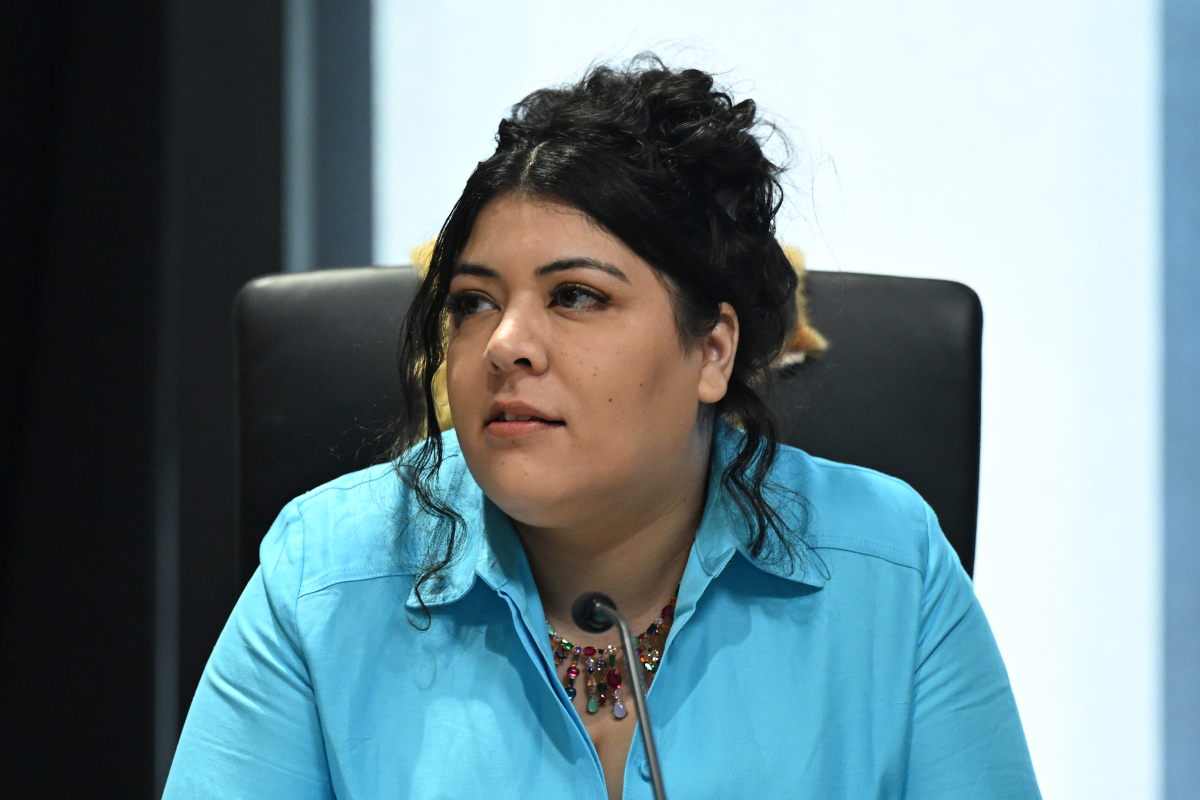
Principal managing lawyer of VALS' Police and Prison Accountability Wirraway Practice, Sarah Schwartz, said the organisation was currently representing five Aboriginal families who have lost loved ones in Victoria's prisons.
"We have represented clients who have been cruelly detained in conditions of solitary confinement and have suffered abuse and neglect at Port Phillip Prison," Ms Schwartz said.
"Prisons are fundamentally dangerous for Aboriginal and Torres Strait Islander people and do not create community safety. We must move towards different ways of addressing harm, this must be led by Aboriginal and Torres Strait Islander peoples."
VALS called for the healthcare for Aboriginal and/or Torres Strait Islander people at Western Plains Prison to be delivered by Aboriginal community-controlled organisations (ACCHOs), including "holistic cultural support programs".
"The Allan government has made the right call, now this needs to be backed up with investment in Aboriginal-led, self-determined early intervention and community-based supports that rehabilitate and heal," Ms Waight said.
"To ensure that all places of detention are safe and do not cause harm the Victorian Government must establish an independent oversight body to protect and uphold the rights of people in prison.
"We must develop an oversight system that is informed by best practice and meets the standards set out in the Optional Protocol to the Convention Against Torture (OPCAT)."
Australia has ratified the convention, which requires all signatories to establish independent inspection bodies to monitor detention facilities, known as National Preventive Mechanisms (NPMs), but Victoria, along with NSW and Queensland, are yet to implement these reforms.
Ms Waight said the country "lags behind in our implementation of independent detention oversight," arguing it was an opportunity for Victoria to "lead the way for Australian states and territories".
Former Victorian Ombudsman Deborah Glass slammed the government in March for the lack of compliance with OPCAT, labelling it "one of the laggard states," and arguing numerous reports by her office on the UN agreement had been "widely praised by the human rights community," but mostly "ignored by the government".
VACRO welcomed the decision to close the privately-run facility at Port Phillip and called for the continual closure of all private prisons in the country.
"Our practice experience is that private prisons are extremely low in transparency and accountability, and poor at information-sharing," VACRO said in a statement issued Wednesday.
"This severely restricts the capacity of Parliament and the public to hold government to account for the operation of these prisons."
Victoria still has two privately-run prisons: Fulham and Ravenhall, and Mr Erdogan said they would continue to operate.
Other state governments' have looked to move away from private prisons, with WA's 2019 decision to acquire Melaleuca prison meaning there is only one privately-run facility in the state, whilst last year, NSW announced it would not renew the contract for the private Junee prison.



