




Warning: Aboriginal and Torres Strait Islander readers are advised that this article contains the names and images of Indigenous people who have died.
A year on from Northern Territory Coroner Elisabeth Armitage's landmark findings on the killings of four Aboriginal women by their partners, renewed calls are being made for urgent action to protect women and children.
Judge Armitage examined the violent deaths of Kumarn Rubuntja, Kumanjayi Haywood, Ngeygo Ragurrk and Miss Yunupingu — four of at least 83 Indigenous women killed by partners in the NT since 2000. All had previously reported domestic violence to police.
The coroner described their deaths as part of a "plague" of domestic violence homicides that had contributed to a "national shame", and issued 35 recommendations aimed at tackling the crisis.
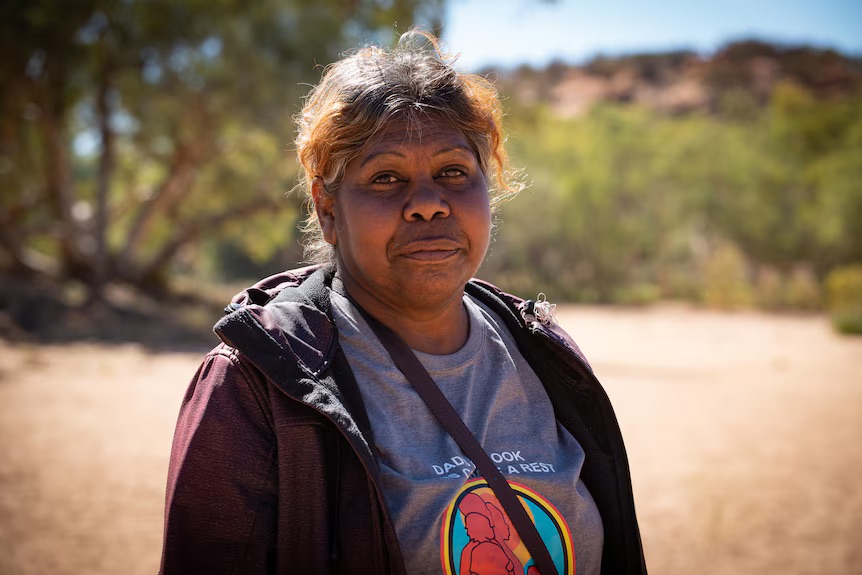
The Territory government released its response eight months later, with NT Domestic Violence Prevention Minister Robyn Cahill saying Judge Armitage's findings were "uninspiring" and failed to hit the mark.
The Minister argued the coroner was not "brave enough" to make recommendations about Aboriginal culture, despite findings in the report about cultural pressure being used as coercive control. She said addressing this could have helped "to empower communities to take a stand on this very sensitive and challenging issue".
Ms Cahill also criticised the inquest as "protracted" and resulting in "lengthy reports delivered in a manner seeming to lack the humility one might expect from an officer of the court".
On Tuesday — one year after the findings — the Aboriginal Medical Services Alliance of the Northern Territory (AMSANT) renewed calls for urgent reforms in the domestic, family and sexual violence (DFSV) system.
Since the inquest, at least five more Aboriginal women have allegedly been killed by partners in the NT. The Territory has the highest rate of DFSV in the world, with 74 per cent of hospitalisations for Indigenous people due to assault linked to family violence.
First Nations women are seven times more likely to die from intimate partner homicide than Australian women overall. Of the at least 476 First Nations women killed since 1989, a third were Territorian, according to a report by the Australian Institute of Criminology.
.jpeg)
AMSANT Chair Rob McPhee said domestic violence affects the entire Territory, with Aboriginal women "bearing the heaviest and most devastating impacts".
"Every woman and child deserves to be safe," he said. "We wouldn't accept this level of violence anywhere else. We must create the conditions that stop it from happening at all."
The NT Government said it would fully support 21 of the coroner's recommendations, accept 11 in principle, and reject three; including the creation of a DFSV peak body. The NT remains the only Australian jurisdiction without one.
"It is only the Northern Territory, which experiences the highest rates of domestic violence in the country, that does not have a peak body," Judge Armitage said last year.
At the time, Family and Sexual Violence Commissioner Micaela Cronin called a peak body "a powerfully important tool", saying it would allow the sector to "speak as one voice" and help government respond more effectively.
Community services say key gaps remain unaddressed
In July, a coalition of community services criticised the government's response, saying major gaps remained — including the absence of a Territory-wide workforce strategy, long-term indexed funding, a coordinated plan across housing, justice, health and child protection, and dedicated resourcing for Aboriginal-led solutions.
Judge Armitage stressed the four women were not invisible to the system, but had been catastrophically failed by it. A year on, Mr McPhee says "we must collectively hold ourselves accountable".
"This means every organisation, every sector, every partner — including government — playing their part," he said. "But meaningful change will only happen if Aboriginal-led solutions are at the heart of the response. We are standing together as the ACCO sector, alongside DFSV services in the NT, to drive change collectively."
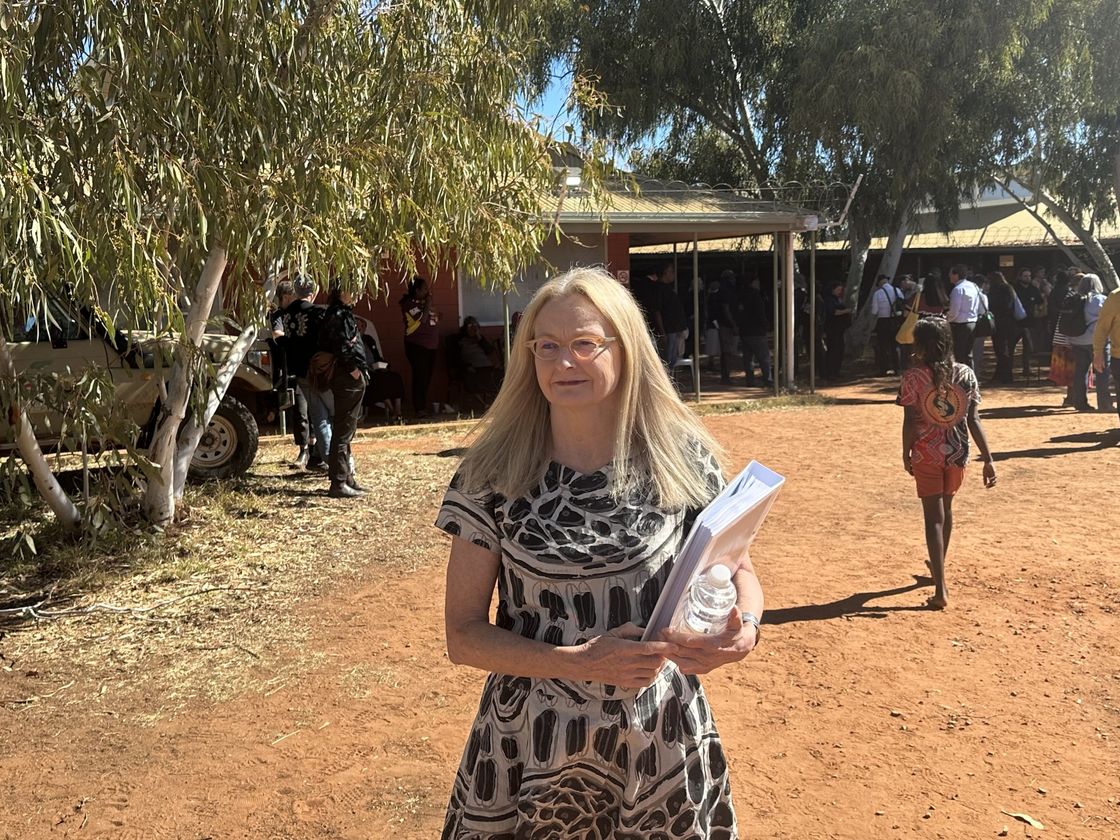
The government has pointed to a record $36 million annual investment in DFSV services, but argued only a "small proportion" of recommendations would lead to "the implementation of a new and innovative approach". In July, Ms Cahill said "extensive consultation" found 24 of Judge Armitage's 35 recommendations related to programs already in place.
Despite the coroner's view that few of her recommendations were "radical," Ms Cahill added: "Some of these measures have been in place for years without delivering the results we need."
Mr McPhee argued that accepting recommendations in principle does not translate into change on the ground, saying the "real investment" recommended by the coroner is urgently needed.
"Our duty of care is to ensure no woman's cries for help go unheard again," he said.
"When we avoid the truths about harm of the past, we keep misdiagnosing the present. As ACCOs and DFSV organisations, we are standing together to advocate, to lead, and to ensure the voices of Aboriginal women, families and communities shape the solutions. If we stand together — and are resourced to do even more — we will be stronger, and the Territory will be safer."
1800 RESPECT (1800 737 732)
Lifeline 13 11 14
Men's Referral Service 1300 766 491
13YARN 13 92 76



