




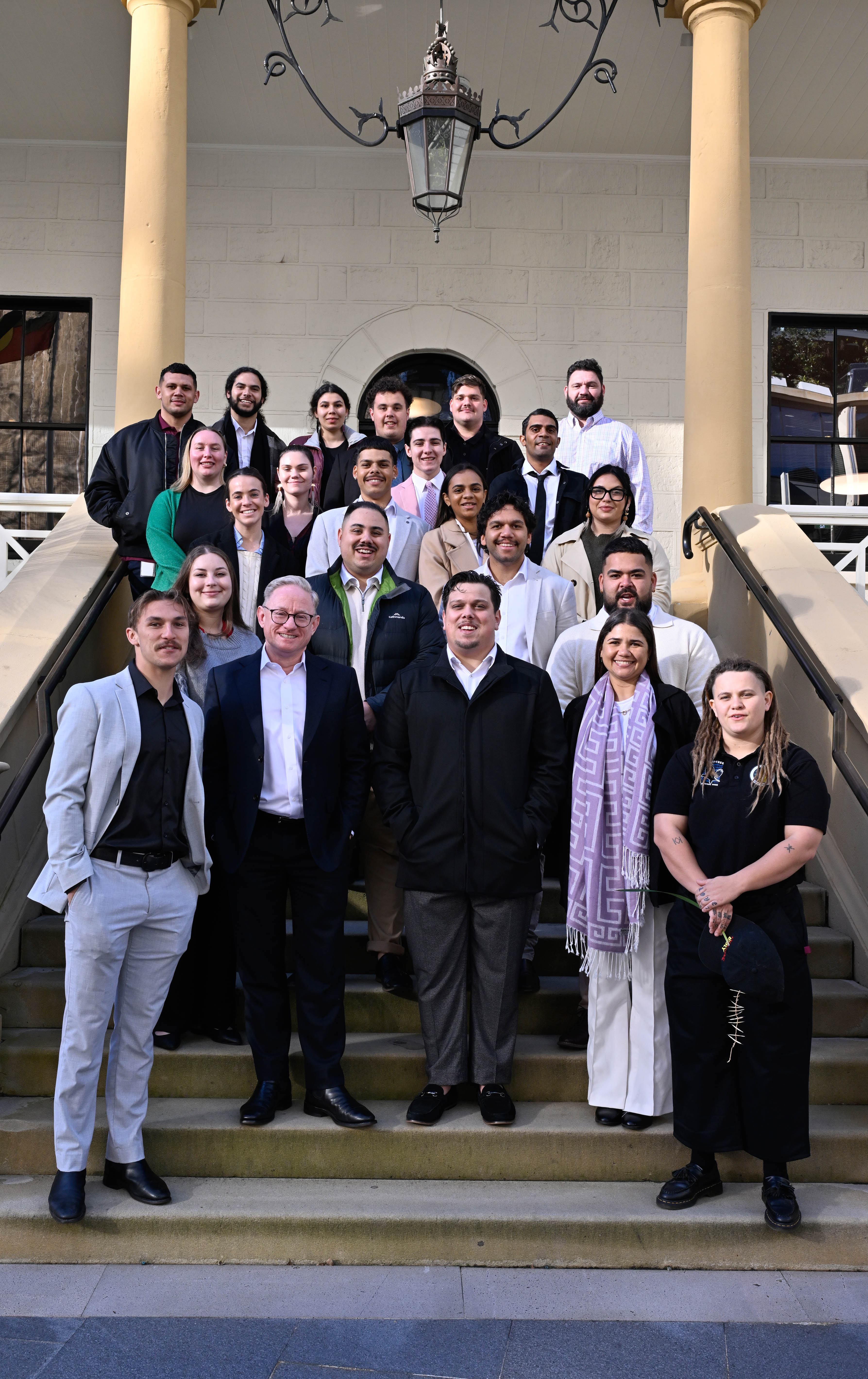
In a step towards greater First Nations representation and political empowerment, the NSW Parliament recently introduced its first-ever Young Aboriginal Leaders Program, uniting aspiring young Indigenous leaders from June 17 to 20 in Sydney.
Held at Parliament House, the program brought together selected Aboriginal and Torres Strait Islander Australians aged 18 to 25 from across NSW. Welcomed by the Parliament's Aboriginal Engagement team, led by Joe Stewart and Damon Goolagong, participants engaged in leadership training, learnt about parliamentary processes and real-world policy case studies, and connected with established Aboriginal leaders.
Among the young leaders selected were proud Gamilaraay and Ngiyampaa man, Jayden Kitchener-Waters, and proud Wiradjuri woman, Eliza Darney.
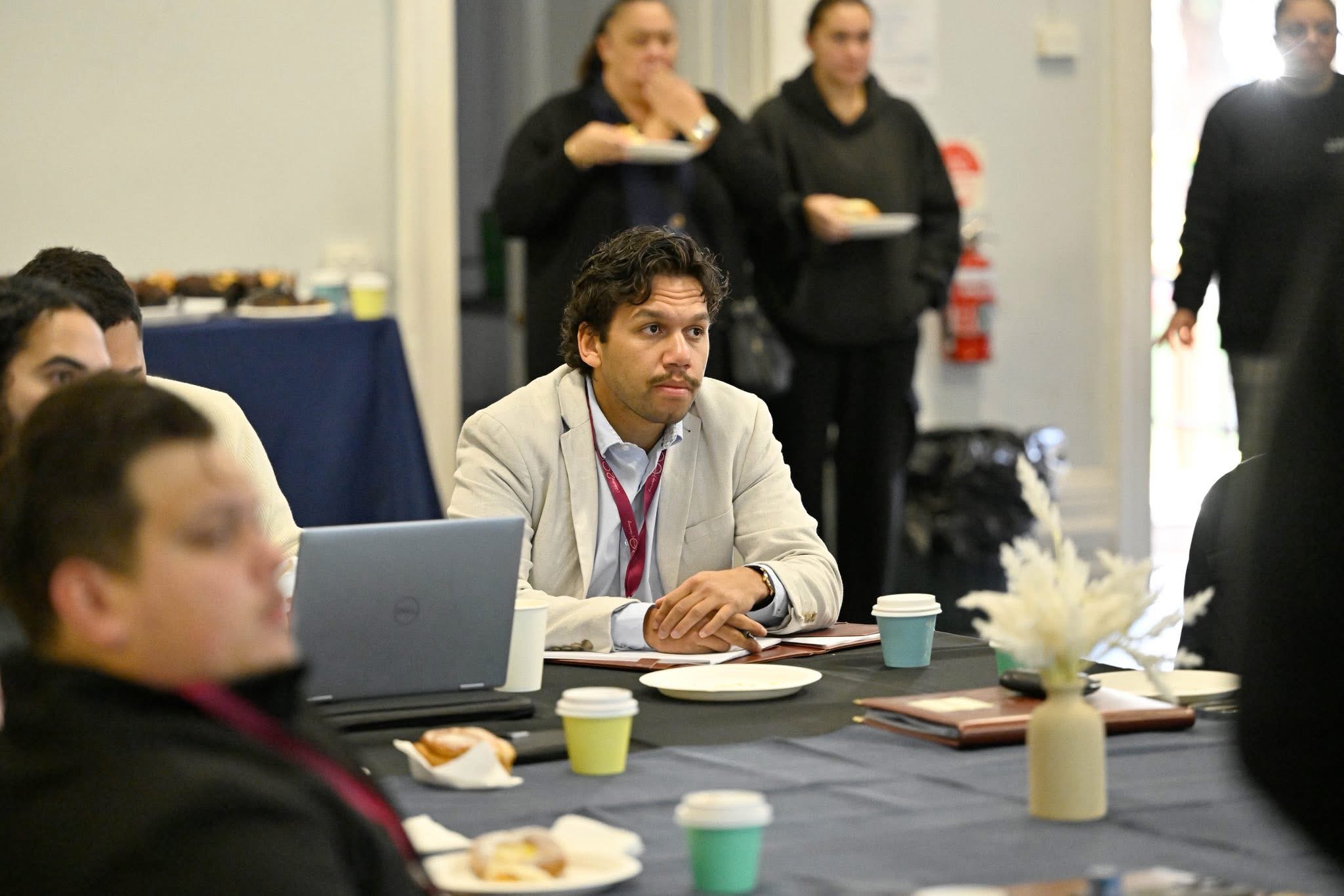
Mr Kitchener-Waters, 24, is a Community Engagement Officer at the NSW Aboriginal Languages Trust and a founding director of Gambadul Aboriginal Corporation - an organisation focusing on revitalising the Gomeroi language and celebrating Gomeroi language, people and culture.
"The work that I do is very much related to uplifting Aboriginal people across New South Wales, whether that is through language or access to country or culture," he said.
"I'm really invested in building up our communities so that we're self-sustainable and have more ownership over our own affairs."
When reflecting on the program, Mr Kitchener-Waters described it as "incredible".
"It was humbling. I was so lucky to be in a room with so many incredible young people that are doing so much for their communities, and in terms of access to all of the resources and people in Parliament, it was just good to get that understanding around how much say we actually do have in our own affairs."
Speaking on the historic lack of First Nations representation in politics, Mr Kitchener-Waters said:
"I think Lidia Thorpe said it best: you don't know what you don't see…Obviously, there have been trailblazers - the Pat Dodsons, the Lidia Thorpes, the Malarndirri McCarthys - who we look up to but are only one voice."
"I think it's important for us to see that this is a genuine, possible career path for our people, and that we need to have more of our people in those kinds of institutions, in Parliament, in those buildings."
His aspirations for increased political representation reflect his heartfelt drive to empower Indigenous Australians through his work.
"I want our Aboriginal communities to be strong and proud in who they are and not have to feel any shame or embarrassment when walking around the main street of their town speaking their language," he said.
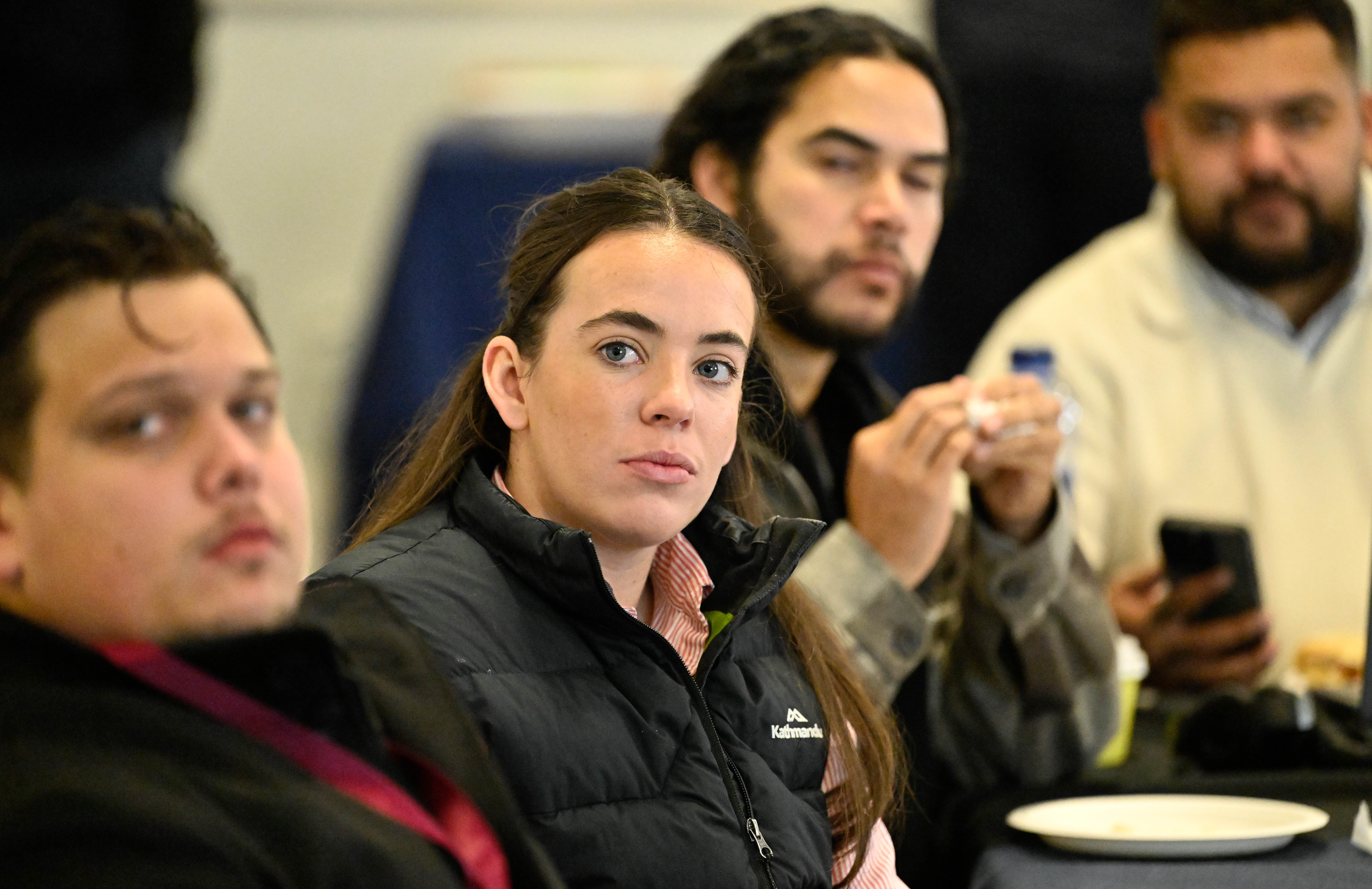
Ms Darney, a fourth-year medical student at the University of Newcastle, brought a different but equally powerful focus to the program: improving health outcomes for Aboriginal communities by promoting culturally safe care.
"The major thing that I've talked about the whole week I was there at Parliament, and is what is the forefront of me doing medicine in general, is advocating to remove a deficit model of care that has been slightly embedded into our healthcare system, in particular with our Indigenous population," she said.
"What I want to strive to do is ensure positive, empowering health outcomes and drive a directional change for like a supportive, educative empowerment ability for patients to direct their own care.
Inspired by her own experiences of chronic disease in the family at a young age, she hopes that her work will encourage greater Indigenous representation in education
"The impact that I want to have through my work is the ability for Indigenous females and males to have access to engaging in a medical degree, as well as engaging in education and higher education, whether that be medicine, whether that be teaching, pharmacy, nursing, or exercise sports science," she said.
"I want to show that no matter where you come from, you have the ability to make change and access education."
When speaking on her experience at Parliament, Ms Darney was overwhelmingly positive.
"I walked out with confidence and strength with who I'm walking beside and the young leaders we have in communities," she said.
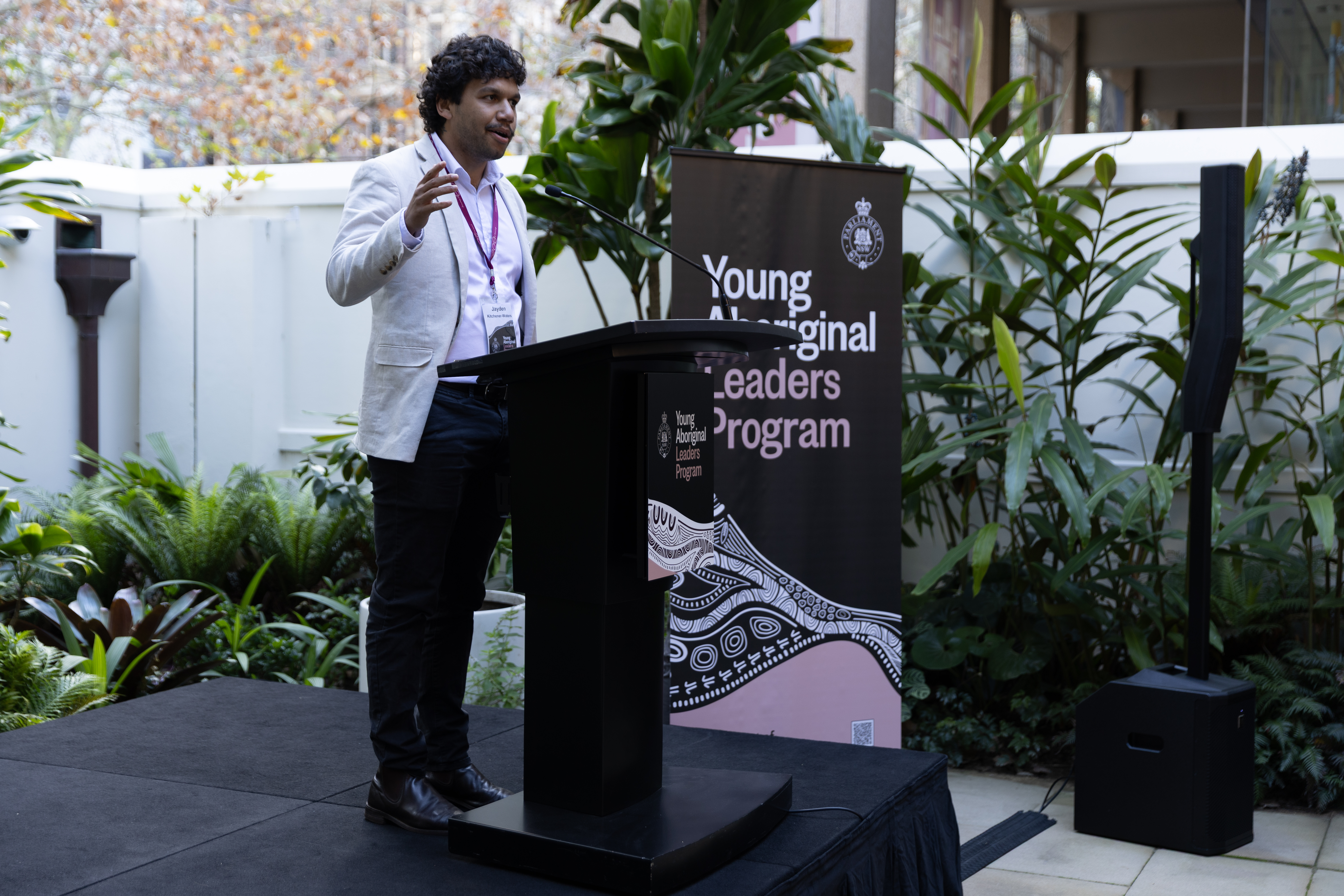
As part of the program's closing activities, each participant delivered a speech in the Legislative Council Chamber - a rare opportunity for young Indigenous voices to be heard in one of the state's most historic political institutions.
Inspired by the reactions of his peers to a painting in the Parliament building titled "The Founding of Australia", which notably excluded recognition of First Nations people, Mr Kitchener-Waters chose to make his speech a call for truth-telling.
"On behalf of all of our group, I proposed to the Parliament of New South Wales that they put a plaque there acknowledging that the painting does not tell the truth and that Australia was not founded in 1788 by the British," he said.
"Keep the painting there on the walls of the Parliament, but make sure there's some truth-telling there as well."
Ms Darney, continuing her advocacy for an Indigenous focus in healthcare, spoke on the creation of a resource to increase the participation of Indigenous women in antenatal care.
"Only 68 per cent of Aboriginal and Torres Strait Islander women access antenatal care at the moment from a national perspective," she explained.
"There should be an ability for women across the state, regardless of their geographical location, to access the best care that they can, that is culturally safe and within a region that is accessible for them."
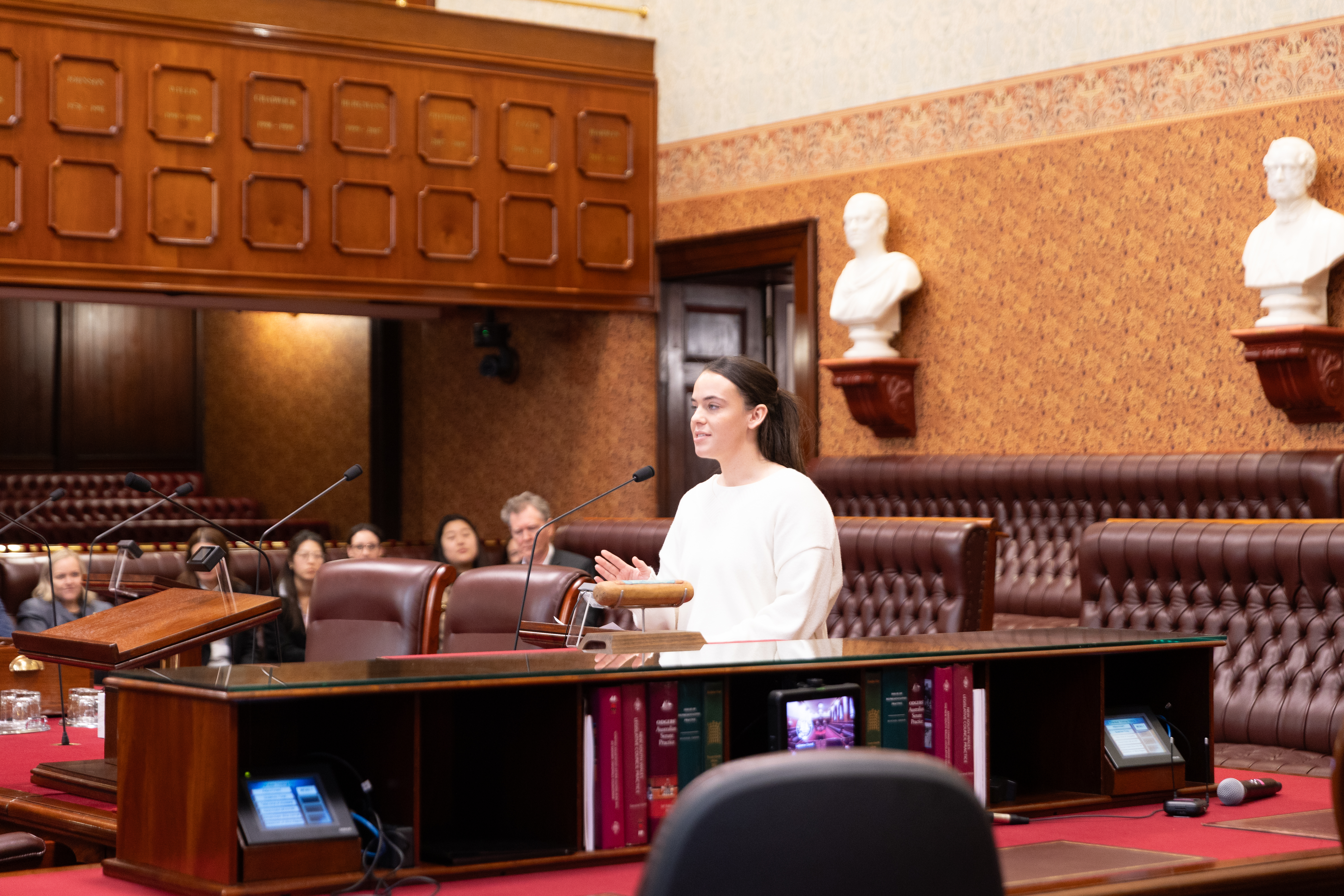
President of the Legislative Council, Ben Franklin MLC, said the young participants demonstrated passion, resilience, curiosity, and a deep commitment to their communities.
"Delivering the Young Aboriginal Leaders Program has been one of the genuine highlights of my career. The extraordinary participants grew together as individuals and now as a group of connected future leaders ready to support each other, make an impact on their communities across NSW," he said.
"I have no doubt the conversations, connections, and confidence the participants built during the Young Aboriginal Leaders Program will echo far beyond these walls," he said.



