




A major ANZAC Day event will honour the life and service of Warrant Officer and fighter pilot Leonard Waters, as well as acknowledge the many other Aboriginal and Torres Strait Islander veterans.
The 17th Coloured Digger Anzac Day March commemorates Indigenous servicemen and women who served overseas.
The event begins with the screening of Black Anzac at the Redfern Community Centre at noon, followed by a Welcome Ceremony and then a march to the Redfern Park Cenotaph.
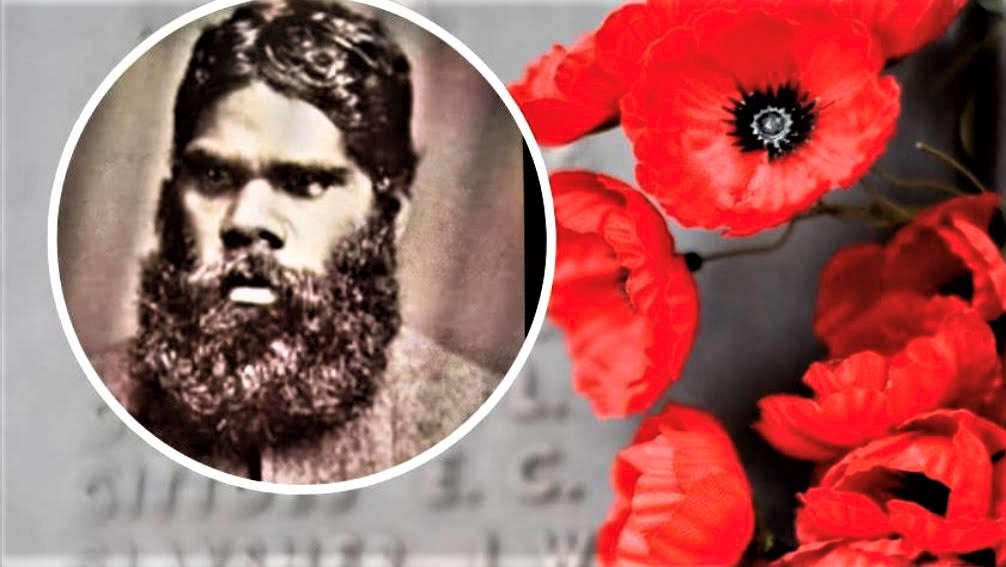
Leonard Waters' niece, Donella Waters, a guest speaker at the event, spoke with National Indigenous Times about her family's history of service, and the injustices faced by her veteran family members when they returned from war.
"We have had three people in our family who have served in war," she said.
"My great-grandfather George Bennett fought in Europe in the First World War. He went to Europe to fight for freedom, but when he came back home, he had no freedom here.
"He never got any recognition for his bravery or anything. After the war he was arrested for being disorderly in public and thrown into jail, and he died in jail alone two days later. He was buried in an unmarked grave and we are still trying to find his grave to give him the respect her deserves."
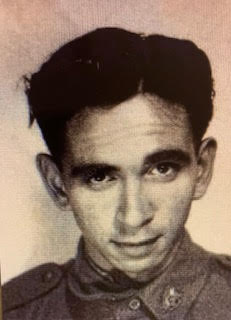
Ms Waters' father, Donald Edward Waters, and uncle Leonard both fought in the Second World War.
Donald Edwards served in the army while his brother was in the airforce.
Ms Waters said her father clashed at times with other soldiers over the way he was treated, but remained dedicated and determined to serve.
"When you put one blackfella with a lot of whitefellas there's trouble. They called him "Darkie Waters", all the white people.
"He had a seven-year career in the army. He broke his wrist and while he was recuperating, he volunteered for medical research up in north Queensland. He was injected with malaria and all the drugs used to combat malaria. He was like a guinea pig.
"He fought on the Kokoda Trail, and in the Pacific islands. It was really intense combat, he was really brave.
"When he first went into the army they said he was not fit enough for jungle combat, but when he went for the medical research you had to be very physically fit, mentally stable, and disease free, and he proved them wrong, after that he went to the islands in the Pacific to fight."
Ms Waters said the recognition of Aboriginal and Torres Strait Islander veterans today is "so important".
"Back in those days you know what our people were treated like, the segregation, the discrimination, the idea we weren't worthy," she said.
"They volunteered for the services, proved them wrong, they could stand up and fight. It makes me so proud of them. I feel proud my father, uncle and great-grandfather fought."
Ms Waters grew up on Toomelah Mission.
"From Toomelah my dad would go into town every Anzac Day. He never missed a march, but after the march he would be passed a beer through the window by his mates because he was not allowed in the pub," she said.
"He always managed to get himself there to the nearest town. With no means of transportation, he would walk about 2km to the main road to a get a lift. And that meant getting up at 4am.
"To this day I'm always supporting, paying my respect and gratitude to my father, great grandfather and Uncle Len. They committed themselves in battle to fight for their country, not only the people's country but their ancestors, the First Nations people's country.
"ANZAC Day is important to me. It's a time to reflect to be proud of our Black Diggers, for many of them fought in wars for our country and freedom.
"I too would like to acknowledge our First Nations warriors who fought against invasion of this country."
Ken 'Kira-Dhan' Zulumovski, an Aboriginal man who has served in the Royal Australian Artillery Corps part time for eight years while balancing a career in Aboriginal mental health, is the lead organiser of the Coloured Digger Project.
"I find it extremely encouraging that Australia, as a nation, is finally starting to open up and have the uncomfortable conversations about our true history," Mr Zulumovski said.
"With that comes a deeper understanding and appreciation for the Aboriginal and Torres Strait Islander peoples who volunteered to leave their country and kin to go far way to a distant land and defend a system that did not value or recognise them. One that in fact brutally oppressed them. They fought for the freedom of all of us while their freedom and rights at home were largely unseen."
Aboriginal and Torres Strait Islander men were legally exempt from military service, making it all the more remarkable that more than 1,000 Aboriginal and Torres Strait Islander people served in the First World War, including around 70 who fought at Gallipoli, and an estimated 3,000 Aboriginal and 850 Torres Strait Islander people served in World War II.
Those who returned home after the war were denied soldier settlement lands, RSL membership, military funerals, respect, and other benefits.
"These are the tough facts that we will tell through the project. We will tell them so that this does not happen again, to any marginalised groups, and so that the nation, all of us, can properly heal and make our bonds stronger, giving fuller meaning to the ANZAC spirit," Mr Zulumovski said.



