After walking down a makeshift fashion runway in the outback red dust, a beaming young woman said: "I didn't feel any shame, it felt like walking on the moon."
An op-shop fashion parade in the middle of Urapunga, 600 kilometres southwest of Darwin on the edge of Arnhem Land, brought out a new side of the remote town's young women.
"It's difficult for Aboriginal young girls to join in ... they're a bit shy, most of them," Urapunga's op-shop manager and community leader Annie Daniels told AAP.
"I have my girls working with me and I show them and inspire them in a way ... they'll understand."
This is the power of the Remote OpShop Project, which directs high-quality used clothing to First Nations communities across WA, the NT, Queensland and SA.
The project allows community members to set-up local op-shops, clothe their families, bolster their economies and fund sports clubs, events and health programs.
The Remote OpShop Project and its impact in communities like Urapunga is the focus of a new documentary Fashioning Change, premiering at the Museum of Sydney on Wednesday night.
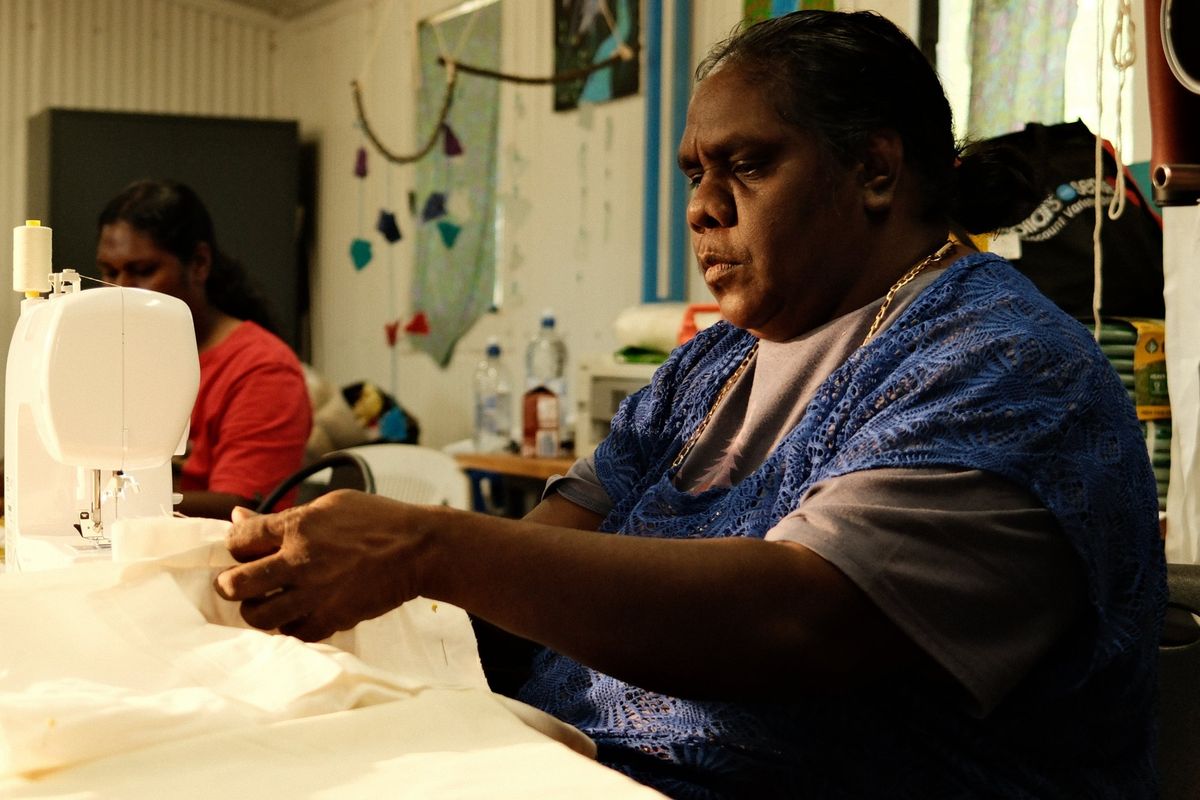
It follows Ms Daniels as she works in her op-shop, shares cultural knowledge and helps her community tap into their creativity to upcycle textiles for a fashion parade.
Filmmaker Laticia Braving said the women who manage the network of remote op-shops are compelling.
"They're just so tenacious and driven," said Braving, who tells regional stories in a series called You Can't Do That in the Bush.
"Annie, in particular, is very driven to not just thrive herself, but really support younger generations coming through."
The film's release coincides with Black Friday retail sales, which encourage shoppers to buy new and buy more.
Australians are among the worst offenders for discarded clothing, with an average shopper buying 27kg of new apparel every year while tossing out 23kg, according to research.
Addressing fast fashion and the immense problems of overconsumption and waste is part of what drives Remote OpShop Project founder Tanya Egerton.
Ms Egerton, who won the prestigious Rural Women's Award in 2024, established the social enterprise after being struck by poor access to clothing and household items in remote areas.
"The op-shops create ... economic opportunities and jobs and platforms for people to learn, not just access clothing," she said.
"Whereas buying fast fashion online is an extractive model.
"People spend money, that money leaves the Australian economy, leaves the community ... and it's not creating jobs here."
The women hope the film gives Australians a greater appreciation of the initiative, passion and heart found in remote communities.
Ms Daniels, meanwhile, was thrilled to dip her toes in the water at Bondi Beach during her first trip to Sydney for the premiere.
"I'm amazed; I always see it on TV, the Opera House and Bondi Beach," she said.
"I still can't believe it."
Australian Associated Press