




New South Wales' peak Aboriginal legal service has raised concerns about the state government's proposed restrictions on protests following the Bondi terrorist attack earlier this month.
The legislation — the Terrorism and Other Legislation Amendment Bill 2025 — is expected to pass parliament late on Tuesday night after clearing the lower house with several amendments.
Introduced in the wake of the antisemitic Bondi attacks on December 14, which killed 15 innocent people, Premier Chris Minns said the measures — which he has acknowledged are "extraordinary changes" — are designed to tighten gun licensing laws and address hate speech, while also allowing restrictions on "public assembly" for up to 90 days after a terrorism incident.
Under the bill, police would be able to impose a public assembly restriction within 14 days of a terrorism incident, preventing authorised protests for up to three months.
"I know that it's a big change to ensure that there's no Form 1 protest during a terrorism designation, so we need to explain why we've pursued those extraordinary changes in New South Wales," Mr Minns said.
The Aboriginal Legal Service (ALS) NSW/ACT warned the laws "risk silencing" First Nations voices and "legitimate and peaceful protests" in the lead-up to Invasion Day/Survival Day on January 26.
Since the 1938 Day of Mourning, January 26 has been marked as a day of protest and solidarity for First Peoples and regularly draws large crowds across the country, the ALS said.
They also expressed concern about how the legislation could affect upcoming rallies marking the 10th anniversary of the death in custody of David Dungay Jr.
This year has recorded the highest number of Indigenous deaths in custody since current records began. Last month, a NSW Police officer was found guilty following the death of Dunghutti teenager Jai Kalani Wright in February 2022.
"The right to protest is a cornerstone of a functioning democracy. Aboriginal deaths in custody and the incarceration of Aboriginal people are at record highs, both in NSW and nationally," said ALS Principal Legal Officer Nadine Miles.
"This is a time of crisis for the communities we serve. It is a time to come together and unite for change, not to risk silencing the voices of Aboriginal people."
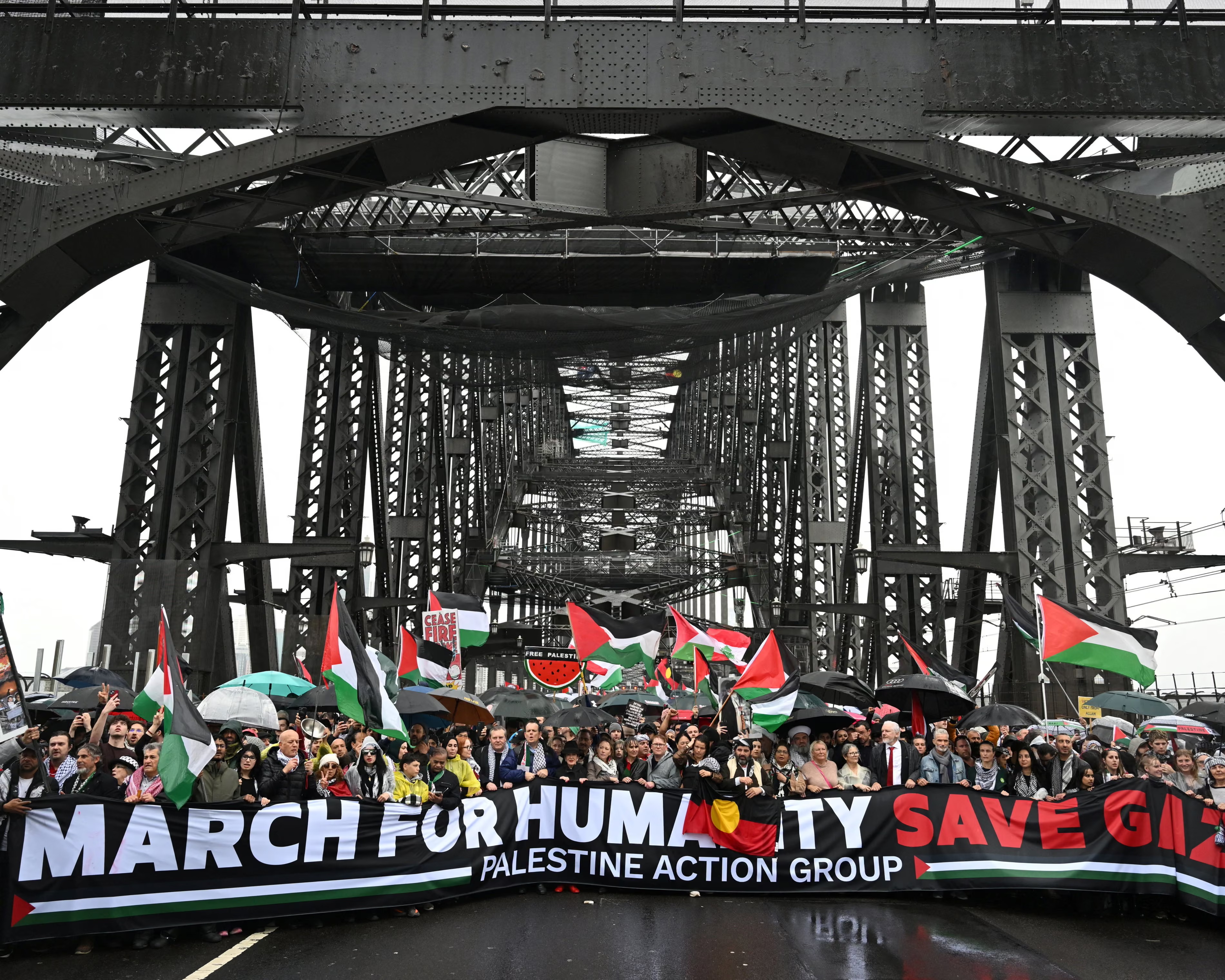
Three activist groups — Palestine Action Group Sydney, Jews Against the Occupation 48, and the Blak Caucus — have said they will launch an appeal, likely in the High Court, as soon as the legislation passes, arguing it will prevent peaceful assembly and describing the laws as "undemocratic".
The First Nations-led Blak Caucus said it is particularly concerned about the impact of the laws on upcoming Invasion Day rallies.
"It's absolutely appalling," representative Lizzie Jarrett said, as reported by the ABC.
"It would really be a kick in the face to this conversation that the government keeps having with us about reconciliation, closing the gap, and putting the realities of First Nations people on the table."
The proposed legal challenge is being supported by NSW Greens MLC Sue Higginson, along with other advocacy organisations, including the NSW Council for Civil Liberties.
"Conflating the right to peaceful public assembly with the horrors of the antisemitic killings that we are all reeling from in Bondi is dangerous and divisive," Ms Higginson said.
"To do this in this moment, when we should be proceeding in unity and calm is not leadership. Restricting the civil liberties of all Australians due to the actions of two depraved terrorists with guns is not conducive to social cohesion."
Mr Minns said he is confident the laws will "withstand a constitutional challenge", noting the government has "run our legislation thoroughly through the Crown Solicitor".
"We are alive to the threat from the high court and a reversal of these changes. And in some cases, that's tempered us in terms of rushing into bills. In other cases, we don't think that we can wait," he told reporters on Tuesday.



