


With the child protection "crisis" facing Aboriginal and Torres Strait Islander children occurring nationwide, leading First Nations organisations and advocates say it is more important than ever that families receive support from Indigenous-led organisations, and that decisions affecting their children are made with their knowledge, cultural authority and leadership.
The death of five-year-old Kumanjayi Little Baby in April this year, alongside reports — first revealed in The Australian — of up to 15 children living in poor conditions and reportedly left unsupervised for days at a time in a state government-owned home on Frisby Court in Port Hedland, has renewed national scrutiny of child protection for Aboriginal children.
However, for Aboriginal Community-Controlled Organisations (ACCOs), the fight for Indigenous-led decision-making in child protection is nothing new.
From improving family reunification rates to providing earlier, culturally safe support, organisations such as the Victorian Aboriginal Child and Community Agency (VACCA) and AbSec in NSW have advocated for a child protection system built on trust, self-determination and community-led solutions.
"ACCOs know the solutions that work for our children and families and it is fundamental that they are at the table, sharing decision-making with government about the services that affect our children, families and communities," AbSec CEO John Leha says.
"Investment without structural reform and genuine power-sharing with Aboriginal communities will keep producing these terrible outcomes in NSW, year after year."
Yet, despite evidence that Aboriginal-led approaches can make a difference, Aboriginal children continue to be disproportionately removed from their families, while systemic barriers to reunification persist.
The latest data show that First Nations children are removed from their families at more than 11 times the rate of their non-Indigenous counterparts nationwide.
In many cases, this can come down to funding and support. Newly appointed National Indigenous Children's Commissioner Sue-Anne Hunter has spent her career working in the sector. She tells National Indigenous Times that ACCOs continue not to be "prioritised and resourced correctly".
"We cannot expect a different result within our child protection systems if our governments refuse to listen to the very people who know our children best," Ms Hunter says.
In Victoria, where Indigenous children are removed from their families at almost twice the national rate, VACCA is attempting to make real changes.
VACCA CEO Muriel Bamblett says the organisation has taken on Aboriginal guardianship, telling National Indigenous Times there are "over 500 children now that I'm the guardian for".
The result is that while reunification rates for the department are 12 per cent, for children on long-term orders under VACCA's guardianship, the rate is double.
"What we're seeing is Aboriginal children going home and staying home," Ms Bamblett said. "I think we're also seeing, with community protection-wise, that we're getting early help into families earlier to prevent children entering the system.
"The data is there."
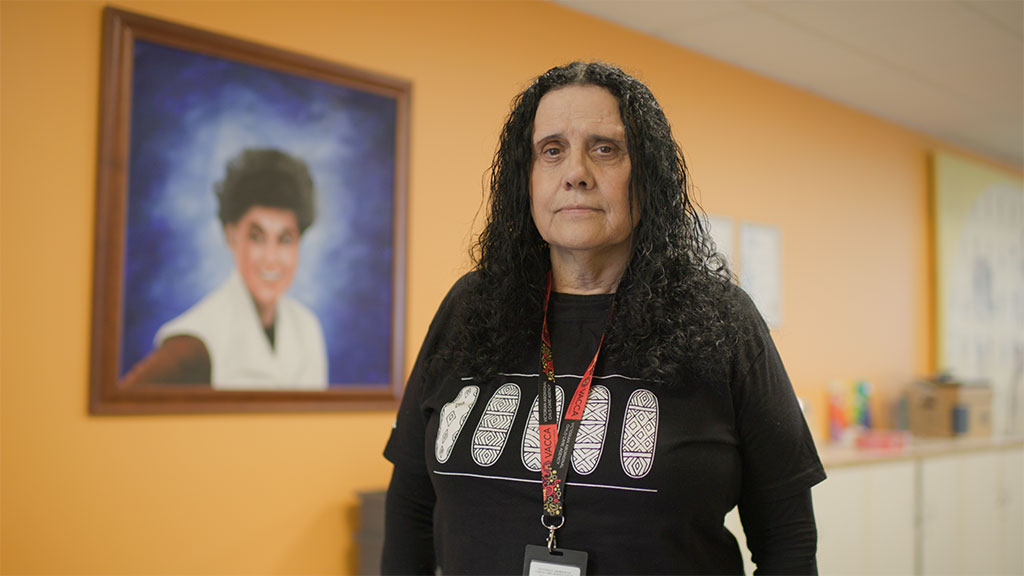
When it comes to programs addressing addiction and male violence, Ms Bamblett argues that they must tackle the underlying problems — not just be a short-term fix. Programs need to engage Aboriginal people, "but also sustain that change".
"So when they're having problems, [they are] able to go to a service and get help, not have a service be punitive and either report you to the police or report you to child protection," she says.
The Yorta Yorta, Dja Dja Wurrung, Taungurung, Boon Wurrung Elder is also chair of SNAICC - National Voice for Our Children and sits on the Coalition of Peaks. Both organisations, she argues, are putting First Nations systems and voices into "government agendas on legislation, policy, programming, practice frameworks".
Peak bodies play a "key role in harnessing community engagement," Ms Bamblett adds.
Asked whether governments are doing enough, she told this masthead there has been greater engagement through the Closing the Gap agreement.
"We have just gone through the process of developing jurisdictional and Commonwealth implementation plans against the National Agreement — this will be the opportunity for governments to step up."
Others are more critical.
Commissioner Hunter's role was legislated by the federal government this year, in a move welcomed by advocates. Mr Leha says AbSec has long called for an equivalent position in NSW, along with an independent Child Safety and Wellbeing Commission.
"Unlike most states and territories, in NSW, that mechanism simply does not exist; and overwhelmingly, progress is not being made on most Closing the Gap targets in NSW," he argues.
The proposed commission would oversee and report on the child protection system, set and enforce standards, and provide a safe place for concerns to be raised in a state with the worst reunification rates in the country.
The Commonwealth "should do more," Mr Leha says.
"If it is serious about Closing the Gap, the Commonwealth government has real leverage to press each state to do more, including establishing key improvement and oversight mechanisms like a Commissioner for Aboriginal and Torres Strait Islander Children and Young People and an independent Child Safety and Wellbeing Commission."
Commissioner Hunter points to governments and the need for them to invest more in prevention and early intervention systems. This, she says, will ensure families can access support before it reaches crisis levels.
Furthermore, the federal government could do more to put pressure on the states and territories, adding that "child protection is failing" across the country.
The child protection "crisis" does not "operate in a silo," the Wurundjeri and Ngurai Illum Wurrung woman argues.
She notes what has recently been experienced in Western Australia "is a clear reflection of the systemic injustice and failure by all of our governments".
"The response requires a whole-of-government approach and accountability from each sector to ensure our children's rights and safety are centred in the discussions and decisions that impact them."



