




Indigenous Senator Lidia Thorpe says Australia can look to the United States on how they managed levels of "forever chemicals" in water, calling on the federal government to act.
Speaking on ABC RN on Thursday morning, the Gunnai, Gunditjmara and Djab Wurrung woman said the level of Perfluoroalkyl and Polyfluoroalkyl (PFAS) - known as "forever chemicals" - in drinking water in Australia was up to 400 times of level allowed in the US.
"We should not be drinking poisonous water, and governments need to be honest about the situation to the community to keep people safe," Senator Thorpe said.
Her comments come in the midst of a Senate inquiry into PFAS levels, which on Tuesday heard the Aboriginal community in Wreck Bay, NSW, are the victims of a "cancer cluster" due to PFAS contamination caused by the Department of Defence.
The chemicals are found in firefighting foams which have been used on the neighbouring naval base HMAS Creswell, as well as the Jervis Bay Range Facility since the 1970s.
"We have elders in this community buying bottled water out of their aged care packages because they don't have the support from the federal government…around the concerns that they have, that they have had for decades and it's fallen on deaf ears," Senator Thorpe said.
The Wreck Bay Aboriginal Community Council chairperson, Annette Brown, told the hearing on Tuesday both the government and chemical manufacturer, 3M, continued to "evade" responsibility for the contamination.
"They've all remained silent," she said. "I think the lid's got to get lifted off their silence."
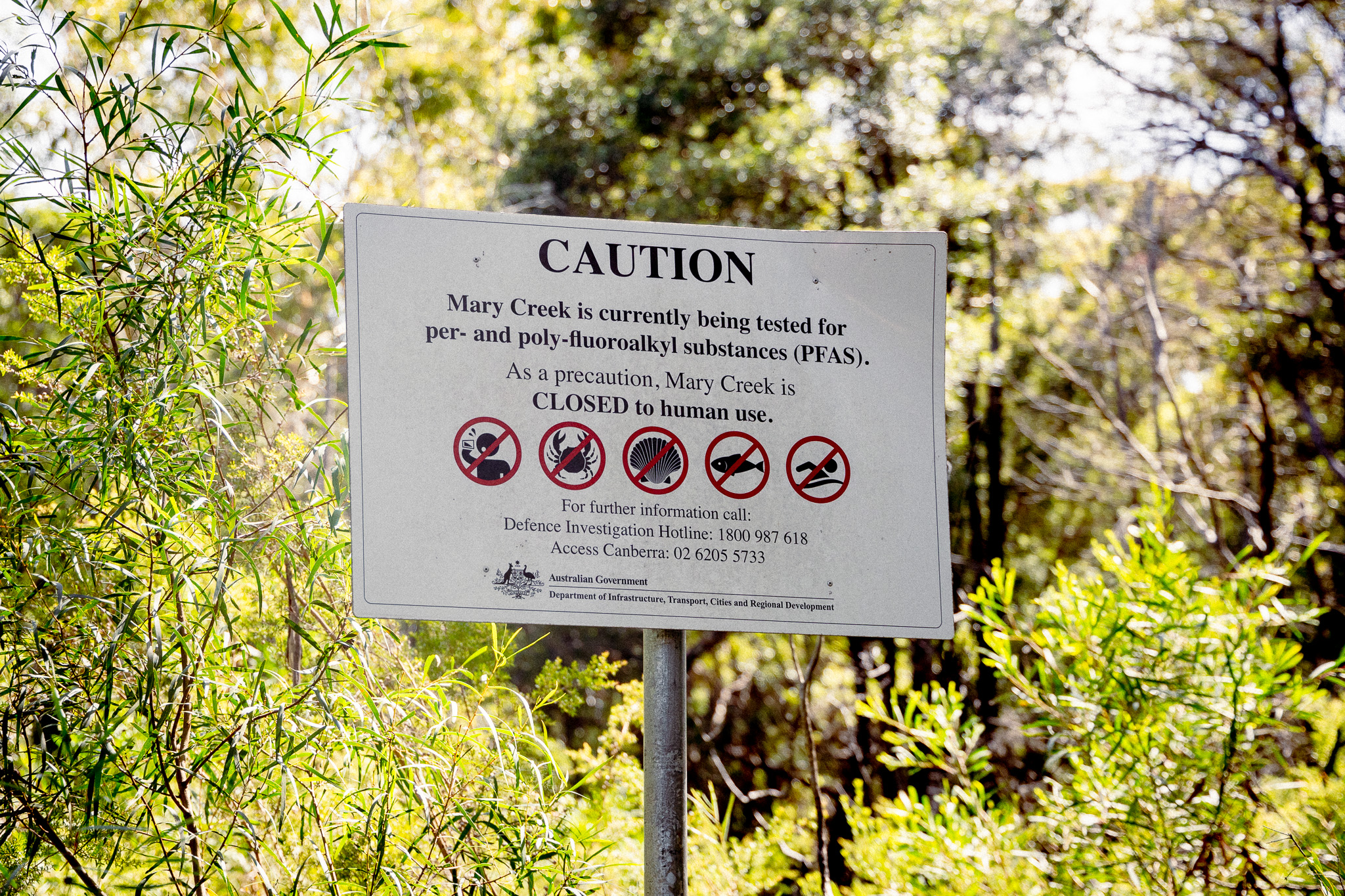
Senator Thorpe, who is chair of the inquiry, said many members of the Wreck Bay community have "some type of illness related to PFAS, or they've lost family members to PFAS".
"We're talking about children with rare cancers, we're talking about eye cancers, we're talking about breast cancers, and the community is completely devastated," she said.
"Whilst I was there, I watched a snake slowly die on the beach because the beach is so contaminated with these poisonous chemicals that it's leaching into rivers, creeks, the ocean, and it's poisoning people.
"It's literally killing people."
Her comments mirror those made by a former GP in the community, David Goldberg, who told the hearing in Nowra on Tuesday: "We know a cancer cluster when we see one, even though we can't statistically prove it."
"It's highly likely people are dying from this," Dr Goldberg said.
The International Agency for Research on Cancer classified PFOA, a compound used to make Teflon, as a human carcinogen in December 2023.
PFOS, which was most commonly found in Scotchguard, was labelled as "possibly" carcinogenic at the same time.
Guardian Australia reported new guidelines to be finalised this year have proposed decreasing the level of PFOS in the water to align with US guidelines, but the Australian levels of PFOA would remain higher than the limits in the US.
Senator Thorpe said Australia needed to take stock of the process of dealing with forever chemicals in the US.
"We need to look at the US, talk to the US about their remediation and about their levels of PFAS in their water, and do what they do, because there is no acceptable level of PFAS in our drinking water," she said.
At a hearing on Wednesday, Dr Nicholas Chartres from the University of Sydney called on the government to adopt the position of European countries and ban PFAS chemicals, before arguing the US Environmental Protection Agency has done an "extraordinary evaluation of the evidence on this" for which Australia should be "adopting their values because they are far more health protective".
However, expert Prof Stuart Khan of the University of Sydney disagreed with the idea the US was a beacon of positivity in the field.
"PFAS was developed, produced initially in the US, contaminated the US – very, very significantly in some areas – and that contamination spread to the rest of the world under the watch of the Environmental Protection Agency," he said.
Senator Thorpe, who visited locals and Elders on Country near Wreck Back on Monday, noting the whole inquiry was "indebted" to their work and struggle, said the government needed to urgently erect signage to let people know the water is contaminated as well as the risks associated with swimming in it.
"Tourists are swimming in these beautiful parts of the Booderee National Park and it's contaminated," she said.
"Tourists are coming to these towns; they're letting their kids swim in this beach that we know - and the defence force knows - is contaminated.



