



At the steps of NSW Parliament, a new permanent sculpture serves as representation of the history, people and Country surrounding the same grounds present for thousands upon thousands of years.
On Wednesday, the public artwork, made in collaboration by Dharawal and Yuin artist Alison Page, Indigenous heritage consultant Rowena Welsh-Jarret and ceramicist Simon Reece, was formally unveiled at the Macquarie Street forecourt.
Ms Page said the concept and meaning draws from "a story that starts in deep time".
She said the artwork and dreaming stories of the creation of the 'bedrock' of Sydney, through the ancient ancient river from western NSW extending to the Blue Mountains - where the artists collaborated on the piece.
"What would you see if you took a core of the earth underneath Parliament House? What you would see are layers and layers of story, of history. You would see layers of fires, countless fires, that were burned here. Meals that were shared here," Ms Page said.
"It was wonderful to have these conversations about country."
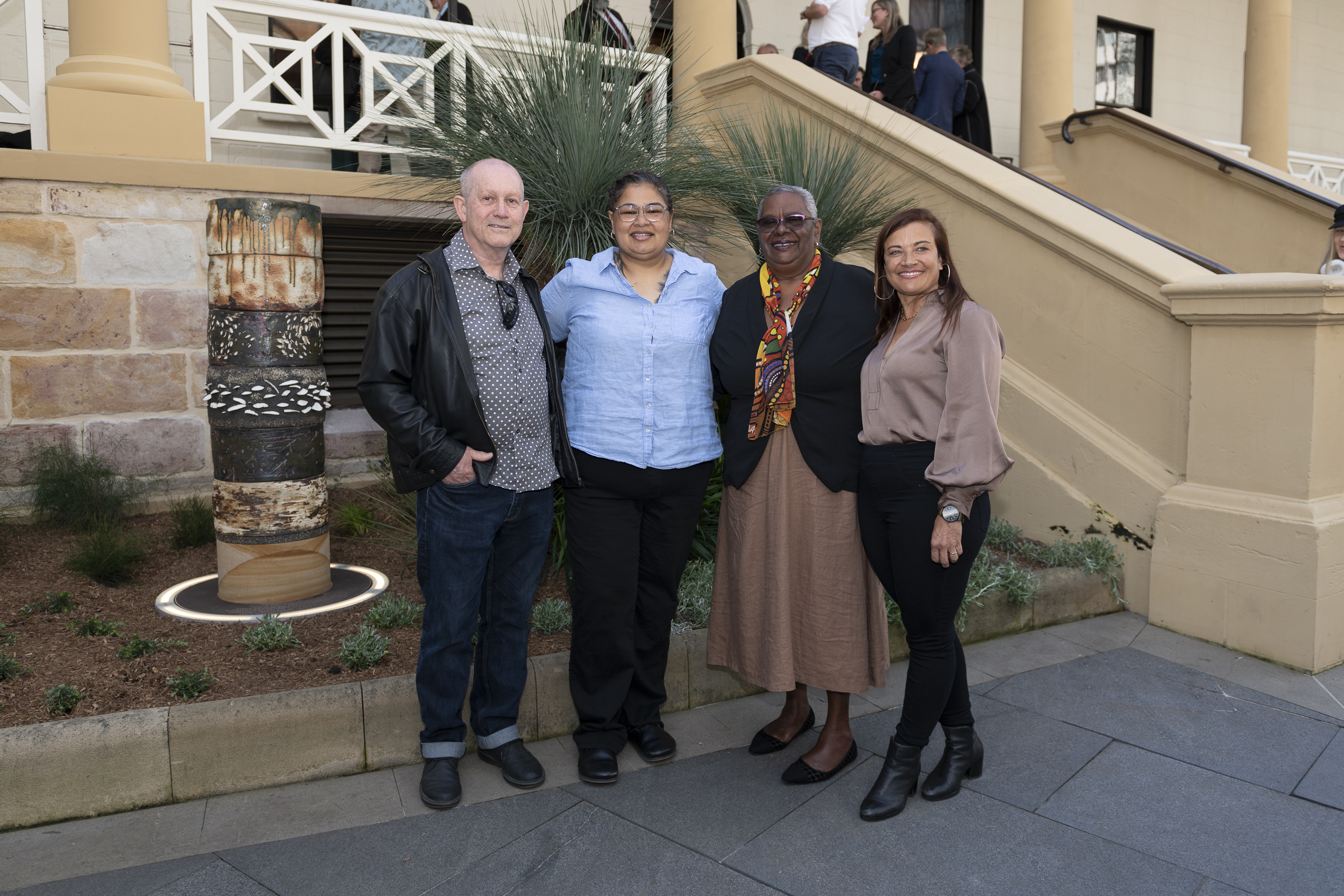
As cultural advisor to the work, Ms Welsh-Jarrett said it was an honour to reflect on what country means to Aboriginal people and to have that expressed at the steps of Parliament.
She said the sculpture stands as a "reminder that all our old people have met on these lands for 1000s of years, making decisions about country".
Etched into the base of the sculpture is a an acknowledgement of country.
NSW Governor, Margaret Beazley said an appreciation for Country, by all people, "is what I believe we are celebrating today", and thanked First Peoples for expressing that appreciation for the land for all others.
Ms Beazley said it is significant, before entering Parliament "the first thing that you are greeted by is the acknowledgement to Country".
.jpg)
Ms Page added a First Nations voice has been added to a colonial structure, to make the landscapes endemic.
"We've now bought the First Nations voice here, and we can start to see what a modern Australia will look like; where we have these layers of storytelling that sort of say, who we are as a modern nation," she said.



