



Catherine Freeman knows the pressures of being an elite athlete better than most, and the value of somewhere to connect, decompress and host open and honest discussion.
The Victorian Institute of Sport's (VIS) new, permanent Yarning Circle is more than just a powerful symbol; It's unity, the Australian sport icon and Olympic champion said, and an evolving space of "enormous significance" for athletes into the future.
The cultural gathering space is a first of its kind as a permanent site at a high performance sporting institution across Australiia.
At the 2024 Summer Olympics in Paris, a Yarning Circle was introduced into the Australian team's village for the first time.
VIS's new project is built on this legacy — not just for their athletes, but the broader community and public.
Yuin and Worimi man Kyle Vander-Kuyp is a two-time Olympian, and wore green and gold on the athletics track in Sydney alongside Freeman 26 years ago.
He's also on the VIS board, and was deputy Chef de Mission (delegation leader) for the Australian team in Paris.
The Yarning Circle builds on cultural safety frameworks, and provides something important, Vander-Kuyp told National Indigenous Times.
"When a young person comes in, if it's a first time scholarship holder, or even just a community member, to know that this could be a place where you just meet for the first time, I think it just takes away those layers of nervousness or anxiety," he said.
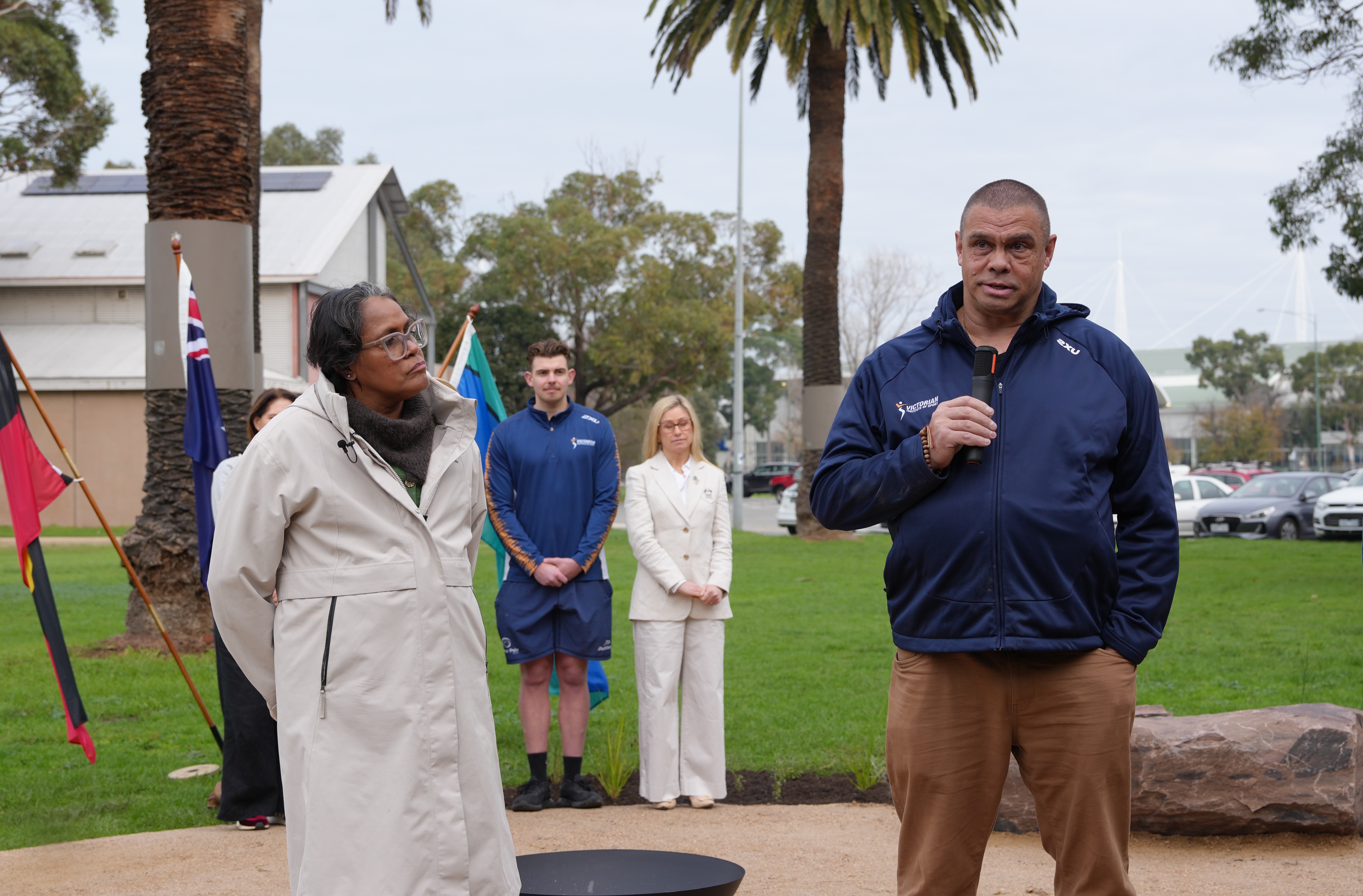
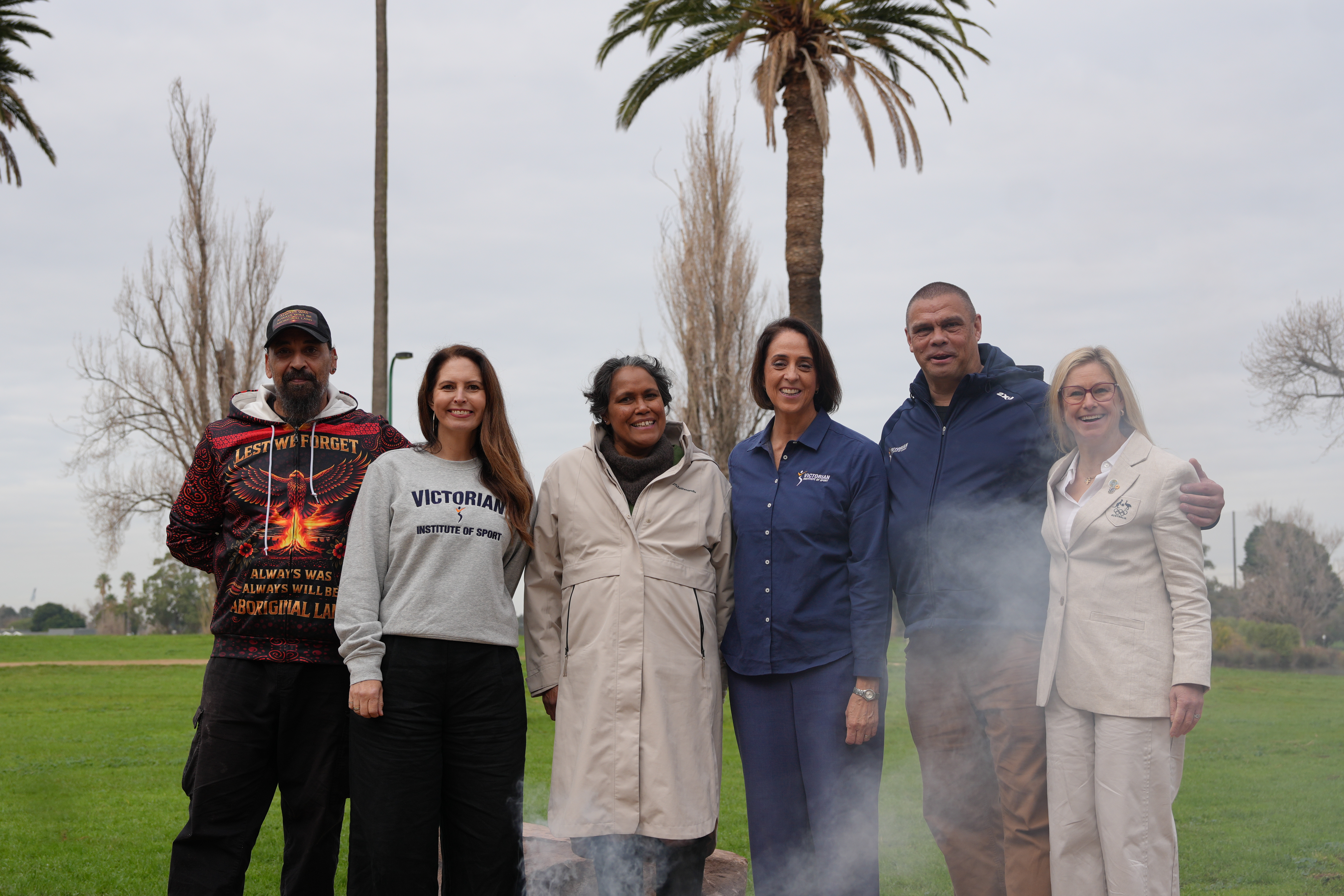
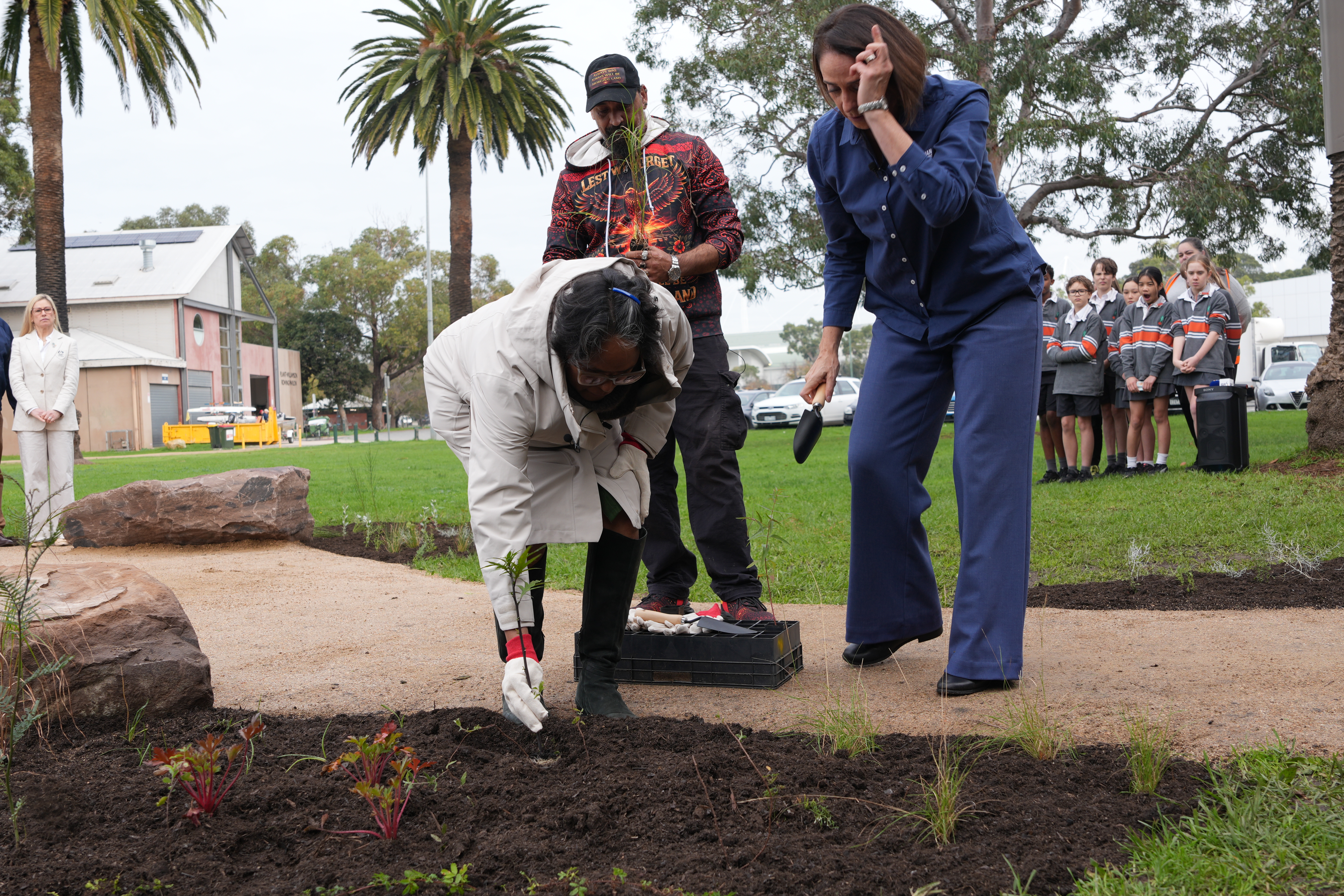
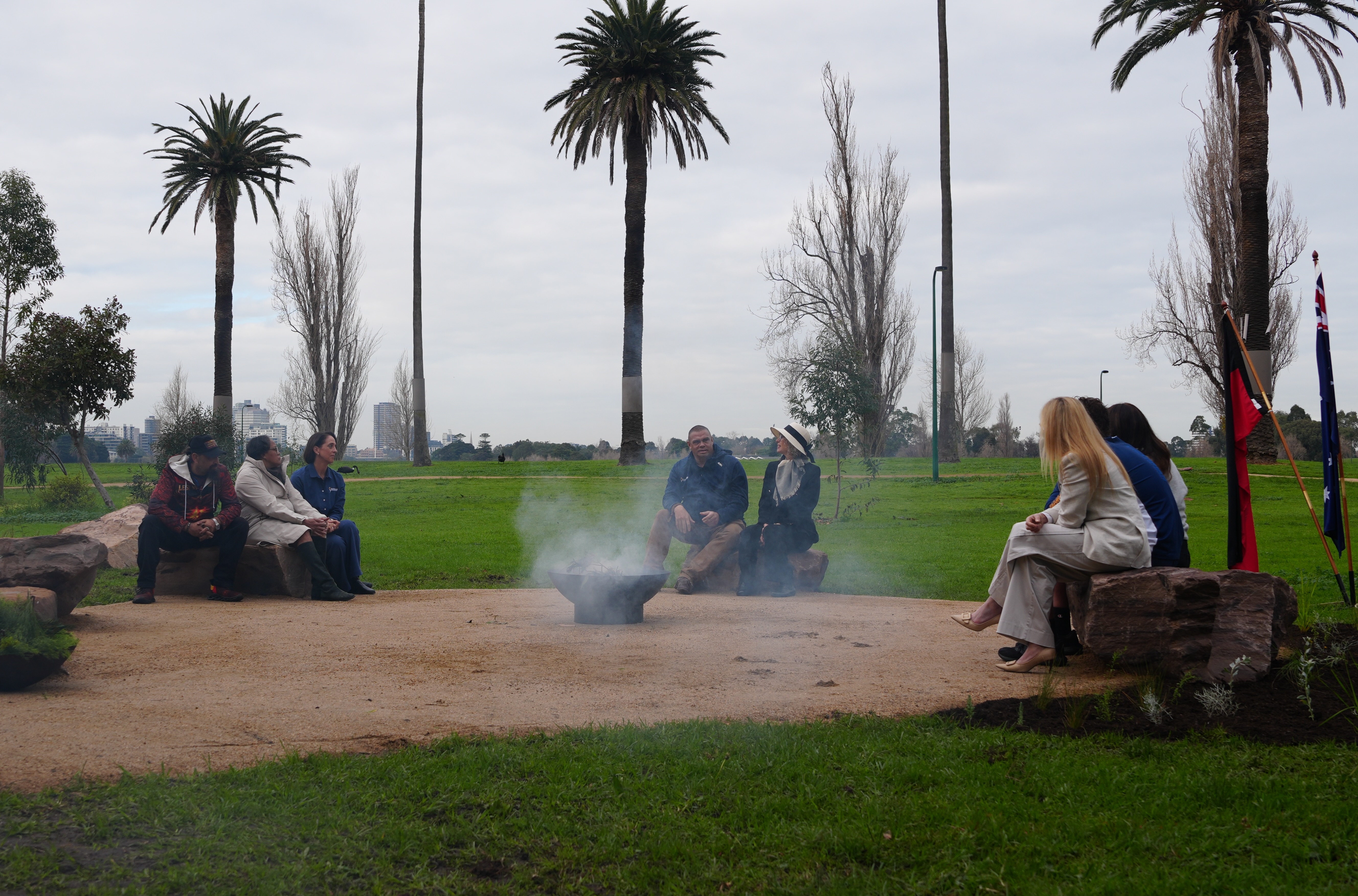
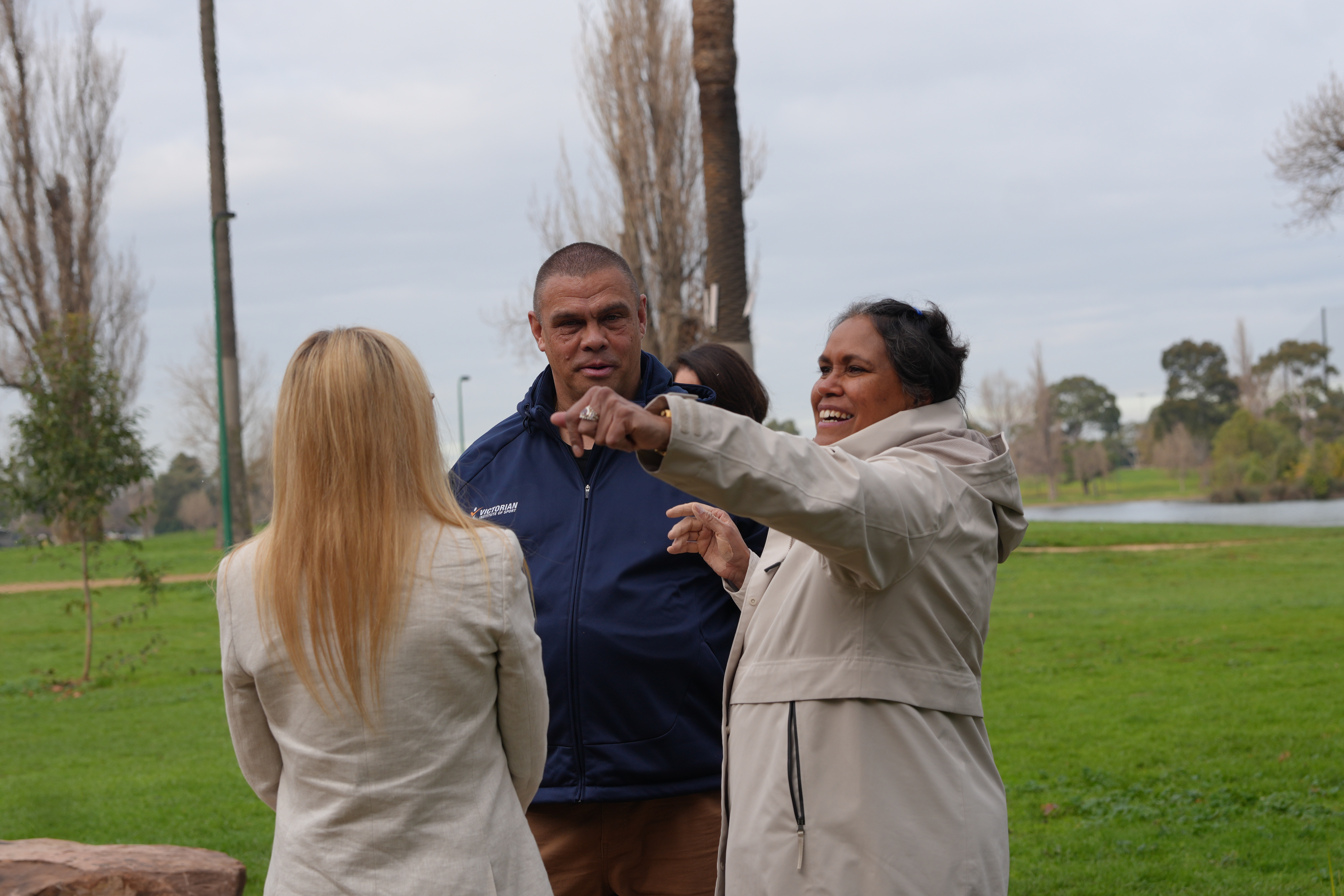
The project was delivered in partnership with Bunurong Land Council, as well as Parks Victoria, and sits outside the front doors of VIS' training centre at Albert Park in the complex shared by Melbourne Sports and Aquatic Centre (MSAC).
At Monday's unveiling, Freeman, VIS athletes, staff and representatives, and more added their handprints in ochre onto an Aboriginal flag to mark the occasion.
Native species of black wattle. kangaroo grass and kangaroo apple, chosen to reflect Country, culture, identity and high performance sport journeys, were planted as part of the space.
A first yarn was also shared, between Freeman, Vander-Kuyp, VIS chief executive and former olympic swimmer Nicole Livingstone and more.
"When you're aspiring to be an elite, it's not easy." Freeman told National Indigenous Times.
"So having that support is really important, and being able to lock into a space that's peaceful, and that encourages simple conversation that can open up so much within the heart and minds of athletes and those young people who want to be athletes.
"It's a lovely opportunity. It presents this wonderful opportunity to talk and yarn, regardless of what your role is in elite sport."
VIS Connection to Country Officer and Wadawurrung man Jamie McPherson is credited as the 'engine' behind the project, and explained it comes after around 18 months in the making.
He says the Yarning Circle is a space to decompress, where everyone is equal, and where a person can be truely heard.
McPherson encourages everyone, not just VIS athletes and coaches, to share in this as well as the world's old living culture.
The Connection to Country Officer role is to ensure First Nations culture, knowledge and leadership are strongly embedded into the VIS.
Wiradjuri man Tyson Mutsch is a current VIS athlete in water polo.
His hometown is Albury on the Murray River and NSW-Victorian border.
Heading back and seeing friends and family has been a way Mutsch has grounded himself, away from the grind and responsibilities of high-level sport.
The Yarning Circle is now another place he can come to, and bring others, "to have a bit of a yarn, just connect with a bit of home, and connect with the space that I'm in as well, just to get that head back on track", he said.
"It's just a good resource to have to reset. It always means different things to different people, and that's the beauty of it, having it here just being surrounded by a really big sporting community."
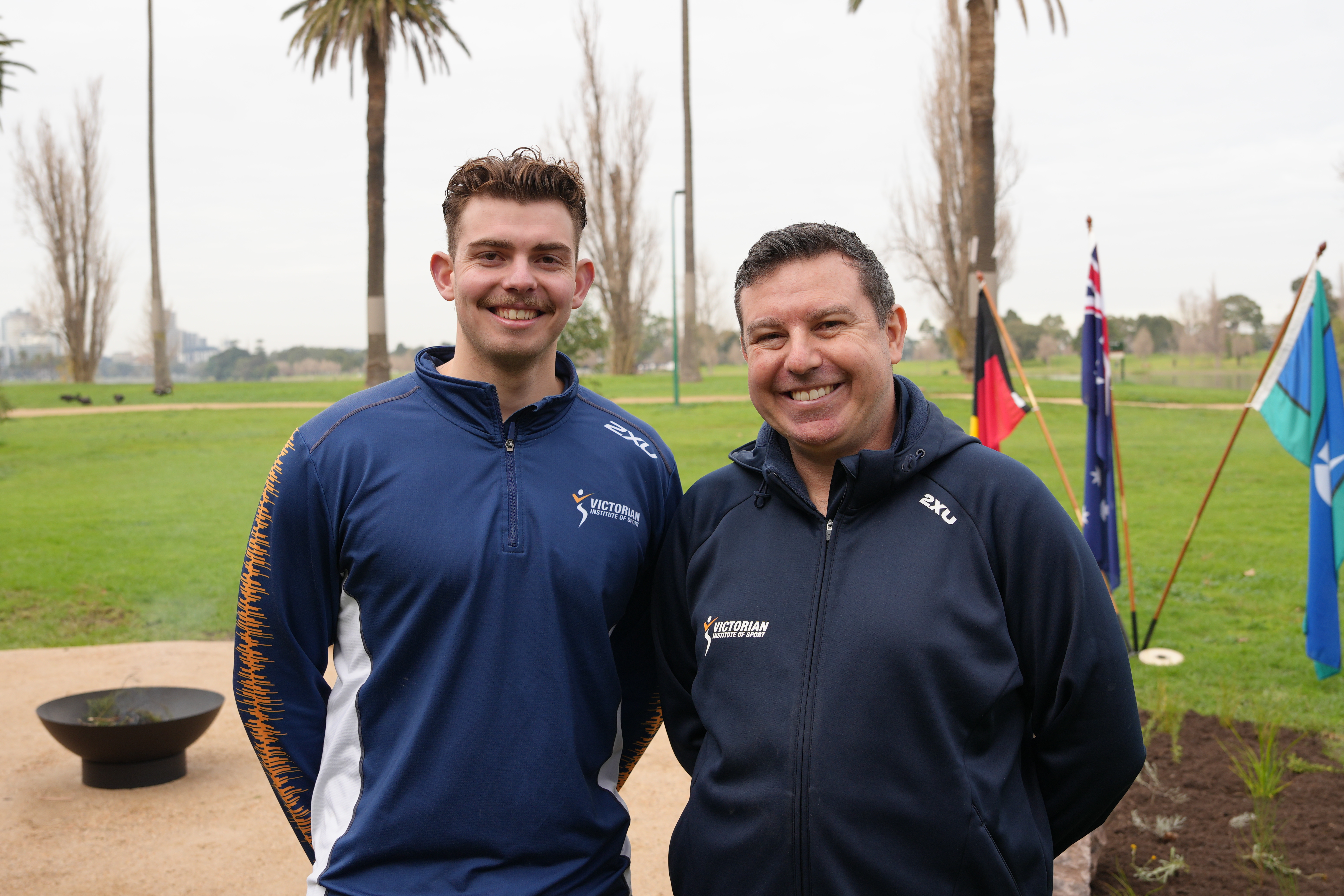
Cultural ranger, storyteller and Djab Wurrung and Dhauwurd Wurrung man Jakobi Ili-Jakobi, from Petrichor Collaborative, explained how looking south to borth, the Yarning Circle is created to visually resemble the Seven Sisters constellation and Dreaming Story.
"The arrangement of these stones in December, it's the reflection you would see that consolation as it hits the water and comes back up," he said.
"And this story connects all First Peoples throughout Victoria, we all have different stories, connections to this to the seven sisters that are like many of our song lines connects one group to another."
The Yarning Circle comes as Australian sport and athletes eye off the 2032 Summer Games in Magandjin (Brisbane).
Asked what her hopes were for First Nations athletes over the coming six years, Freeman pointed to a strong pathway, suppored leaders and cultivating an environment where they are able to thrive.
15 Aboriginal and Torres Strait Islander athletes represented Australia in Paris two year ago, 11 at the Olympics and four at the Paralympics.
Vander-Kuyp will soon head to Glasgow for the Commonwealth Games as a culture and inclusion officer with the Australian team.



