




First Nations leaders fear the Queensland government is trying to "destroy" First Nations youth and families by intentionally removing Indigenous children.
In an extraordinary statement endorsed by more than 100 First Nations leaders, including Marcia Langton and Mick Gooda, after a two-day summit in Magan-djin (Brisbane), the state government was slammed for perpetrating the "ongoing violation of human and cultural rights," in particular, "the targeted harm perpetuated against our children and young people".
"We argue that what is happening in Queensland are egregious breaches of human rights against children, reminiscent of past Queensland Government policies and practices separating children and families," they said.
"We fear that acts are being committed by the State with the intent to destroy our First Nations by forcibly transferring our children from our responsibility out of our care, and out of our communities."
In Queensland, Indigenous children are 9.4 times more likely than their non-Indigenous counterparts to be in out-of-home care. The state also incarcerates more Indigenous children than anywhere else in the country; on an average day, 70 per cent of the state's youth prison population is Indigenous.
"We speak with the authority of our lived experience, our cultural knowledge and commitment to our children and next generations," the statement said.
"When we talk about making communities safer, it must start by listening to those who have carried that responsibility for generations."
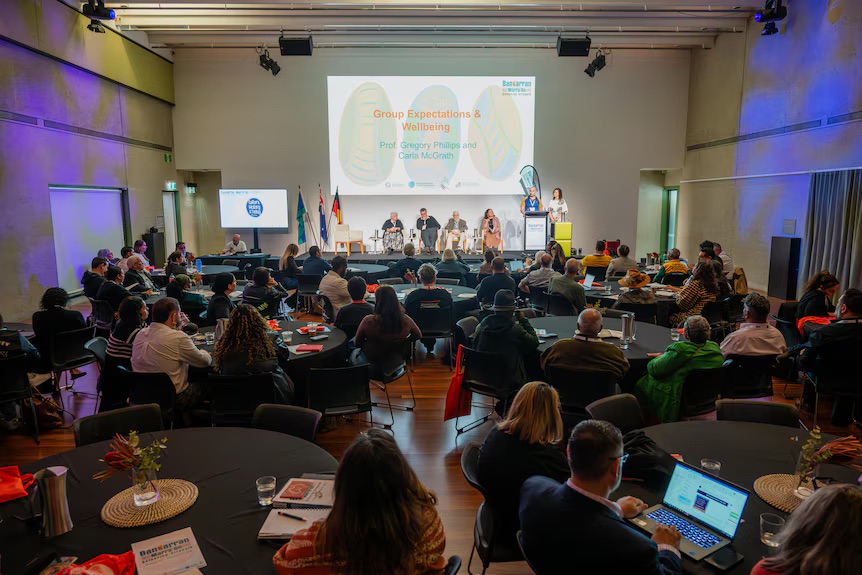
Hosted by the Queensland Human Rights Commission, together with the Australian Human Rights Commission and the Queensland Family and Child Commission, the Bandarran Marra'Gu Gathering Strength Summit, the first of its kind since the Voice referendum in 2023, said the overrepresentation of Indigenous children in the youth justice and child protection systems is not a "coincidence".
Rather, it is a "direct consequence of policies that fail to respect our rights, of services that are culturally unsafe, and of decisions made without our leadership or agreement".
Attendees, who included leading barrister Tony McAvoy SC and Professor Chelsea Watego, endorsed the statement alongside Queensland Human Rights Commissioner, Scott McDougall; Aboriginal and Torres Strait Islander Social Justice Commissioner, Katie Kiss; and Queensland Aboriginal and Torres Strait Islander Children's Commissioner, Natalie Lewis.
They demanded compliance with Australia's Human Rights obligations—including the United Nations Convention on the Rights of the Child, the United Nations Declaration on the Rights of Indigenous Peoples, and the Queensland Human Rights Act—the leaders also called on the current government to "meet with representatives of our communities to determine the pathway forward and the actions that we deem are in the best interests of our children."
"Australian governments have a duty to ensure compliance with international human rights obligations and embed the United Nations Declaration on the Rights of Indigenous Peoples in legislative frameworks that affect us," Commissioner Kiss said.
"We are rights holders, entitled to self-determination, cultural integrity, participation in decision-making, equality and non-discrimination. We want truth, justice and healing for our people and our future generations."
Furthermore, attendees echoed calls by SNAICC by calling for the terms of reference of the Queensland Commission of Inquiry into the Child Safety System—announced on the weekend after data revealed mass levels of abuse in the system across the state—to acknowledge and address the systemic harm against Indigenous children.
"We hold solutions," the statement said. "It is fundamental that there is adequate opportunity for local Aboriginal and Torres Strait Islander peoples to participate directly through the entire duration of the inquiry"
Commissioner Lewis said the summit was not about "organisational agendas," nor "our status, our positional power or profiles".
Instead, the Gamilaraay woman said it was about "connecting, on our own terms, centring our rights, our culture and harnessing our collective power and commitment to our future generations".
Despite criticism from human rights, Indigenous and legal groups, the LNP government is expected to pass its latest version of its "adult crime, adult time" laws, which will see children as young as ten face lifetime prison sentences for a variety of crimes, some of which are non-violent. The government has admitted the new laws are "incompatible with human rights" and will more Indigenous children being incarcerated.
In January, it was reported that the number of children aged 13 or under being housed in Queensland watch houses has increased by 50 per cent in the past 12 months. In 2023-24, 120 children aged 10-13 spent at least one night in an adult watch house—a 50 per cent increase from the year previous.
Last year, a report revealed two disabled Indigenous children died shortly after being released from detention, having been kept in "separation" - the term the Queensland government uses for solitary confinement - for extensive periods whilst incarcerated.
A recent Curtin University study found young people leaving Queensland's detention system were 4.2 times more likely to die prematurely, with suicide and drug poisoning being some of the most common causes.
The statement by the leaders noted First Nations people are "under attack" in Queensland, arguing their treatment is an "affront to dignity and justice".
"We have lost all faith in the capacity of the Queensland Government to ensure our interests are represented."
They argued the relationship between First Peoples and the Queensland government "is now significantly diminished and continues to be undermined under the current leadership".
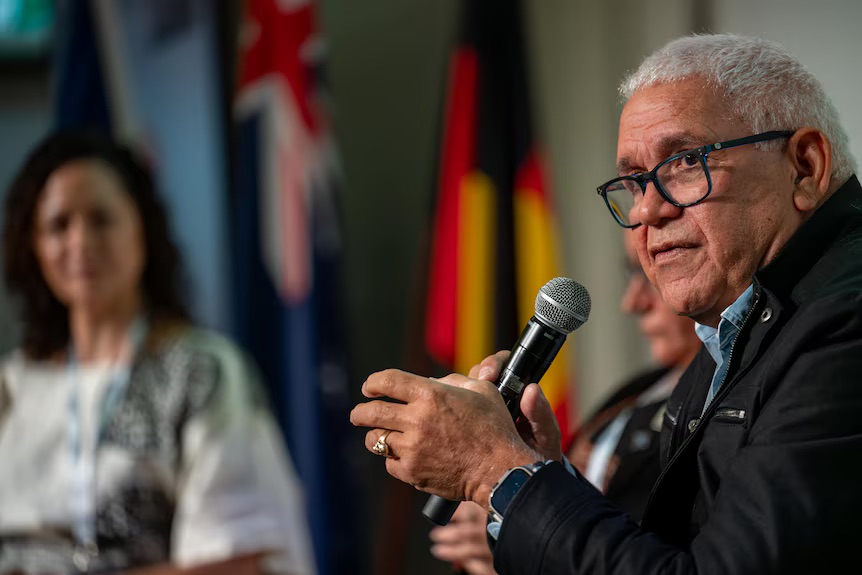
Appearing on ABC Breakfast, Mr Gooda said many Indigenous people in Queensland felt a sense of abandonment from the government.
"Their first action when they got elected was to repeal the Path to Treaty legislation, which really was about framing a relationship with Aboriginal and Torres Strait Islander people in Queensland," he said.
"It's been crickets since. We haven't had a relationship with government … and I think government will eventually realise they need a relationship with us."
Last year, the government defied the wishes of many Indigenous people, including Stolen Generations survivors, by cancelling the truth-telling inquiry, implying - without evidence - that it was divisive.
The leaders said if the government is "serious about keeping our communities safe," they would stop "punishing symptoms" and work with Indigenous organisations, parents and teachers.
"We are not asking," they said, "these are our rights. We are entitled to be safe, heard, and grounded in who we are."



