




A new report has claimed disadvantaged and First Nations children in New South Wales were targeted by police during the COVID-19 pandemic, with fines up to $5000 being issued, pushing families into financial hardship.
Commissioned by the Redfern Legal Centre (RLC), the Public Interest Advocacy Centre (PIAC) and Aboriginal Legal Service (NSW/ACT) Limited (ALS), Children and Covid-19 Fines in NSW paints a troubling picture of the over-policing of disadvantaged communities during the pandemic which was "unsuitable for achieving positive public health outcomes for children".
The report observes fines were disproportionately issued to marginalised groups throughout the state, including to Aboriginal and Torres Strait Islander children, children with cognitive disabilities, and children experiencing socio-economic challenges such as homelessness, or unsafe home environments.
Between March 2020, and September 2022, 3,628 children in NSW received a penalty notice for a breach of a public health order. More than half of those were fixed at $1,000 and some were as high as $5,000.
In comparison, the maximum fine a child can receive in the NSW Children's Court is $1100 and besides two exceptions, children were liable to the same penalty fine as adults.
Furthermore, it observed public health orders were amended every 1.5 days on average during the Delta Wave.
"The frequent changes made it especially hard for children to understand the rules," the report said.
"I'm of the view…police got the law wrong, and many fines were issued unlawfully," one interviewee told the authors of the report. "And therefore, you have kids working off COVID fines who probably shouldn't have been issued with one in the first place."
Chair of the Aboriginal Legal Service (ALS) NSW/ACT, Karly Warner, said Aboriginal communities set the "gold standard" for caring for each other during the pandemic.
"Yet our children paid a higher price because of the Government's punitive approach to enforcing public health orders," Ms Warner said.
"Fines are an extension of the way Aboriginal children are criminalised and punished in NSW. It's time to reform the archaic and unjust fines system."
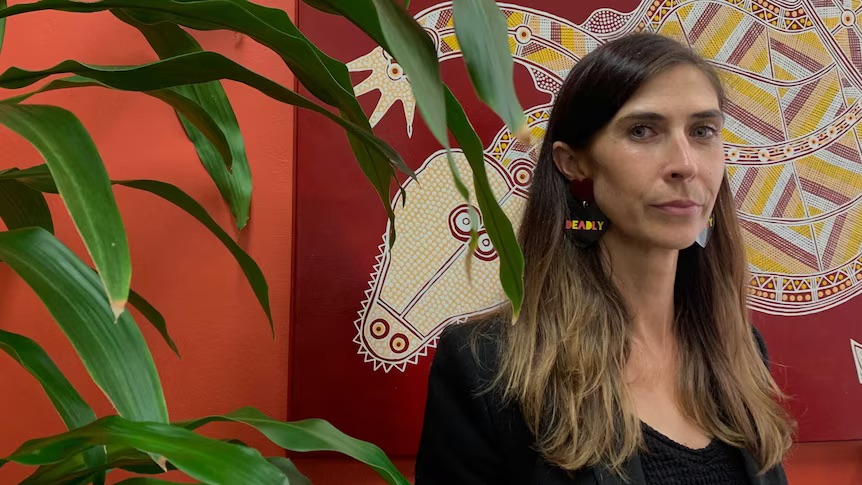
In the aftermath of the lockdowns, a Dharriwaa Elders Group from Walgett in north-western NSW released a statement arguing the harm caused by NSW police in their COVID-19 response had damaged community-police relations.
"Police have a long history as an intimidating presence in Walgett, without a track record of building trust or communicating well with the local Aboriginal community..." the statement said.
One of the report's authors, Dr Julia Quilter, said the report's findings highlighted the "problems" with the fines system.
"Kids have no or little capacity to pay fines and saddling them with crippling debts only sets them up for future failure," Dr Quilter said.
Many of the suburbs with the most fines issued were identified by the Australian Government's SEIFA index as 'most disadvantaged'.
Of the thirty suburbs with the highest number of penalty notices, none were located in Sydney's wealthier enclaves of the Eastern Suburbs, North Shore, Northern Suburbs, or Northern Beaches.
"This is especially troubling given that fines are disproportionately issued by police to vulnerable kids already experiencing socio-economic and other forms of disadvantage," Dr Quilter said.
PIAC's chief executive, Jonathon Hunyor argued NSW needed an "urgent rethink" of the fines system, noting creating debts for children and their families only "amplifies disadvantage," as well as furthering distrust in the system.
A spokesperson for the Law Society of NSW said they welcomed the new report, "which highlights the importance of diversionary options for children, and the potential for fines to have a disproportionate impact on communities already facing social disadvantage".
In 2021, footage emerged of then-police commissioner Mick Fuller telling officers they would not be held accountable for tickets they issued falsely during the COVID-19 Delta wave lockdowns.
Police Minister Yasmin Catley told National Indigenous Times the NSW Police Force (NSWPF) is "committed to developing a strong, positive relationship with First Nations communities across the state".
The minister said the NSWPF was guided by its 'Aboriginal Strategic Direction 2024', which aims to maintain cohesive partnerships with Indigenous communities on issues like domestic violence and the over-representation of First Nations people in custody.
National Indigenous Times has previously reported on a series of incidents between NSW police and First Nations people — including current commissioner Karen Webb arguing Closing the Gap targets would lead to "competing duties".
RLC's chief executive, Camilla Pandolfini said their experience working with children, young people, and families, was that COVID-19 fines issued by police "disproportionately" targeted First Nations children, as well as children from disadvantaged areas.
"Fines are oppressive, discriminatory, and ineffective when used against children. We call for changes to policy, practice, and procedure to ensure that fines do not compound existing disadvantage and criminalise children," Ms Pandolfini said.
The report urges a need to learn from the pandemic and reform the fines system to protect children's rights and well-being.
More than 33,000 COVID-19 fines have already been thrown out by the NSW Supreme Court after they were declared invalid in late 2022.



