




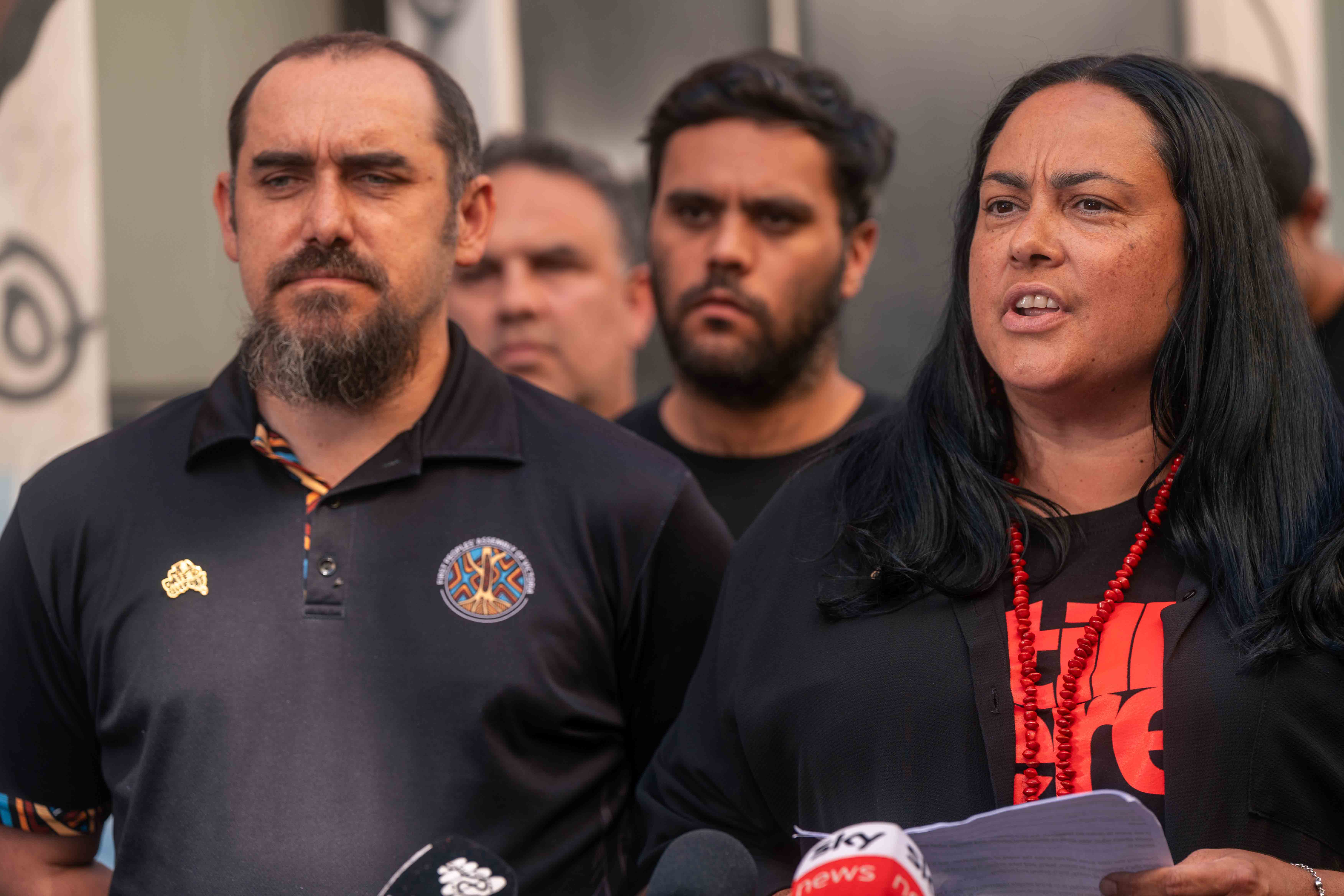
In the shadow of the statue of Archie Roach and his long-time partner Ruby Hunter - who both pushed for Aboriginal recognition their entire lives - and down a lane Roach's music and legacy made famous nation-wide, First Peoples' Assembly co-chair Ngarra Murray was clear and concise about January 26.
"It is not a date to celebrate," she said.
"Australia Day, celebrated annually on the 26th of January, has long been touted as a day of unity, a celebration of national pride and identity.
"However, for many Aboriginal and Torres Strait Islander people, this day represents a day of mourning; a reminder of the beginning of colonisation, dispossession, and systemic oppression."
Speaking to reporters, the Wamba Wamba, Yorta Yorta, Dja Dja Wurrung and Dhudhuroa woman the added: "Opponents of this change argue that altering the date dilutes national pride. However, pride in a nation should not come at the expense of ignoring the suffering of First Peoples."
On a boiling hot morning in Naarm, a group of Aboriginal leaders from across the community gathered in Charcoal Lane to encourage people to abstain from celebrating on January 26, as well as signing a petition, launched by Naarm-based Clothing the Gap, calling for the date to change.
Over a year on from the failed Voice referendum, the annual culture war attacks on people who call for a change of the date has exacerbated.
However, federally, it remains the bastion of politicians to sprout comments on it.
Opposition leader Peter Dutton - who in 2008 walked out of Kevin Rudd's apology to the Stolen Generations - has said he will not stand in front of the Aboriginal flag if he is elected Prime Minister, whilst his party has promised to force councils to hold citizenship ceremonies on January 26.
It even prompted Labor MP Bill Shorten to tell Mr Dutton on their joint appearance on Nine's Today show last week to drop the "culture wars".
"I'm going to miss you, but one of the things I'm going to miss about you is how you predictably lose your mind just before Australia Day every year," the retiring Labor MP said.
The speakers, which included VACCHO chair, Jill Gallagher, and the founder of Clothing the Gap, Laura Thompson, reiterated changing the date was not about apportioning blame or assigning guilt to non-Indigenous Australians, but rather about "fostering empathy".
"It's just a matter of time [before the date changes]," Ms Thompson said.
"Because Australians have a conscience, and they're not disrespectful, and they will listen to the voices of First Nations people."
However, for a change to come, leadership was required, Assembly Co-Chair, Rueben Berg said.
He argued the majority of Australians understood why January 26 is not a date to celebrate, but a few "loud voices" were "pushing back".
"It takes people to say we've heard what First Peoples have said, and we understand what the right thing is to do and to actually take action," the Gunditjmara man said.
Asked about the decision of some local councils to revert to holding ceremonies on January 26, Mr Berg, called on them to "think about why First Peoples are saying this is not about to celebrate," and talk to Indigenous people in their community about their views on the matter.
"Hopefully, by doing so, they realise why that case is being put, and they might reconsider those views," he said.
Speaking to reporters, Ms Murray said 87 years after Aboriginal activist first labelled January 26 a 'day of mourning' in 1938, they would continue that call.
"Changing the date of Australia Day is not about erasing history, but about acknowledging its impact and creating a pathway towards unity, grounded in truth," she said.
Highlighting the impacts on First Nations people the arrival of the first fleet in 1788 had, including "destruction of culture, separation of families to their Country, and acts of genocide," Ms Murray argued it shouldn't be much of a surprise that throwing a party on that date is offensive to a lot of Aboriginal people right across this country.
"To celebrate this day without acknowledging its impact, is to ignore the pain and resilience of the first peoples of this land," she said.
"The resistance to changing the day often stems from a reluctance to confront Australia's colonial history, yet understanding and acknowledging the truth is the first step towards any genuine resolution."
With the annual culture war argument surrounding January 26 often playing out in the media and by politicians yet enacted through racism and abuse, often on social media, Ms Murray said the impacts took its toll on Indigenous people.
"We are sick and tired of feeling unsafe in our own homelands every year," she said.
"We dread the 26th of January and the racism and ignorance that comes with it."



