




Land Councils in the Northern Territory have criticised the CLP government's decision to enact "significant" changes to water allocation plans without prior consultation with Traditional Owners.
Water Minister Joshua Burgoyne said on Wednesday the government was bringing in measures to "streamline decision making and allow economic development in the Territory".
"We are providing certainty to the environment and users of water through the declaration of water allocation plans in the Mataranka and Western Davenport regions," he said.
"Both of these plans have been developed using the best available science and a comprehensive understanding of the water resource."
The NT government said the Western Davenport Water Allocation Plan "maintains the vast majority of water in the aquifer, with the ESY [estimated sustainable yield] using only 0.6 per cent of the groundwater storage throughout the 10-year life of the plan, or 0.06 per cent per year".
"This means that 99.4 per cent of the groundwater remains in the ground over the 10-year life of the plan," Mr Burgoyne said.
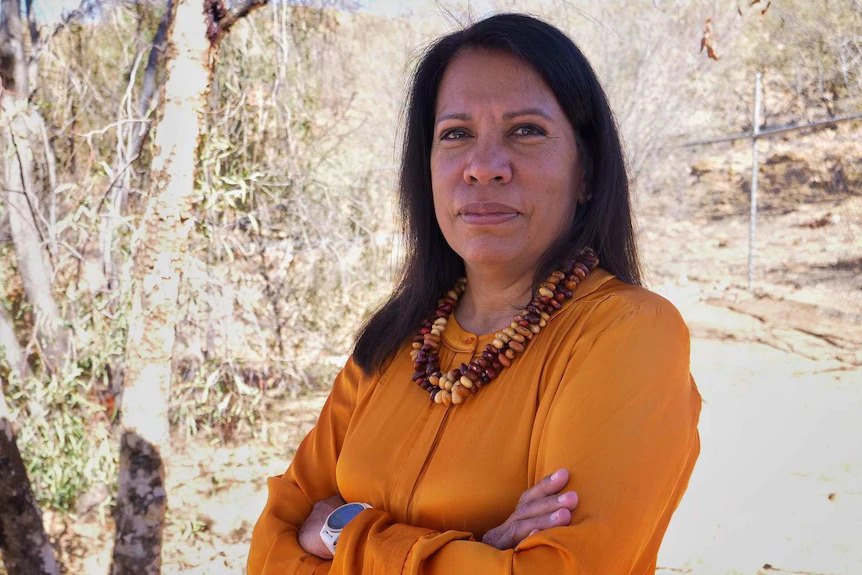
The Central Land Council's (CLC) General Manager for Professional Services, Dr Josie Douglas, said there had been no warning of the changes, and "no effort by the government to speak to traditional owners".
"With holidays looming and cultural activities in the region well underway, the Central Land Council is unable to seek the views of those most likely to be impacted by the changes, the traditional owners of the region," Dr Douglas said.
The NT government said the Mataranka Water Allocation Plan 2024-2034 is the "first water allocation plan for the area," and covers over 9,000km2.
It comprises three water management zones: North Mataranka, South Mataranka and Larrimah.
"The aquifer holds an estimated 32 million megalitres (ML) of water, with the estimated ESY for this allocation plan set at a maximum of 62,474 ML per year," Mr Burgoyne said.
"Together, the ESY and the management rules preserve more than 90% of the dry season flows to the river.
"The plan protects the environmental value of the Roper River and iconic springs, providing water security to communities, and supporting economic development, including in the Larrimah agricultural precinct."
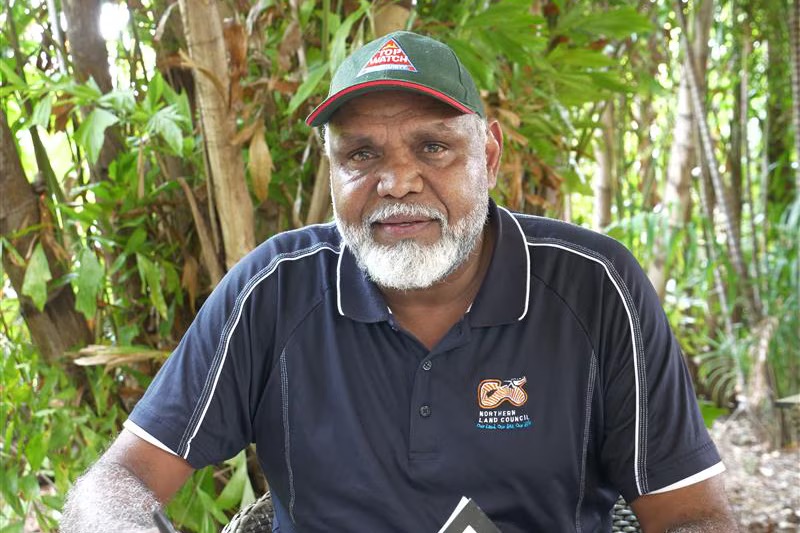
Northern Land Council chair, Matthew Ryan, said the the plan was an "absolute failure" that is "dismissive of the environment and our culture".
"Both the previous and the current NT Government have ignored the voices of Traditional Owners who have repeatedly said that the health and viability of the Roper River and the springs at Mataranka are at great risk," Mr Ryan said.
"Water is life. It is our most valuable resource and Traditional Owners have an obligation to take care of the land and areas of cultural significance."
The NLC said despite being a signatory to the National Water Initiative (NWI), the NT Government had "failed to genuinely consult with Traditional Owners," as well as failing to produce a plan "informed by best-available science and socioeconomic analysis as required".
The Western Davenport region is home to Singleton cattle station—holding the largest water licence in the NT, as well as significant mango and melon crops.
The CLC said Native Title holders for Singleton station were "so anxious" about the impact of large-scale water extraction on groundwater dependent ecosystems and sacred sites in the region they asked the CLC to appeal the licence in court.
The licence would see up to 40 gigalitres per year allocated to irrigate a large fruit farm in the desert terrain of Central Australia.
It is the largest amount of groundwater the NT has ever allocated and will be done without cost to the licence holders.
In February, the CLC announced they would appeal the ruling by the NT Supreme Court, with the NT Court of Appeal yet to hand down a verdict.
Dr Douglas said in recent years, the CLC had been urging the NT Government to consult Aboriginal people appropriately and regularly about water planning and decision making.
"Not just pay lip service to Australia's first people who have had stewardship of the lands and waters of the Western Davenport region for millennia and whose future livelihoods, culture and sustainable living depends on water," the Wardaman woman said.
The CLC said they would continue to represent and defend the rights of Traditional Owners across Central Australia and the Barkly in order to ensure their voices were heard and not discarded.
They said they would consult with Traditional Owners early in the New Year to take guidance and direction on what message they wanted to send to the new NT government about the changes.
"The challenge for the new CLP government is whether it will govern for some or govern for all," Dr Douglas said.
"The proof will be in their willingness to consult and be held to account for their decision by all Territorians."
Mr Ryan was equally firm.
"There's clearly no forward-thinking going on here," he said.
"This is not only very disrespectful to the Traditional Owners, but to all Territorians who are relying on us to create a healthy and sustainable environment for future generations."



