


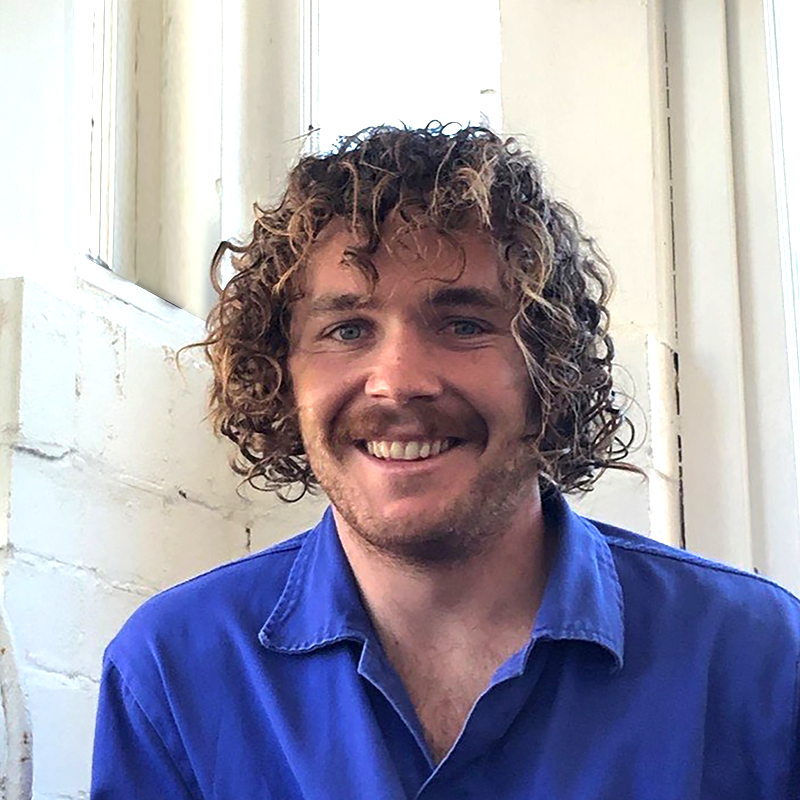

Just over five months out from its next carnival, the history and legacy of the Koori Knockout has been officially memorialised where the tournament began in Sydney's inner-west.
Blue Plaques, a NSW Heritage initiative commemorating individuals and moments in history which have helped shape the state's identity, unveiled its latest installation on Saturday at the site of the first Knockout played in 1971, Camdenville Park in St Peters.
More than half a century ago, Koorie United, Redfern All Blacks, Kempsey, La Perouse, Walgett, Cowra and a Mt Druitt-South Coast combined side competed in the first carnival then called the 'NSW Aboriginal Rugby League Knockout'.
Its founders; Victor Wright, Bob Smith, Bob Morgan, Bill Kennedy, Danny Rose and the late George Jackson had earlier conceived the idea at Redfern's Clifton Hotel.
Now, tens of thousands come to watch hundreds of players compete year on year across the men's, women's, boy's and girl's brackets during the October long weekend.
The Knockout is often recognised as one of the largest annual gatherings of Aboriginal people in Australia, and also a 'modern day Corroboree'.
After 54 years, Saturday's unveiling brought back some old memories for Uncle Bob Morgan, including one he said recognised a "very important historical event".
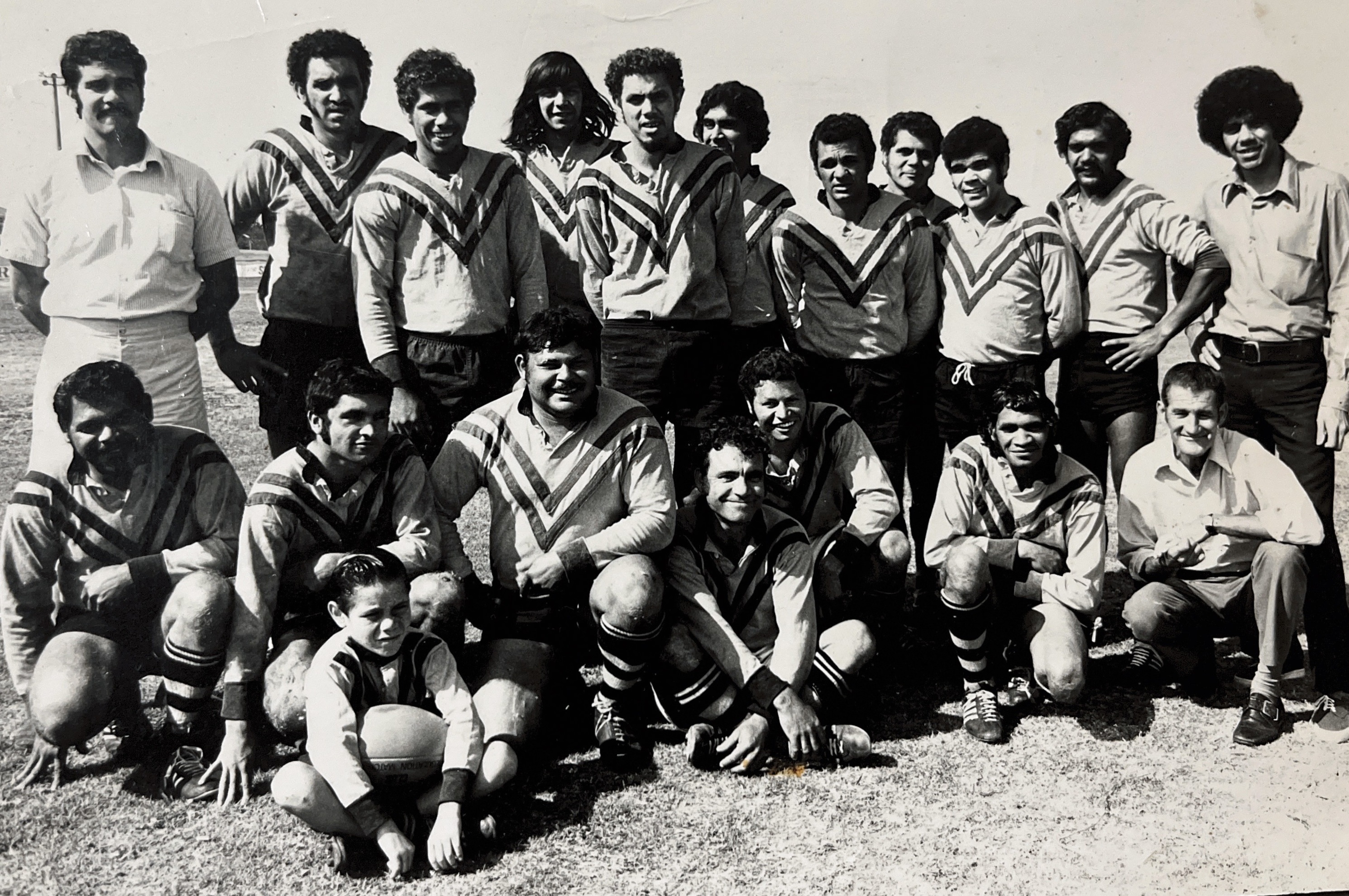
It was an emotional day for himself and fellow co-founders Victor Wright and Bill Kennedy, Uncle Bob told National Indigenous Times this week.
"I'd be lying if I said we knew that it would grow to what it is today. We had no idea, but we're so proud of the fact that it has," he said.
Uncle Bob was living at the Clifton Hotel at the time of those early conversations.
The founding members were all in their early 20s at the time, he said.
Among the six of them, with their ties to communities around the state and by utilising grassroots advertising - even cardboard signage posted up around Redfern - the inaugural carnival came together in a couple of months, largely through word of mouth, Uncle Bob said.
"One day I talked to the boys and said, 'Look, wouldn't it be great if we could have a carnival where our blokes could come along and play, and we could invite the talent scouts and see if some of these blokes can, you know, get a contract?'. That's how it virtually started," he explained.
"There were three of us from Walgett - one of the founding teams, two from Kempsey - that was another founding team, and then we knew blokes in Sydney... and of course Redfern All Blacks and La Perouse (and) Cowra. We were all connected with political movements at the time."
The founders each allocated themselves responsibilities to get the tournament up and running.
Alongside the football, what became the Knockout came out of a motivation to organise a gathering "where our people could demonstrate that we're as capable as any other race of people on this planet, when given the opportunity".
"We weren't given those opportunities in those days," Uncle Bob said.
Uncle Bob reminded the first Knockout was just four years after the 1967 referendum.
"It's a time when we come together. When we decided that it wasn't just about football. It was about community, Country and kin. We wanted to ensure that our people came together and celebrated the fact that we are the oldest surviving culture on this planet," Uncle Bob said on Saturday.
"We wanted to incorporate all of that into what has eventually become the largest gathering of Indigenous people in the Southern Hemisphere."
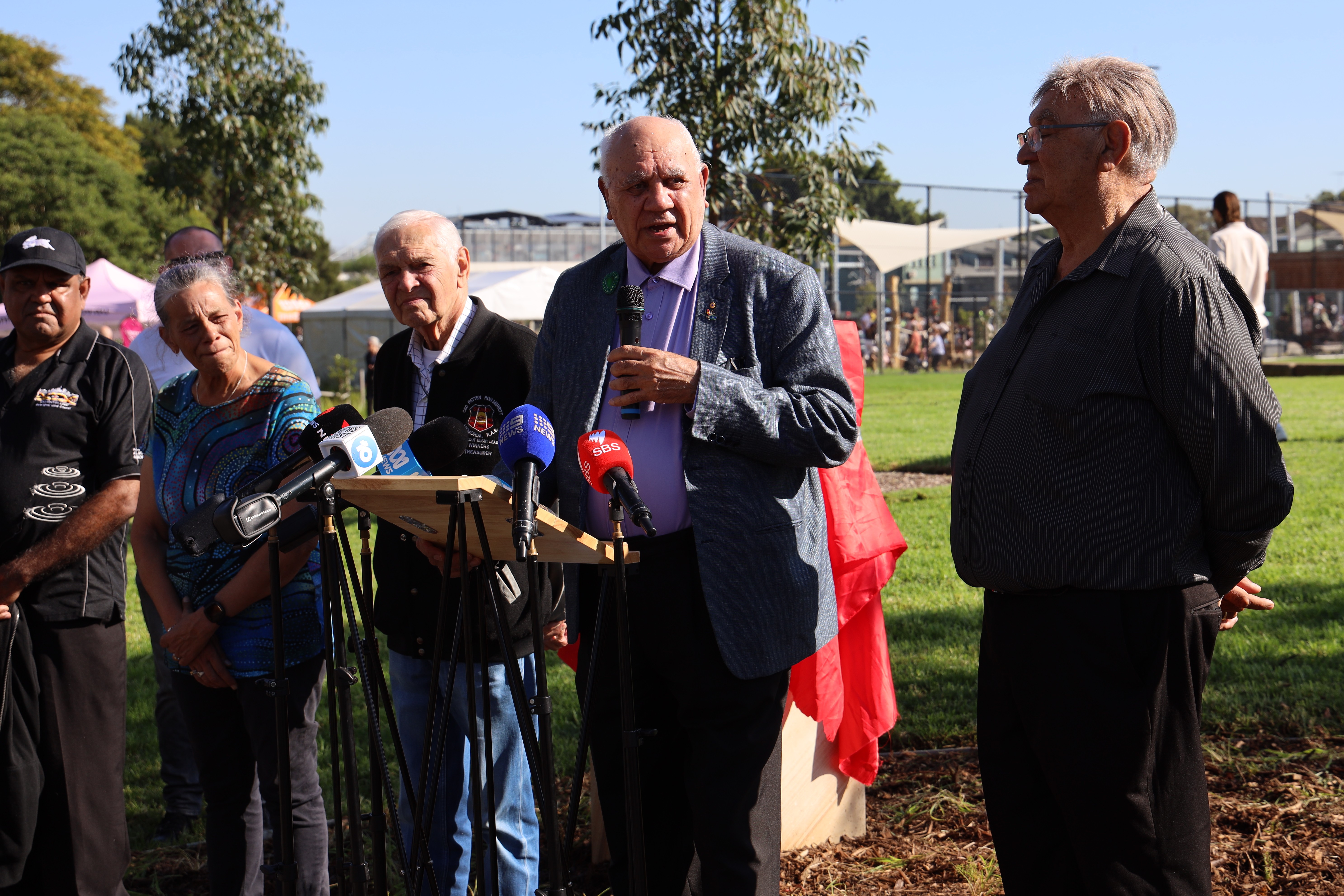
The men and women who had a hand in early Knockouts and have since passed were acknowledged by Uncle Bob on Saturday.
He played in a handful of Knockouts himself in those early years.
"It was tough, believe me...but, you know, you were able to test yourself against some really good (footballers). We were all mates…it was tough, but no dirty stuff," Uncle Bob told National Indigenous Times.
He recounted on Saturday when the then-coach of La Perouse "got stuck into me" on the phone feeling his side had been excluded from the first carnival.
"I said, Unc, anyone can come and play. And they did. And, of course, they won the first Knockout," Uncle Bob said with a laugh, "It was poetic justice, I guess".
One of the best he saw was the late Mark Wright from Moree who went on to play first grade for the Newtown Jets and represent NSW in the mid-to-late 1970s.
These days the Knockout joins past, future and current NRL and NRLW stars - Dally M winners, State of Origin and international representatives between them, with local footballers from communities across the state both on the field and in the crowd.
The organisation and hosting of each knockout is assigned to the previous year's men's competition winner.
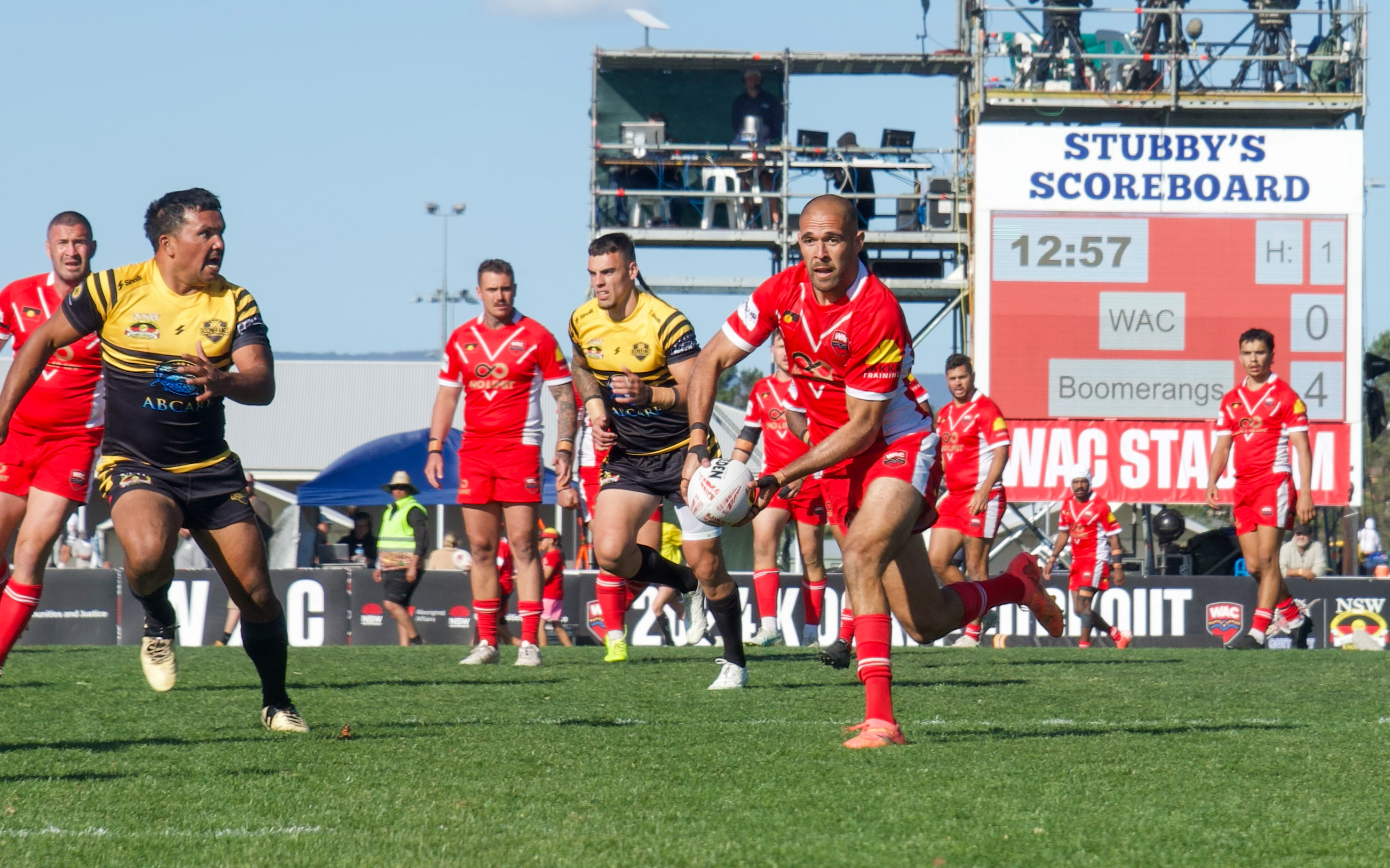
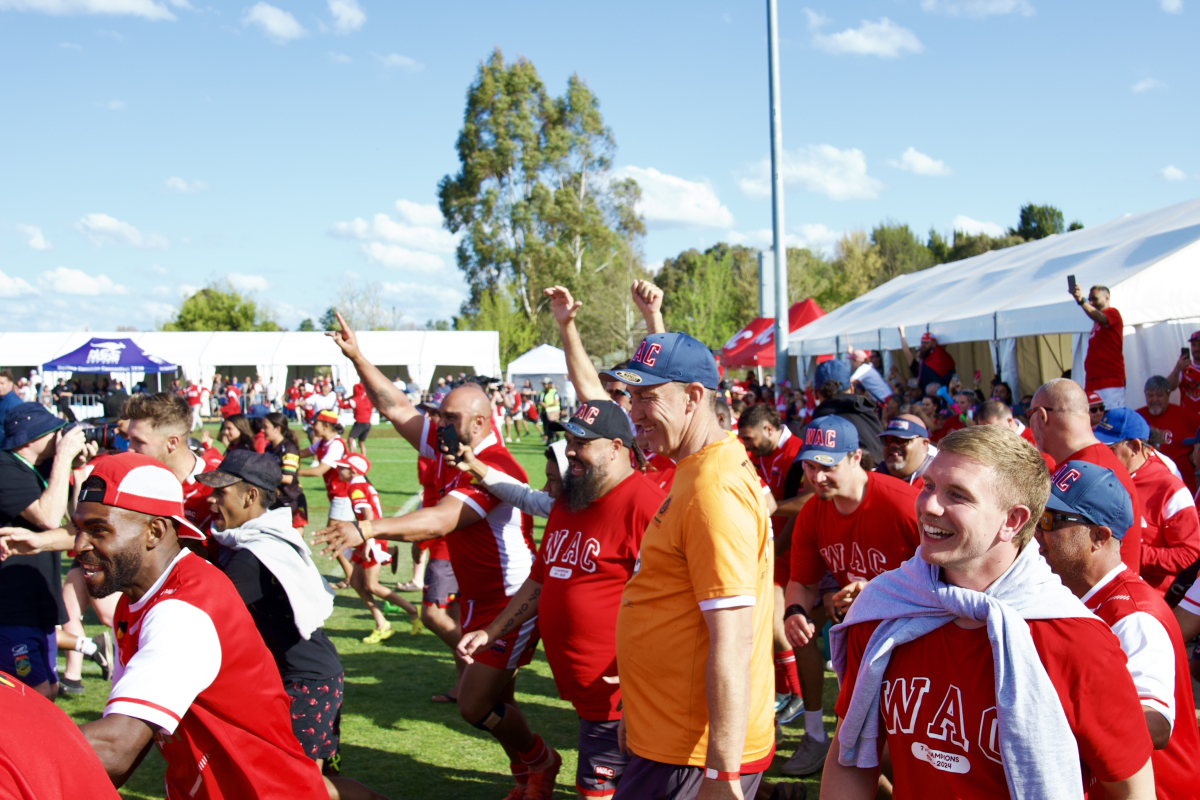
Walgett Aboriginal Connection are set to host 2025's Knockout at Riverside Sporting Complex on Gomeroi Country after claiming their eighth men's trophy going back-to-back in Bathurst last year.
"The Knockout is no longer a small football carnival or an Aboriginal community event, it is now a major sporting event on the New South Wales calendar," another co-founder, Uncle Bill Kennedy said at WAC's venue announcement in December.
"As founders, we're proud of the legacy we have left, but are also in awe of where our modern day leaders have taken the event and turned it into a showcase piece."
Blue Plaque NSW places round markers at sites around the state to 'recognise and share the stories of individuals or moments in history'.
NSW Minister for Heritage Penny Sharpe said: "This is more than a tribute to a game of footy – it's a celebration of the deep cultural connections, identity and resilience of Aboriginal communities across NSW. The Koori Knockout is a living celebration and it's great to see it formally recognised today".
"The Koori Knockout is a proud legacy of Aboriginal leadership, determination and community spirit. It began as a grassroots initiative and has grown into one of the most significant cultural gatherings in the country. This plaque rightly honours that history."
Local inner-west members Minister Ron Hoenig and Jo Haylen said they were proud to see the recognition in their electorate and local community, respectively.
The plaque unveiling coincided with Inner West Council's official re-opening of Camdenville Park following a 8.2 million upgrade.
Mayor Darcy Byrne said, as previous Mayor of Leichhardt, bringing the Koori Knockout to Leichhardt Oval in 2016 and 2017 was one of the council's best achievements.
Current Redfern All Blacks secretary Carlo Svagelli, life member Charles 'Chicka' Madden, and former player and Metropolitan Local Aboriginal Land Council chair Allen Murray attended Saturday's unveiling.
"It was important for Redfern All Blacks to be here today because the Knockout is part of who we are," Mr Svagelli said.
"Our Club has been there since the beginning – not just playing the game, but carrying the culture, the community, and the stories.
"This plaque ensures the legacy of that first Knockout, and those who started it, is honoured and remembered."



