




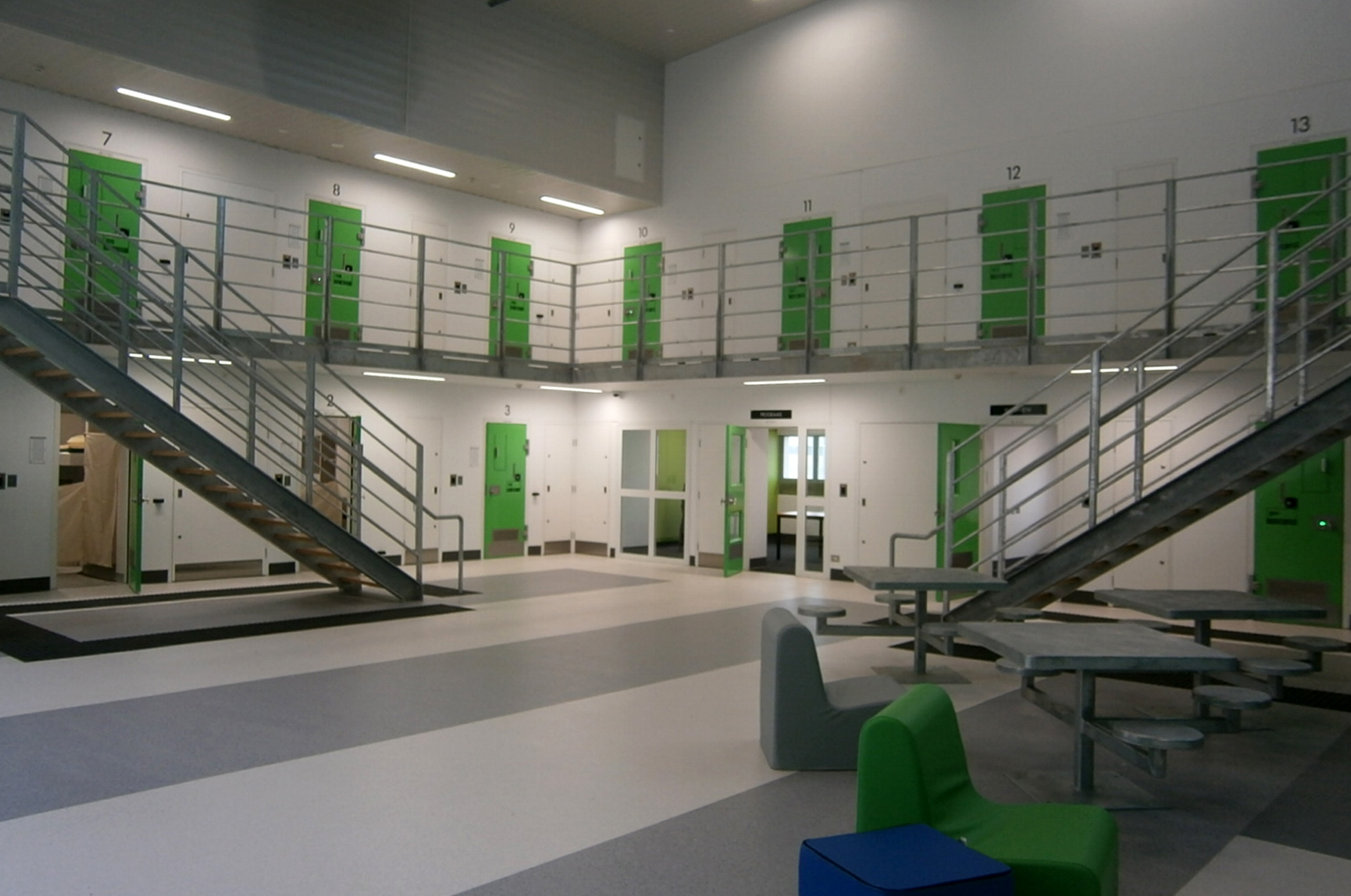
New data shows that in 2024-25, the ACT Government spent an estimated $36.2 million on detaining Aboriginal and Torres Strait Islander people in the Alexander Maconochie Centre and the Bimberi Youth Justice Centre, compared to just $15.4 million on delivering services through Aboriginal Community-Controlled Organisations.
The ACCO funding data was revealed through a recent question asked in the Assembly by the independent Member for Kurrajong, Thomas Emerson MLA. The detention costs come from Productivity Commission data released earlier this year.
"The ACT Government has committed to building the ACCO sector to deliver services to Close the Gap, yet they've been pouring far more money into incarcerating First Nations people than funding ACCO-led services for them," Mr Emerson said.
"It's easy to talk about justice reinvestment and supporting First Nations people, but following the money reveals what the ACT Government has actually been prioritising.
"People don't turn to a life of crime without reason. We know services that improve the lives of people experiencing disadvantage lead to reduced crime. We need long-term upstream investment that strengthens communities, keeps people out of jail and saves money downstream."
'A complete failure of priorities'
Bundjalung man and community advocate Joe Hedger said the ACT is "spending more than double locking our people up than we are on the solutions that actually keep them out of prison in the first place".
"That's not just backwards, it's a complete failure of priorities," he said.
"We know what works. Community-led solutions, grounded in community leadership, are delivering outcomes every day, often with little to no government investment. Meanwhile, millions keep getting poured into a system that punishes the symptoms and ignores the cause.
"It's also economically unsustainable. In a small jurisdiction like the ACT, it's hard to justify spending tens of millions of dollars every year locking people up and expecting a different result. Taxpayers have a right to expect better, especially in the current economic climate."
Winnunga Nimmityjah Aboriginal Health and Community Services chief executive Julie Tongs said "it is clear from all the available data that people detained in the AMC are more likely than not to reoffend upon release".
"The Productivity Commission in its latest report reveals 40 per cent of adults discharged from the AMC return to prison within two years," she said.
"The Productivity Commission has also revealed in its latest report that the AMC has the highest Indigenous incarceration gap in Australia.
"Even more disturbing is that in the last year the ACT had the highest rate of Aboriginal deaths in custody in Australia."
Ms Tongs, a Wiradjuri woman, said: "If the ACT Government is serious about fixing these issues, there needs to be more investment in community-controlled services to address the gaps - with things like an Aboriginal Child Care Agency for First Nations kids at risk, and an Aboriginal Justice Centre."
Overwhelming evidence shows the value of justice reinvestment
Mr Emerson noted that a significant body of work has highlighted the social impact and economic efficiency of justice reinvestment. In the ACT, the Jumbunna Institute's 2025 Independent Review into the Over-Representation of First Nations People in the ACT Criminal Justice System and the Justice Reform Initiative's 2024 report on Alternatives to Incarceration in the Australian Capital Territory both show the positive impact of redirecting funding from incarceration to community-led programs. A 2020 review of the Galambany Court - one example of a diversionary program - showed a $3.25 return on every dollar spent.
Mr Emerson called for increased funding for ACCOs and preventive programs in the upcoming ACT budget.
"Let's see the ACT Government put their money where their mouth is in this year's budget," he said.
"Imagine the level of service provision that could be provided with the almost $600 per day it costs to incarcerate someone at the AMC, or the more than $4,000 per day it costs to detain a young person at Bimberi.
"These are huge costs and they're indicative of the mistake we continue to make in failing to invest sufficiently in prevention and early intervention."
Mr Emerson said the ACT does not invest enough in "breaking cycles of disadvantage", and pays "the price with an expensive justice system".
"We're pouring millions and millions of dollars into addressing symptoms while refusing to invest sufficiently in tackling causes, with catastrophic social and economic consequences," he said.
"Upstream investment is a win-win — it makes economic sense and leads to far better community outcomes. The Territory budget needs to be restructured to reflect this reality."
'It's costing every single Territorian'
Mr Hedger noted that "you don't get safer communities by investing in incarceration".
"You get safer communities by backing people early and backing solutions that come from the ground up," he said.
"Right now, we're doing the opposite and it's costing every single Territorian."
An ACT Government spokesperson told National Indigenous Times the government is "committed to addressing the overrepresentation of Aboriginal and Torres Strait Islander people in the justice system, in line with our obligations as signatory to the National Agreement on Closing the Gap".
"The ACT Government supports justice reinvestment and diversionary programs to prevent offending and reoffending.
"The ACT Government does not accept the comparison being made, as it compares fundamentally different types of expenditure, and does not account for others. Detention costs represent whole‑of‑facility operational expenditure required to safely and lawfully detain people. These costs are not discretionary and include staffing, infrastructure, security and statutory obligations."
The spokesperson said the government acknowledges the critical work done by ACCOs to support life outcomes for Aboriginal and Torres Strait Islander people, and "continues to work in partnership with Aboriginal and Torres Strait Islander organisations to improve outcomes and reduce over‑representation of First Nations people in the criminal justice system".



