



In a closed door discussion, mothers and daughters have shared memories of the days, and heartbroken years which followed, when their lives met the child protection system.
One mother said she grieved as if it were a death when her children were taken from her care.
"If this is what I'm going through…imagine what my girls are going through," she recounted feeling.
She has since been reconnected with her daughters, who now live at home, after an exhaustive battle.
"The system only ever did everything it could to stop my girls from coming home," she said.
Her lived-experience shared was one of numbers heard at the NSW Aboriginal Child & Family Conference, recently held on Dharug Country.
Across discussion, the realities of what's been endured by many - families separated, kids arriving at strangers' doorsteps, abuse and pain, were repeated.
They brought attentive silence from a room filled with the sector working to end those experiences from being repeated, followed by applause for the speaker.
People, not numbers or statistics, was a common theme.
At the mothers' panel, domestic violence presented as shared experience, and catalyst for forced removal tied with victim-blaming.
One mum lived through knowing her now-adult daughter, who sat beside her on the panel, was being sexually abused by her father while she was forced to keep her distance despite living on the same property.
Another recounted fighting "tooth-and-nail" after her kids self-placed.
She described fearing the possible consequences of going to pick up one of her children after he called pleading to come home, and times being deemed too reactive by those making the decisions in her efforts to reconnect.
After a "healing" reunion where her care rights for her son were reinstated, the toll of her son's experience in an abusive out-of-home care environment took its toll, she said.
Her son became an "angry" teen, and later entered juvenile detention.
"There was so much trauma," she said, "It's not his fault".
She said she remains angry, with every right to be.
Uncle Willy Nixon told National Indigenous Times his culture is still lost as a result of his removal from family and placement at Kinchela Boys Home (KBH) on the NSW mid-north coast more than half a century ago.
Stolen Generation survivors Uncle Roger 'Pigeon' Jarrett and Uncle Robert 'Bullfrog' Young joined Uncle Willy in relaying their experiences at KBH.
All three were forcibly removed from their family, stripped of their names, identity and endured the result of Government policy.
"I feel the bloody tears of my mum on my hands, even today," Uncle Roger said of the time his mother was made to leave after travelling hours believing she was going to take her son home.
She had been told signing papers would mean her son would return home after 12 months on the day he was taken, aged 11.
Uncle Roger described his time there as torment.
After 11 years at KBH, Uncle Robert was placed with "nice people…they treated me like a human being".
He wasn't told, however, his mother was just 150 yards away from his foster home.
Uncle Willy said they are three of just 49 still alive from the 600 who were taken to KBH.
He spent seven years there before being sent to other institutions as a child.
"It's still going ahead now...through removing children from their families, their culture," Uncle Willy told National Indigenous Times.
Speaking earlier at the conference, Yoorrook Justice Commissioner Sue-Anne Hunter said the government philosophy of the Stolen Generations was not a thing of the past, and "the colonial machine is working exactly as its planned".
"Laws have changed…but the actions have not stopped," Commissioner Hunter said, adding "this isn't history, this is now", referring to the overrepresentation of Indigenous Victorian children being placed into care - 102.9 per 1,000.
The concern is felt in NSW.
Emma (not her real name) is 18 years old.
Her account of entering OOHC care due to a parent's drug and alcohol-related issues earlier in her youth, moving through several homes - some of which were places of physical abuse and others becoming her new home without much choice, feelings of isolation at home and school, bullying and self-harm was met with a standing ovation.
In a safe environment Emma said she later began to experience security and self worth, and found a support worker who met her needs.
Last week Catherine Liddle, chief executive of SNAICC, the national non-government peak for Aboriginal and Torres Strait Islander children and families, revealed latest data shows 22,000 First Nations children and young people are in out-of-home care.
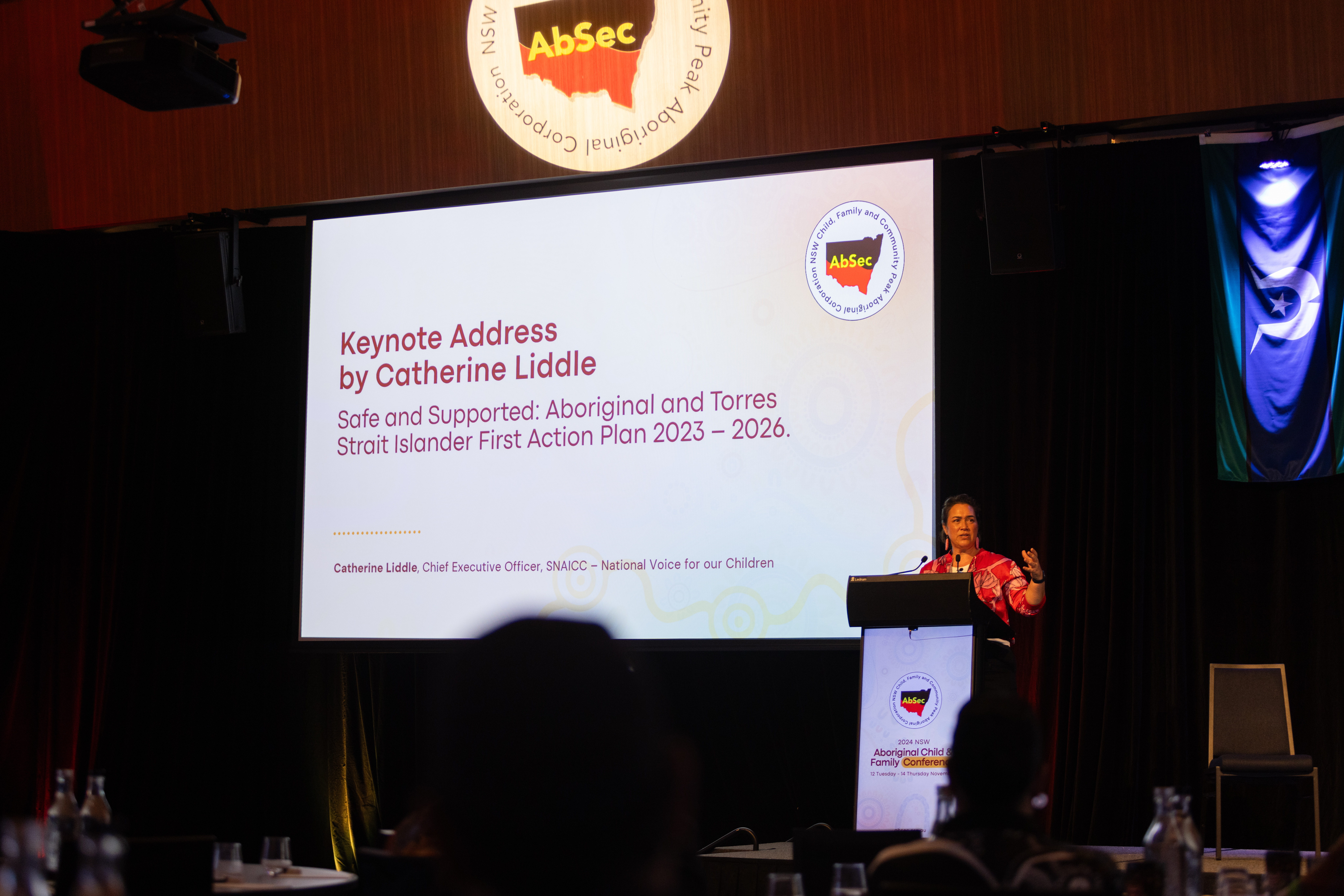
Speaking to National Indigenous Times, Ms Liddle backed ACCOs (Aboriginal Community-Controlled Organisations) as the groups with means to create safe spaces for children.
She added full commitment to Closing the Gap targets from government, and celebrating pieces of success already achieved, were crucial to "the tidal wave that we need to push back on the over-representation of our children in out of home care".
OOHC philosophies are "vague and inconsistent in placements, not aligning with First Nations' worldviews" and principals of kin are not adhered to where the "majority of our first nations children are", Jumbunna Institute for Indigenous Education and research fellow, Dr. James Beaufils told a session.
Dr Beaufils added he found a number of barriers are in front of Aboriginal families wanting to become carers.
This includes being over-policed, being disenfranchised, elements of shame and inappropriate assessment.
"Young people with a lived experience of OOHC referred to those who were placed with Aboriginal families as being one of the lucky ones. Being in these placements was seen to be luck of the draw," he said.
Tyrah Chan-Hampton is trying to change the future for Indigenous kids in OOHC.
A week out from graduating a social work degree at UNSW, she joined student peers Mahlia Garay, Tiah Payne, Tara Weldon in a panel discussion.
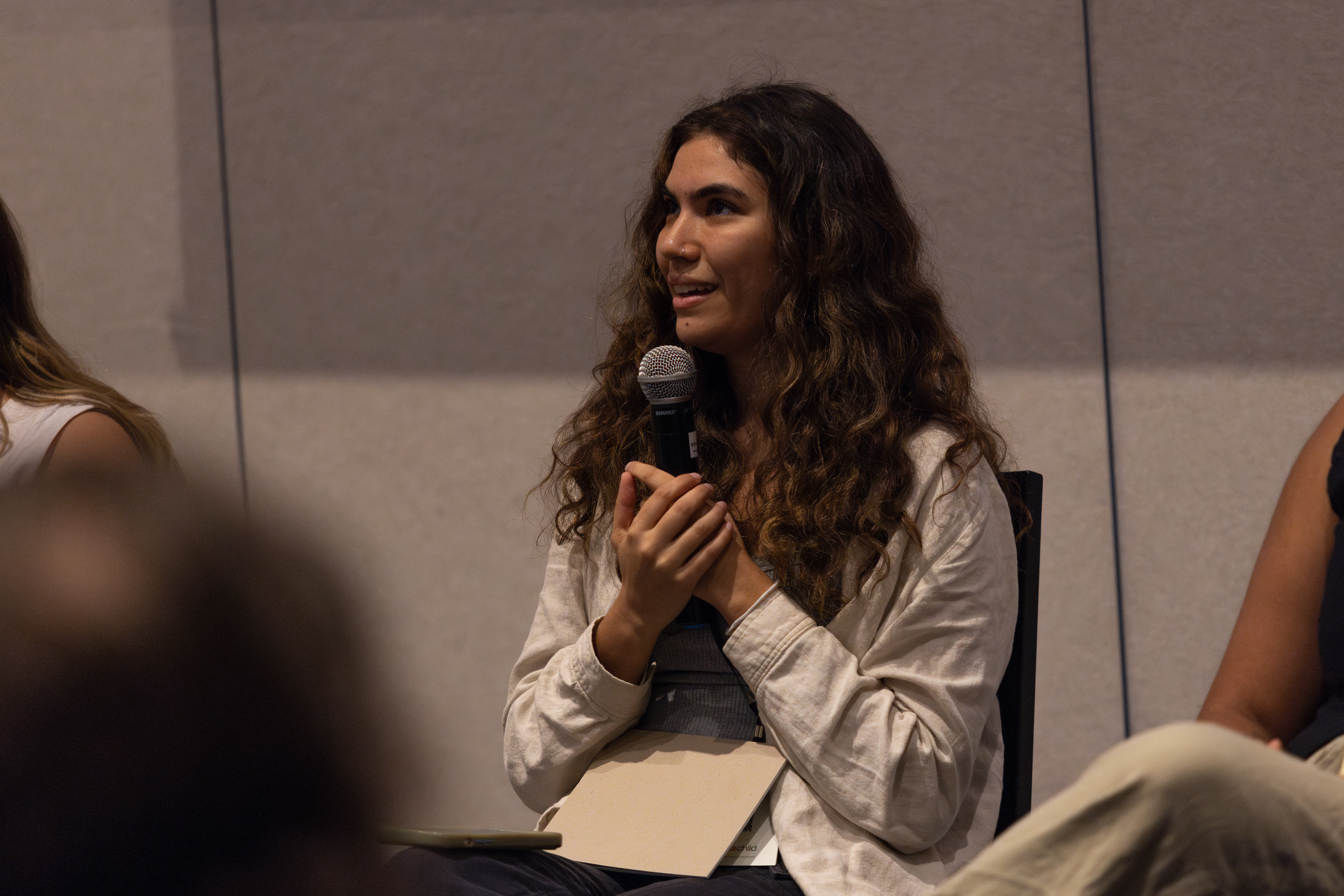
Ms Chan-Hampton has her own lived experience of the OOHC system.
"My hope for when I enter this sector is (that) more children are home. That's literally all I want. I want kids to be home with family, with kin, with community," she told National Indigenous Times.
Her panel said they were concerned about the numbers of people in their classes who had never met an Aboriginal person, given the likelihood they'll work with Indigenous kids in the profession.
"That's what we all hope, right, is that we do make change in this sector. Because, as we can see, the numbers are just getting worse and behind every number is a kid, is a family," Ms Chan-Hampton said.
"I'm a social worker, and that's scary because I now have the power (of decision-making)...I think all of us, anyone working within this profession needs to reflect on that power that we hold."
NSW Minister for Families and Communities, Kate Washington addressed the conference via a pre-recorded video outlining the state government's and her personal commitments to addressing the disproportionate implications of child services on First Nations families.
"We have an opportunity to, firstly, help more Aboriginal families stay safely together," she said
"Secondly, we have an opportunity where that is impossible, to protect more vulnerable children by responding and providing safe, stable and nurturing homes with Aboriginal family and kin.
"And thirdly, importantly, we have an opportunity to better support our central frontline ACCOs."
Minister Washington referred to a number of efforts towards reform, including the Ministerial Aboriginal Partnership Group (MAP Group), established in February, system reviews, shifts to risk-assessment framework and emergency removals, stakeholder engagement and forums held.
The path toward Aboriginal-led and shared decision-making and investment in early-intervention alongside government commitments to Closing the Gap were noted.
"We have a broken system that has continued to fail Aboriginal children and families. I'm here to say the system is broken, and I'm committed to working with you to rebuild trust and to fix it," the Minister said.



