




The Mabo case ended in an historic High Court decision in 1992 that rejected 'terra nullius' and recognised that Aboriginal and Torres Strait Islander peoples can hold native title based on their own laws and customs.
It upheld that the Meriam people of Mer (Murray Island) in the eastern Torres Strait maintained traditional rights to most of the island.
The case began on 20th May 1982 when five Meriam plaintiffs, Eddie Koiki Mabo, Reverend Dave Passi, Sam Passi, James Rice and Celuia Mapo Salee, sought legal recognition of their land on Mer.
They challenged the long-standing legal fiction that it was "land belonging to no one" at colonisation and argued that Meriam law and custom had continued without interruption.
Meriam witnesses gave over 4000 pages of evidence about their laws, clans and boundaries.
Hearings were held on the mainland and on Mer so the court could see the places and hear from Elders on Country.
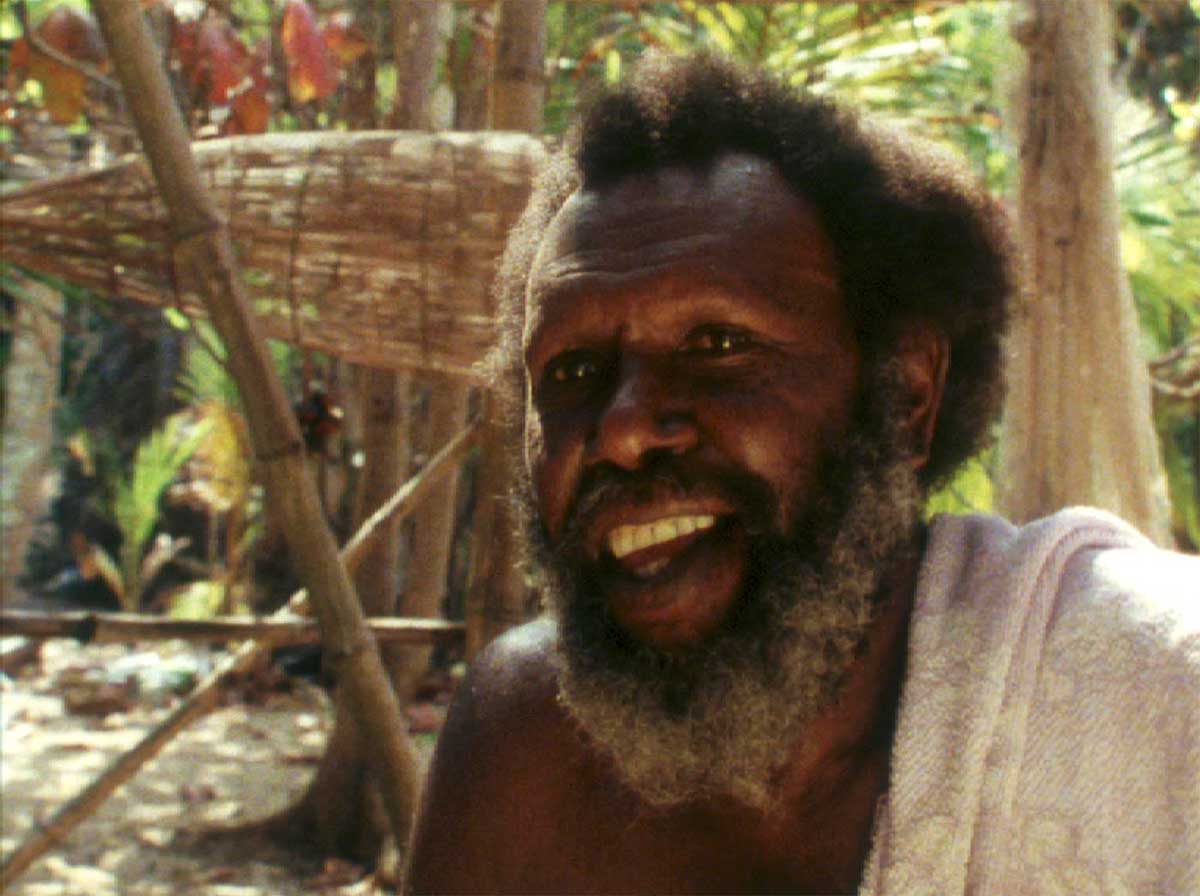
Eddie Mabo said the court's visit made history by hearing Aboriginal and Islander people on Country and recognising laws and customs laid down generations ago.
"We feel that we've made history in terms of the highest court in Queensland - coming out to an Aboriginal or Islander community to sit in our public court and listen to us," Mr Mabo said.
"It's very significant and we think that it'll also help the Aboriginal and Islander people that the court visits the area and be able to recognise the things that have been put in place many many generations ago."
While the facts were being heard, the Queensland Coast Islands Declaratory Act 1985 to wipe out the Islanders' rights without compensation.
In 1988, the High Court ruled that law invalid because it conflicted with the federal Racial Discrimination Act 1975.
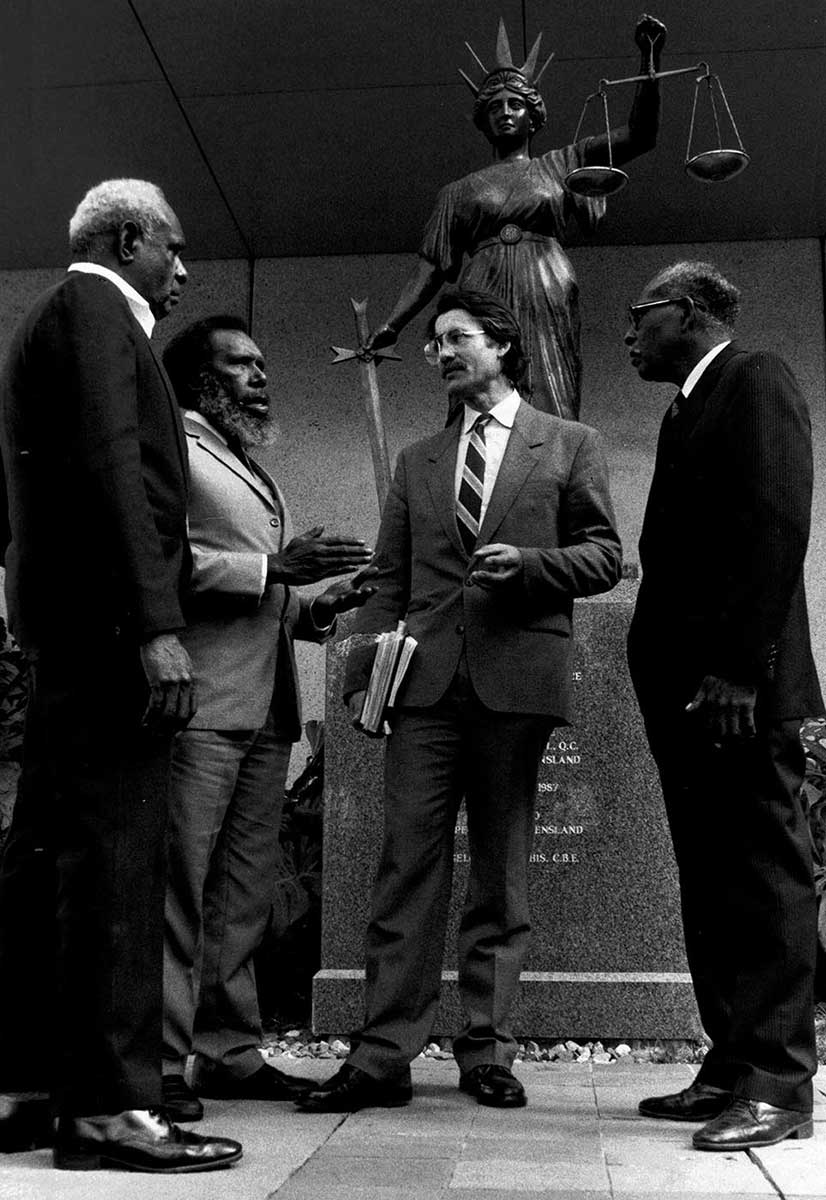
With the facts later settled, the High Court delivered its final judgment on 3 June 1992.
Six of the seven judges said that native title could survive the assertion of British sovereignty, that it depends on continuing connection to Country, and that the Meriam people were entitled to possession, occupation, use and enjoyment of most of Mer.
By then, Eddie Mabo, Sam Passi and Celuia Mapo Salee had passed away.
Eddie Mabo often explained the Meriam system in simple terms.
"In the Torres Strait, land ownership is the same throughout," he said.
"It is different from Aboriginal land ownership on the mainland... although we have tribal regions, we go much further into the clan area and then to individual or family holdings.
"When the first white men arrived in our islands they found people as village dwellers who lived in permanent houses and in well-kept villages.
"They also discovered that we were expert gardeners and hunters."
Those descriptions matched evidence the court heard about long-standing occupation and clearly defined clan territories on Mer.
Parliament later responded with the Native Title Act 1993, which began on 1 January 1994.
The Act shows how native title is recognised and protected and how claims, agreements and compensation are handled.
Native title usually applies to Crown land and certain waters and can coexist with some other interests, but it is extinguished where land has been granted for private ownership.
When mining projects are proposed on land that may carry native title, that law provides a right to negotiate - not a veto - and if agreement is not reached a tribunal can decide the terms on how it proceeds.
In conflicts between native title and earlier exclusive grants, the Crown grant prevails.
%20dancers,%201921.jpg)
The decision changed Australian law and public understanding by recognising that Indigenous peoples laws and relationships to Country pre-dated colonisation.
Many communities have since secured determinations and agreements, but the process can be demanding.
Claimants carry a heavy burden to prove a maintained connection, which is difficult where past laws and policies caused loss of language, culture and broke families.
Despite those limits, the case remains a turning point.
"The court system in Australia, have given my people the authority to decide for themselves because the system that were dealing with is totally strange to the people who invaded us during the earlier stages," Mr Mabo said.
The case ended the legal fiction that Australia was empty and established that native title exists where connection has been maintained and has not been extinguished.



