


A new First Nations exhibition has opened at the Australian Museum that showcases stories about the longest river in Australia, the magnificent Barka (Darling River).
Barka; The Forgotten River, will focus on the stories centred around the longest river in Australia, which is currently under threat.
The experience is presented in four sections with visitors following two different paths: In Our Veins, Lore Keepers, Agriculture, and Kulpa-Kulpa.
One path will lead to a healthy and thriving ecosystem and one towards devastating environmental and social impacts that will be felt far beyond its dry banks.
Curators want people to understand the need to repair the relationship with the river and its valuable resources.
With the collaboration between the two artists, Barkandji Elder Uncle Badger Bates and visual artist Justine Muller, and their mixed media, along with cultural objects from the AM's renowned collection, the visitor is taken on an unforgettable journey.
It also combines carvings, sculptures and audio-visual production to convey the importance of this extraordinary NSW river system, which brings into sharp focus the environmental impacts it is facing.
Focussing on the stories, culture, and people who depend on Barka as a life source, the exhibition has been a 20-year project for Uncle Badger.
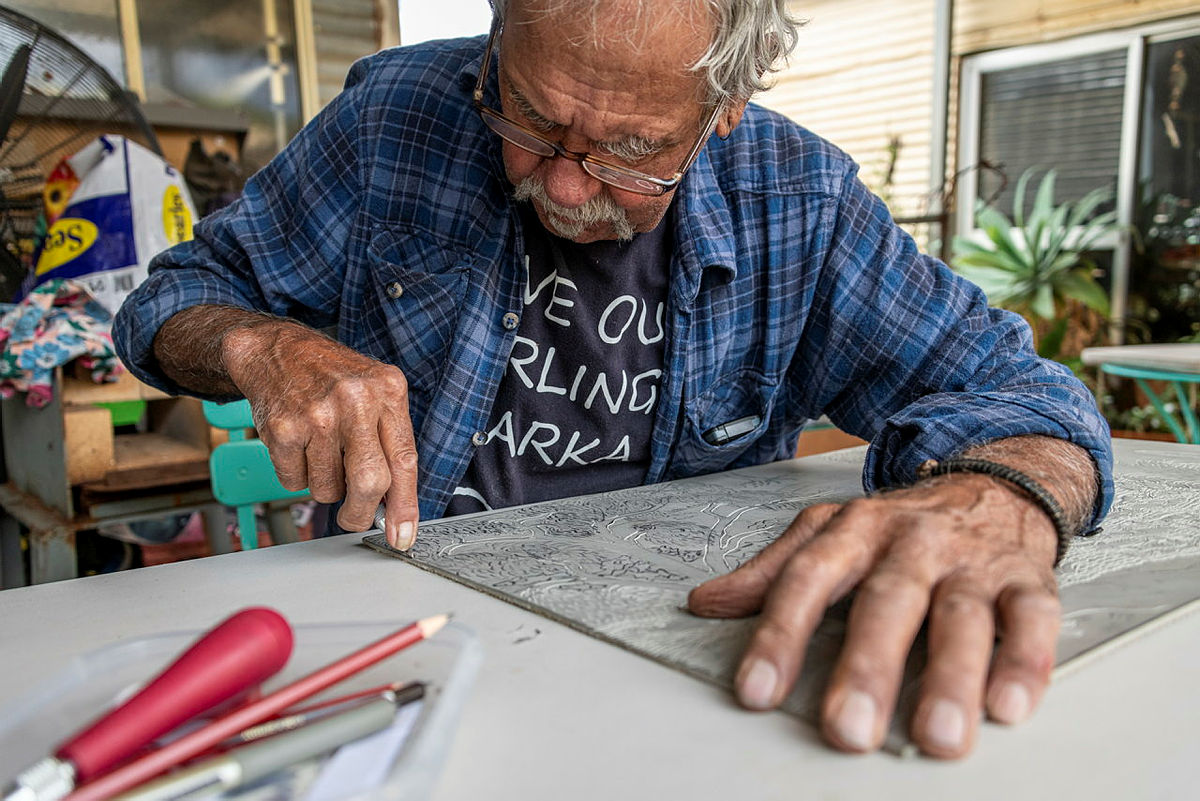
Born and raised on the river in Wilcannia, his grandmother Granny Moysey showed Uncle Badger how to carve and taught him about his Barkandji Culture while travelling along the river.
Uncle Badger uses sculptures, leadlight, lino print, wood, and steel to bring our attention to the predicament the Barka and its communities face.
Muller tells these stories using photography, video, sound recordings, ceramics and paintings she made on site in Wilcannia with Community participation.
Uncle Badger says that rivers give so much more than water – they provide strength and vitality to all who use them.
"Where rivers wander, life can flourish. Rivers and surrounding areas are home to different plants and species such as fish, yabbies, mussels, turtles, birds, and Red River Gums," Uncle Badger said.
"These animals and plants have been an important cultural and food source for the Barkandji people who have relied on the Barka's interconnected ecosystems for thousands of years."
The Barka's headwaters form in northern NSW and it joins the mighty Murray River at Wentworth in western NSW.
Creating the lifeblood for many towns across Queensland, New South Wales, Victoria and South Australia.
More than three million people rely on its flowing water for sustenance and irrigation. For Barkandji people it is the source of everything, it is the giver of life and it is central to their Culture.
"Rivers have shaped us as a species, long before we have shaped them. The modern world has attempted to change, divert, straighten and drain them. We must now restore our 'Barka' so she may help restore us," Uncle Badger said.
Muller, who was given a blessing from an Elder to travel out onto Country, said that not only was it a great privilege to be welcomed into the community.
The community showed her generosity and teachings enabled her to translate shared knowledge into a visual lens of her own.
Muller hopes others similar to herself will have the ability to see the importance and beauty of this culture and its wisdom.
"It was through their welcome and their care that I was able to learn and contribute in my own way to the wellbeing of the Barka," said Muller.
"Their deep spiritual connection to Country and all its surrounding elements will not only transcend time but will be essential to its survival.
"Through observation, reciprocity, and practice they have learnt to live with the land, whereas we live off it," she said.
"I hope that through this exhibition we can help bridge the cultural gaps and remind visitors of ancient truths which are now more relevant than ever."
Laura McBride from the Australian Museum said rivers "are not merely resources to be used, they should be recognised as living entities with whom we are in a lasting reciprocal relationship".
"In Barka: The Forgotten River, the use of multiple cultural objects from sculpture, paintings, tools and carved objects illustrates the great cultural and environmental understanding that Barkandji people have regarding the Barka and surrounding landscape." she said.
"Through consultation and collaboration with an Elder on Country, AM curator, Courtney Marsh, a Minjungbal-Yugambeh, Ni-Vanuatu woman, has been dedicated to showcasing how we all need to repair and improve our relationships to the Barka.
"Using historical items from the AM collection and contemporary art works, Marsh reveals how we must understand our river in a more holistic manner," McBride said.
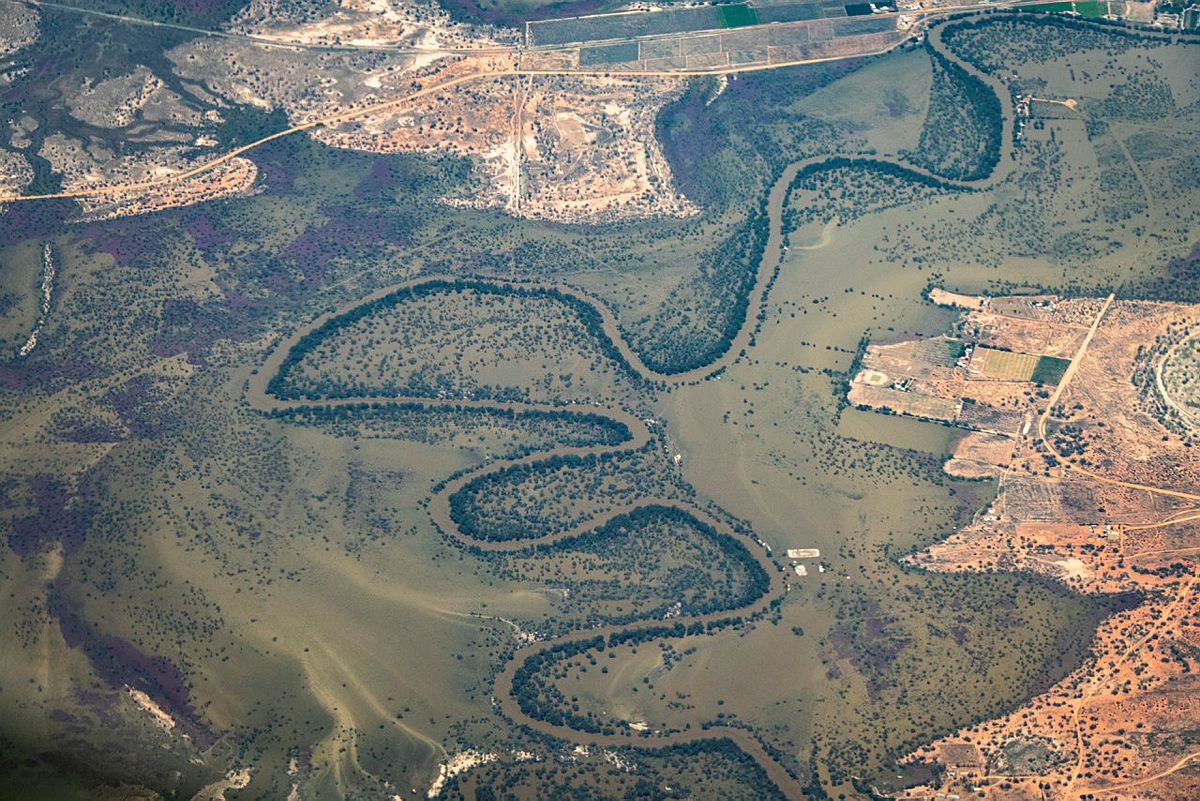
The Balnaves Foundation chief executive Hamish Balnaves said "the Darling River is under threat, and as a vital resource for the region and the community, the Foundation is proud to partner with the Australian Museum to highlight the plight of the Barka".
"We support the traditional custodians and seek to communicate the ecological and cultural values to a broader audience through this exhibition," he said.
Mr Balnaves added that the spiritual, cultural and ecological philosophy of First Nations peoples means our land and resources were kept in pristine condition for thousands of years.
Supported by The Balnaves Foundation, the exhibition will be open to the public in Hintze Hall from Thursday 16 March through to Sunday 23 July 2023.



