



Journalists and academics have urged stronger First Nations-focused education in Australian media at the Media Diversity Australia Symposium, saying the ignorance and misinformation seen during the 2023 Voice referendum campaign exposed deep gaps in newsroom understanding of Indigenous affairs.
Hosted by the School of Humanities and Communication Arts and Western Sydney Creative, in partnership with Media Diversity Australia, The Whitlam Institute, and the Centre for Western Sydney, the Symposium saw media leaders, academics, students, and advocates gathered for a day of discussion under the theme "Power, Platform, Possibility".
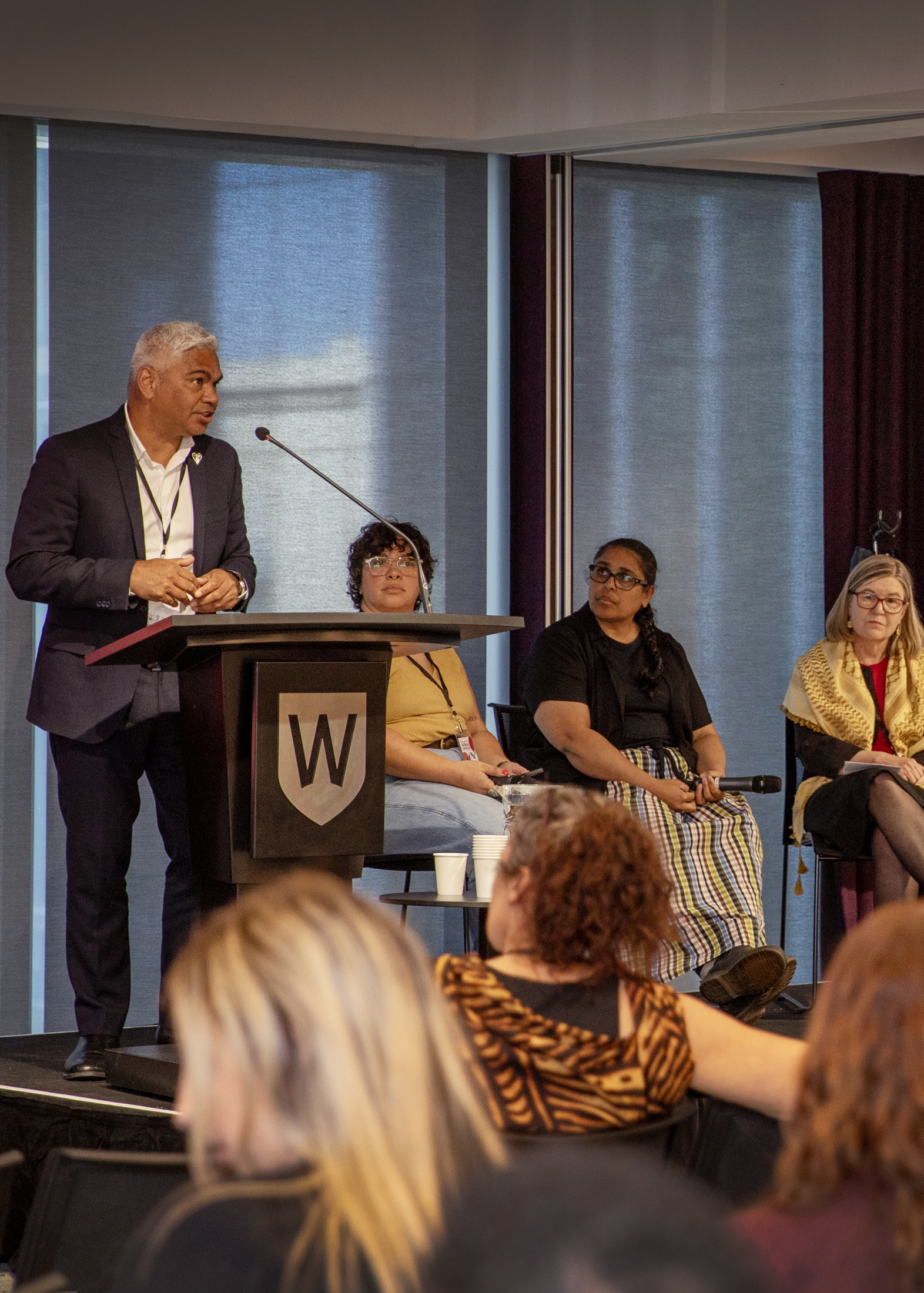
Held at Western Sydney University's Parramatta campus, the event featured sessions exploring diversity, equity, and inclusion across Australia's media landscape - including 'Indigenous Autonomy: Reclaiming the Voice,' a panel with Peta MacGillivray, Rhianna Patrick, Professor Susan Page, and John Paul Janke.
In the session, panellists described Australian mainstream media as "ill-equipped", citing fear-mongering media narratives used to incite racial fear in the public and undermine First Nations' rights amidst the 2023 Voice Referendum campaign.
"What I learned from the referendum was just how ill-equipped mainstream media was to cover Indigenous Affairs issues in any quality way...with any of the professionalism and the quality we would expect," said Ms MacGillivray, a Kalkutungu and South Sea Islander lawyer and UNSW researcher.
She said reporting had largely ignored the Referendum's vital context and the long-standing demand for constitutional reform by First Nations people.
"From what I saw, it was woefully inadequate where you had this two-sided approach to reporting on the detail, which resulted in none of the important stories getting covered," she said.
Similarly, Mr Janke, National Indigenous Affairs Editor at SBS and NITV, noted that media coverage failed to handle the Referendum appropriately as a matter of human rights and Indigenous self-determination.
"Australian media covered the referendum, not like a referendum, but more like an election, when the issue at hand was actually about humanity and how to improve the lives of Aboriginal and Torres Strait Islander people, given the lack of progress in closing the gap," he said.
He added that digital platforms only amplified the spread of misinformation:
"But what we saw was that this was the first referendum in the digital age. Misinformation and fear-mongering were spread through social media and particularly through digital platforms."
"And many media outlets, when they ran stories, didn't correct the information. They just let the information go, which was able to gain traction and perpetuate across our media landscape," he said.
Panellists agreed that these gaps were not just the result of newsroom practices but reflected a lack of training and preparedness for Indigenous reporting across newsrooms and journalism education.
"People didn't know what they were voting for; there was a lack of voter information and understanding of what was going on," said Ms Patrick, Senior Journalist at National Indigenous Radio Service.
"The fact that we haven't unpacked that, and how media feeds into the democratic process here, I think it's disturbing, and we should all be thinking about that a lot more," she continued.
Echoing this sentiment, Professor Page, Pro Vice-Chancellor of Indigenous Education at Western Sydney University, said more needs to be done to prepare reporters for covering Indigenous issues.
"Why didn't we have newsrooms that were ready and prepared to go? That's on us as universities. We ought to be preparing our journalists for that. We should be preparing all our professionals to be comfortable and capable in this space. So I think the media were irresponsible and possibly ignorant," she said.
Panellists called for greater First Nations-focused education in both universities and professional newsrooms to prevent the future spread of misinformation when reporting on Indigenous affairs.
"The first thing that needed to happen was education...It's one thing to be educated at university, it's another thing that when you walk into a workplace, that education doesn't finish, that education needs to keep going," Ms Patrick said.
"There needs to be a far greater uptake of critical thinking and thinking back to the purpose for which you are reporting and finding ways to pose critical questions that the reader and the audience can engage with. That's what we need to do better going forward, because the work of self-determination does not end.
"Aboriginal and Torres Strait Islander people do not compromise on self-determination. It's not going anywhere. So if journalists and the mainstream media want to engage professionally, they must be engaging in these issues because they're important to us."



