


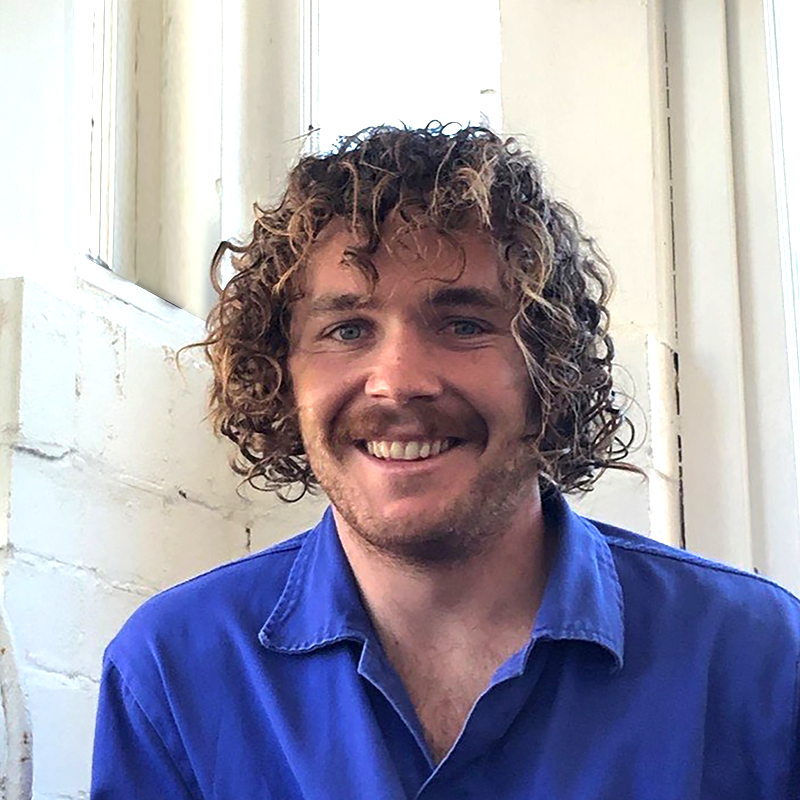

Ben Nabea Davis is imprinting his Torres Strait culture onto the AFL's marquee celebration of First Peoples, Sir Doug Nicholls Round.
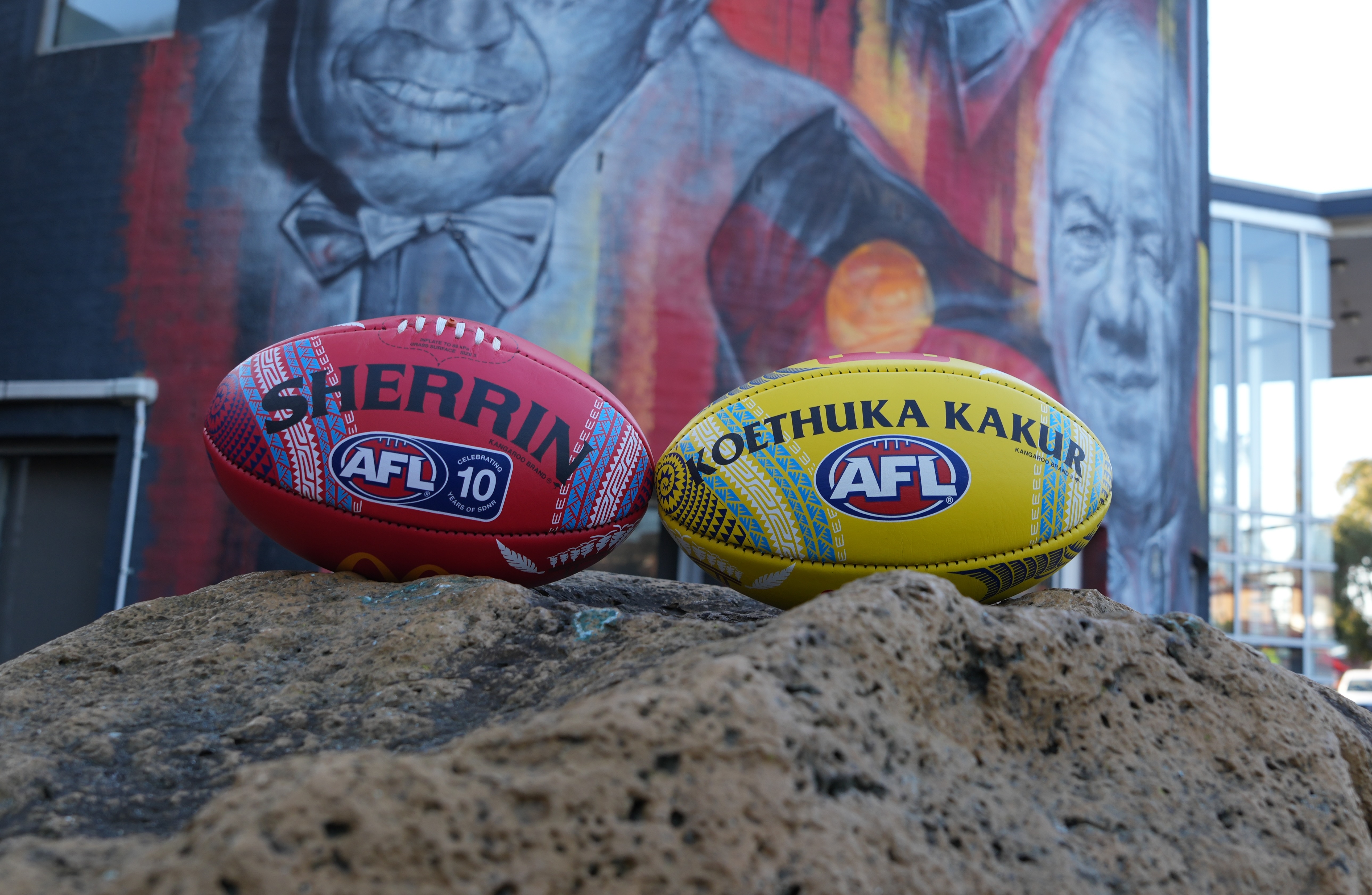
The Saibai and Waiben Islands man is paying tribute to his ancestors, cultural custom and Indigenous history of the game he loves on the Koethuka Kakur (ball, in Saibai Island dialect Kala Kawaw Ya) to be used across the next two weeks.
The former Adelaide Crow and VFL player has partnered with Sherrin for a second time in 2025.
Sherrin have featured Indigenous Art on their footballs for Sir Doug Nicholls Round over 10 years.
"It's just a really amazing sort of tribute from Sherrin to change the word to something in my language, something that I've just been learning and discovering over the past few years," Davis told National Indigenous Times.
The contributions of Indigenous people to what is now football is deep and storied - from its origins as marn grook to the generations of male and female champions of the code in elite to local levels across the continent.
It's a history arguably largely linked with Aboriginal people.
At present, Gold Coast Sun Heidi Talbot, a Ait Koedal woman, is the only Torres Strail Islander player across the AFL or AFLW.
In recent years, Darryl McDowell-White, son of Brisbane champion and triple-premiership player Darryl White, was on Brisbane's list.
Davis is proud to represent his culture on the greatest stage.
"It's a really amazing thing for Torres Strait Islander culture, because growing up when I would tell people I was Torres Strait Islander, they would say, 'Isn't that Aboriginal?" he said.
"They're both Indigenous, but they're very different.
"To be able to be the first person to design a Torres Strait Islander piece that goes on our ball for Sir Doug Nichols round, it took me a while to actually appreciate the achievement…I feel very privileged and humbled that I can share my beautiful culture through this design."
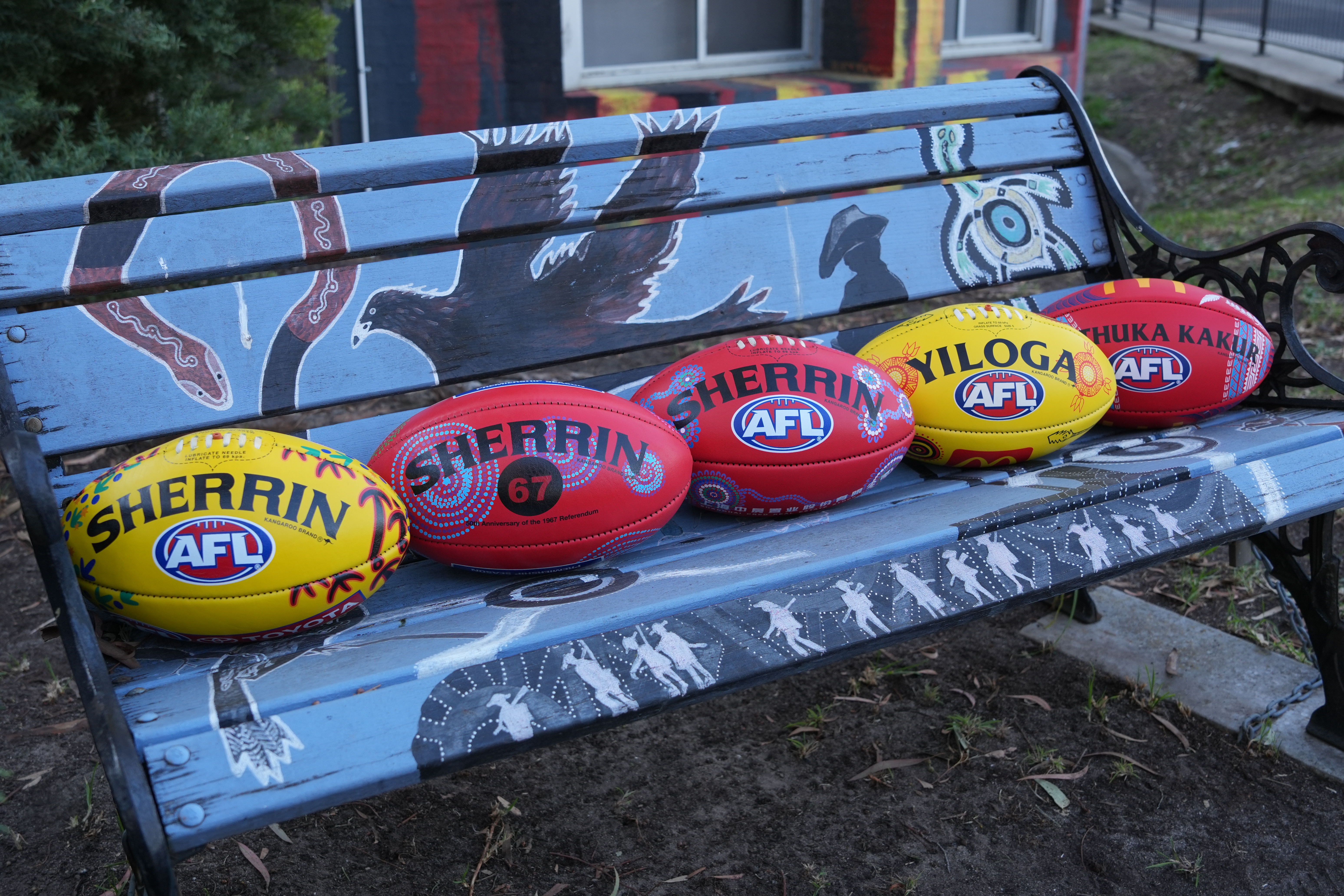
This year, Sir Doug Nicholls Round is bringing 'Past Legacies, Future Legends' to the fore.
Davis, and his design, has done the same.
Among "paying homage" to marn grook, the colours, customs of his traditional lands sweep across the leather.
It includes a Dhari traditional headress - "a very key integral part to our culture", "story of the hardship and all the trials our elder generation went through to get us to where we are today" in a shark tooth, basket weave pattern, a representation of his generation and "the emerging generation of Indigenous people who have been handed the batton by our elders, and we're very thankful for what they went through".
To him, he said, the basket weaving connects current and past generations together.
The warup is a traditional drum used in ceremony and dance, which also features.
"To me, this was a really integral part of the design" he said.
"I thought about going to the footy on the weekend, you sit around an oval and you cheer on these men and women who put on a performance. They try and win for their team.
"I tried to think about what links that to Torres Strait Islander culture. When we play the drum and we play the warup and watch our performers dance...it's very similar to us watching footy on the weekend. So that was a really integral part for the design as well."
Importantly, Koethuka Kakur replaces the iconic arched text 'Sherrin'.
"If you can roll your Rs, you can say it. If you can't, keep working on it," Davis joked.
It's not his first time putting his culture front and centre for Sir Doug Nicholls Round.
He previously partnered with Sherrin in 2024, and designed the Crows 2021 Indigenous jumper.
The annual celebration "stems far beyond football", he told National Indigenous Times last year, "It allows our Indigenous people to feel valued and really feel like they can express their culture and really be appreciated."



