

The Northern Territory Government's proposal to allow the public naming of accused rapists and child sex offenders before they are committed to stand trial has drawn cautious criticism from legal groups, who warn that identifying an alleged offender could also identify the victim.
Under NT law, the identities of people charged with serious sexual offences, including rape and child sex offences, cannot be publicly revealed until their cases are committed to the Supreme Court.
The NT is the only Australian jurisdiction that maintains anonymity for alleged offenders in these cases before committal.
Last week, Chief Minister Lia Finocchiaro flagged changes to the law, and told Darwin's Mix 104.9 this week that "these types of heinous offenders have been protected for too long".
"We have already, for a number of months, been doing the work on what this could look like and how we bring the territory in line with other jurisdictions," she said.
"What we would do by the end of the year is bring legislation — to bring that as far forward as we can in the process, with some judicial discretion — so that these people do not get to be protected."
Her comments come after the identity of Nathaniel Farrell, 34, who was found guilty of raping a four-year-old girl, was made public after being suppressed for almost a year.
Farrell was sentenced to 10 years in prison last week after pleading guilty to one count of rape over the attack on the child in an Indigenous community in the greater Darwin region last year.
A suppression order was imposed by the Darwin Local Court last year to prevent Farrell's name from being published. The order was extended after he was committed to the Supreme Court and also prohibits the publication of the victim's and witnesses' names.
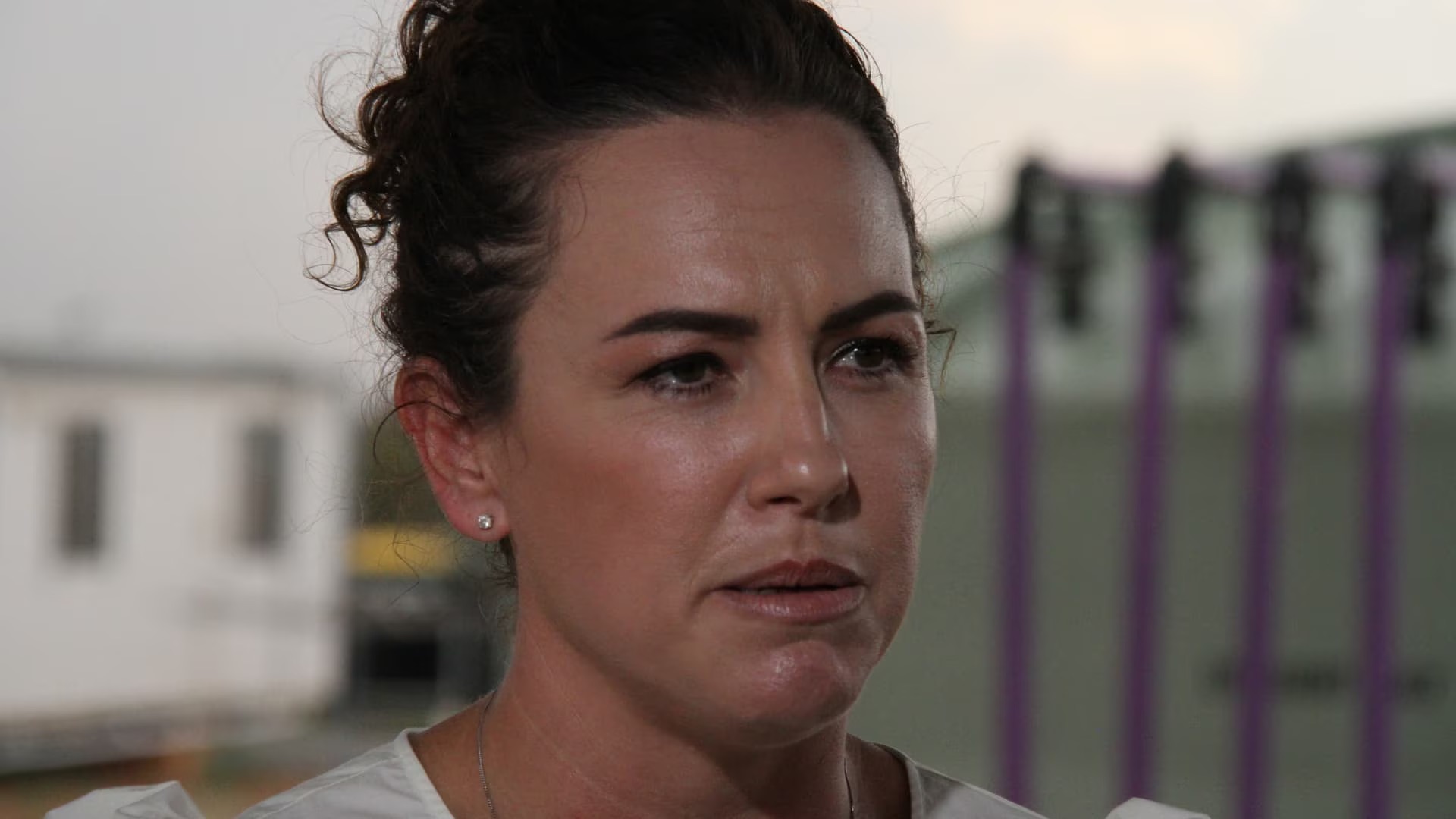
The Northern Territory Legal Assistance Forum (NTLAF), a group of legal organisations, responded to the proposed changes by saying: "Victims' voices, choices and safety must be at the centre of any changes".
The group said it was "concerned" about Ms Finocchiaro's comments, arguing that "rushing through legislative changes based on one or two high-profile cases often leads to bad laws and unintended consequences".
"Lifting suppression orders can give victims power over their own stories," it said in a statement.
"For some victims, being able to speak publicly and see the accused named can be an important part of reclaiming control and seeking accountability. For others, public identification can bring exposure and risks they have not chosen.
"It may also have the unintended consequence of silencing the victim too fearful of making a complaint, thereby undoing the extensive work in recent years to encourage victims to report sexual assaults."
Debate from advocates, media organisations and lawyers on suppression orders has often been about the balance between open justice and the potential to cause reputational damage before someone has been committed to stand trial.
Sexual assault survivor and creator of the #LetHerSpeak campaign, Nina Funnell, who has advocated for the changes in the NT, told the ABC: "Justice done in the dark is not justice."
"If we want survivors to keep coming forward to protect the community, the least we can do is ensure their efforts to make us all safe aren't being thwarted by decisions which prioritise the feelings of offenders over the principle of open justice," she said.
NTLAF said it acknowledges the importance of open justice and accountability, but that any changes to the law "must also include effective safeguards against identifying victims indirectly and a process that allows their views and safety concerns to be heard before identifying information is published".
"Long-term reputational damage may also be a risk for someone who may be found not guilty of a sexual violence offence and whose identity is exposed both in the community and on social media," they said.
North Australian Aboriginal Family Legal Service (NAAFLS) principal lawyer Clara Mills argued that in a jurisdiction as small as the NT, "naming a user-of-violence can also identify the victim".
"Family, work and community connections can make a victim or child recognisable, even when their name is never published," she said.
Ms Mills said the NT Government must consult victims from remote communities, specialist legal and support services, Aboriginal community-controlled organisations and experts before legislation is introduced to parliament.
"High-profile cases must not drive rushed changes. We need evidence, genuine consultation and safeguards that protect victims' autonomy, dignity and safety," she said.
"Victims should not have to choose between pursuing justice and protecting their identity, their family or their safety. The government must get this right."
1800 Respect (1800 737 732)
Lifeline (13 11 14)
13YARN (13 92 76)
Yarning Safe'N'Strong (1800 959 563)
Beyond Blue (1300 22 46 36)