


Hidden by the rainforest-covered mountains south of Cairns, the small beachside town of Yarrabah is home to a community which has long held a place in the national conscience.
A knowledge tree sitting on its idyllic bay is widely regarded as one of the most important sites associated with the 1967 referendum to count Indigenous Australians as part of the population.
Now, 55 years later, that humble tree has once again bore witness to the green-shoots of a major referendum on Indigenous rights.
It was in this town on Sunday, April 10, Uluru Statement delegates agreed to lobby the Labor and Liberal governments for a May 27, 2023 referendum on a constitutionally-enshrined First Nations voice to parliament. An alternate date of January 27 was also put forward.
https://twitter.com/ulurustatement/status/1513075240737583104
Yarrabah elder Alfred Neal was among those who led the charge in 1967, which remains the most successful referendum in Australian history. He recounted the story of his fight for delegates on Sunday as inspiration ahead of the looming battle.
Uluru Statement director Pat Anderson summed the feeling up succinctly on the campaign ahead.
"We start today, with the issuing of the statement," she said, as 2500 kilometres away Australian Prime Minister Scott Morrison called the Federal election for May 21.
Yarrabah resident Mala Neal, who welcomed delegates to country, is ready to take up the fight.
He carries a strong skepticism of groups who try to rub shoulders with government, but on the voice to parliament, Mr Neal is resolute.
"We have to go for it, that is our god-given right, but don't rush it," he said.
"We want treaty, we want sovereignty, all these things... but we must be sure we get it right, that this fabric of solidarity is strong like a dilly bag.
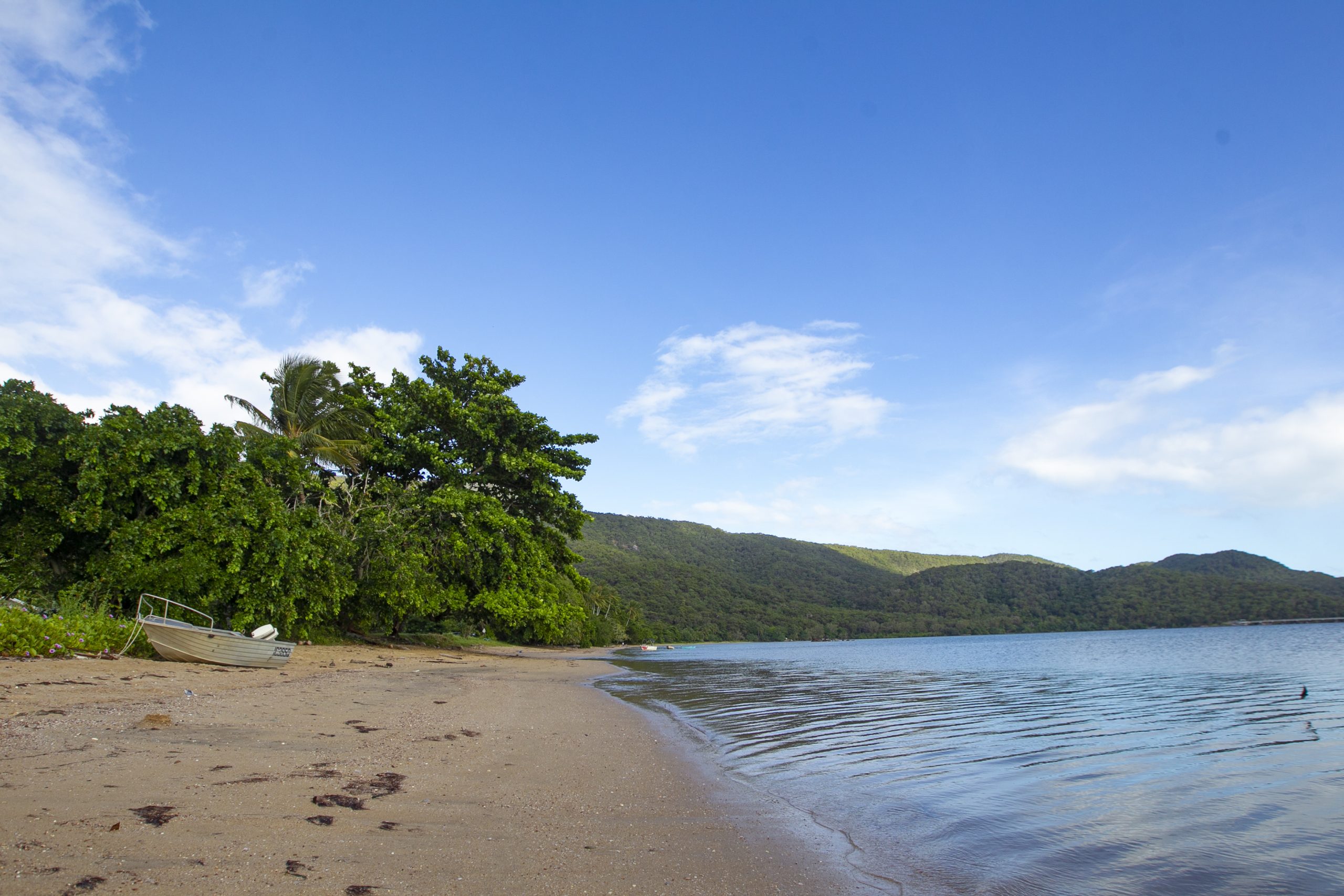 Yarrabah, Queensland.
"In our law we have to ensure nobody go without food, and it is the same perspective here, it has to ensure no one goes without consulting, everyone have a right to have a say."
Mr Neal's drive is part of the reason backers of the voice to parliament are so confident - he is among the 90 per cent of Indigenous people and at least 60 per cent of Australia as a whole who support a referendum, according to a large body of data accumulated since 2017.
That does not, however, mean championing the referendum is smooth sailing.
The activist spirit is still alive and strong in Yarrabah, something the Uluru team experienced firsthand during the day.
One Traditional Owner walked up to shout the crew down to their faces after the welcome to country, while another was vocal outside Town Hall on his concerns about commitment to Yarrabah at a grassroots level.
For Kimberley leader Nolan Hunter it was a clear sign there was work still to be done to ensure the right message was getting out of these meetings of leaders and delegates, and into communities.
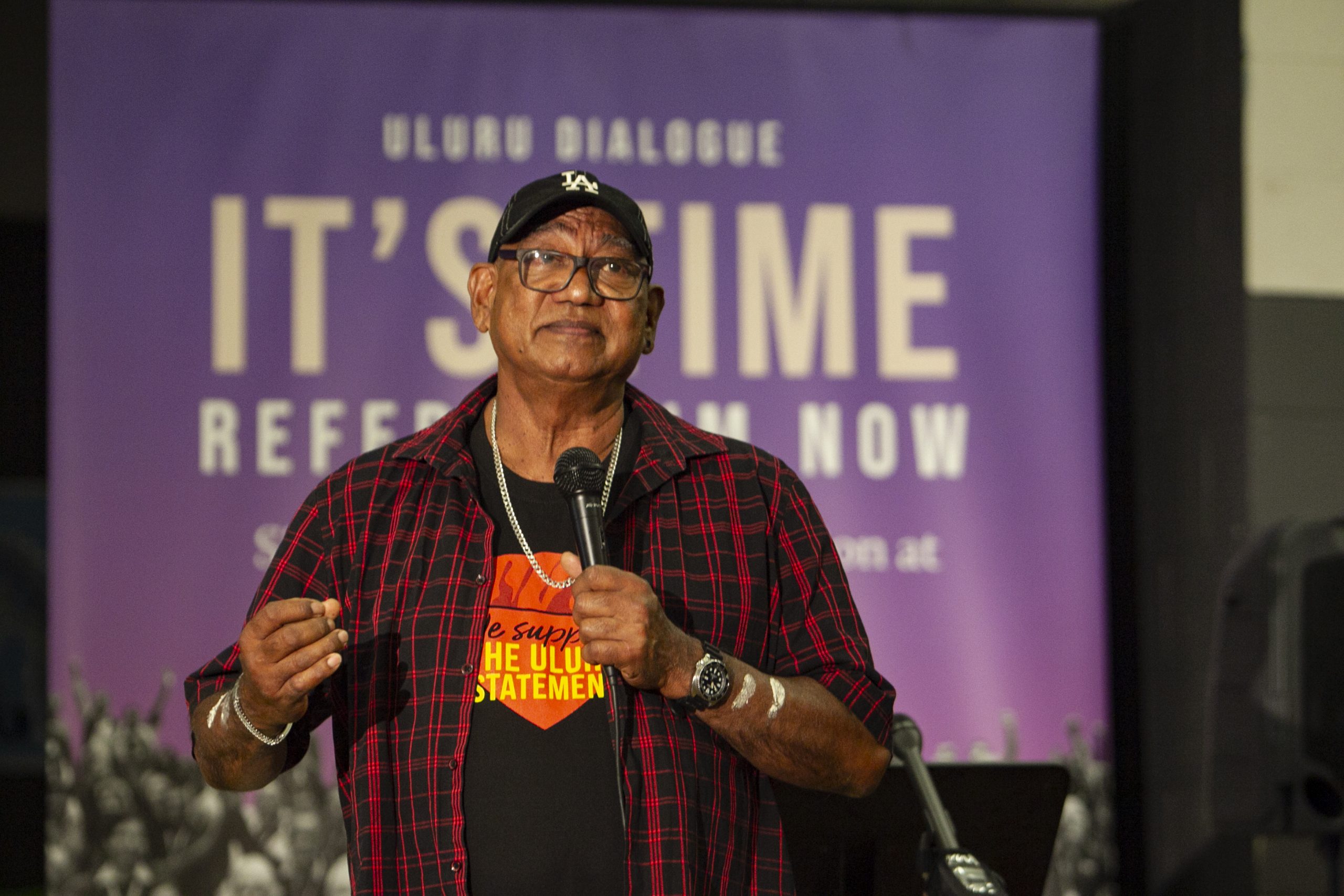 Nolan Hunter.
There remains confusion between the Uluru Statement's plan; a constitutional voice giving Indigenous people a say on policy affecting them, and the Federal Government's plan to set up 35 local advisory bodies, and consider a referendum pending consensus.
Labor leader Anthony Albanese has committed to the referendum should his party be elected. The incumbent government has committed $31.8m to the advisory bodies.
Mr Hunter said the Indigenous-led version of the voice was a strong show of unity backed by generations of campaigning.
He has great faith in the Australian people too, to back a constitutional voice should it go to a public vote.
"Our warriors from the past have continuously fought, and our warriors of today - our young people, our old people - are still fighting for the same cause," he said.
"How long in history have we gone, how long have Indigenous people in this country said the same thing over and over.
"Do not underestimate the Australian people who appreciate and understand the aspirations, legacy and the future of their generations to come."
With five years of campaigning under her belt Uluru Dialogue co-chairwoman Megan Davis has not doubt left in her mind the time is right to make their case.
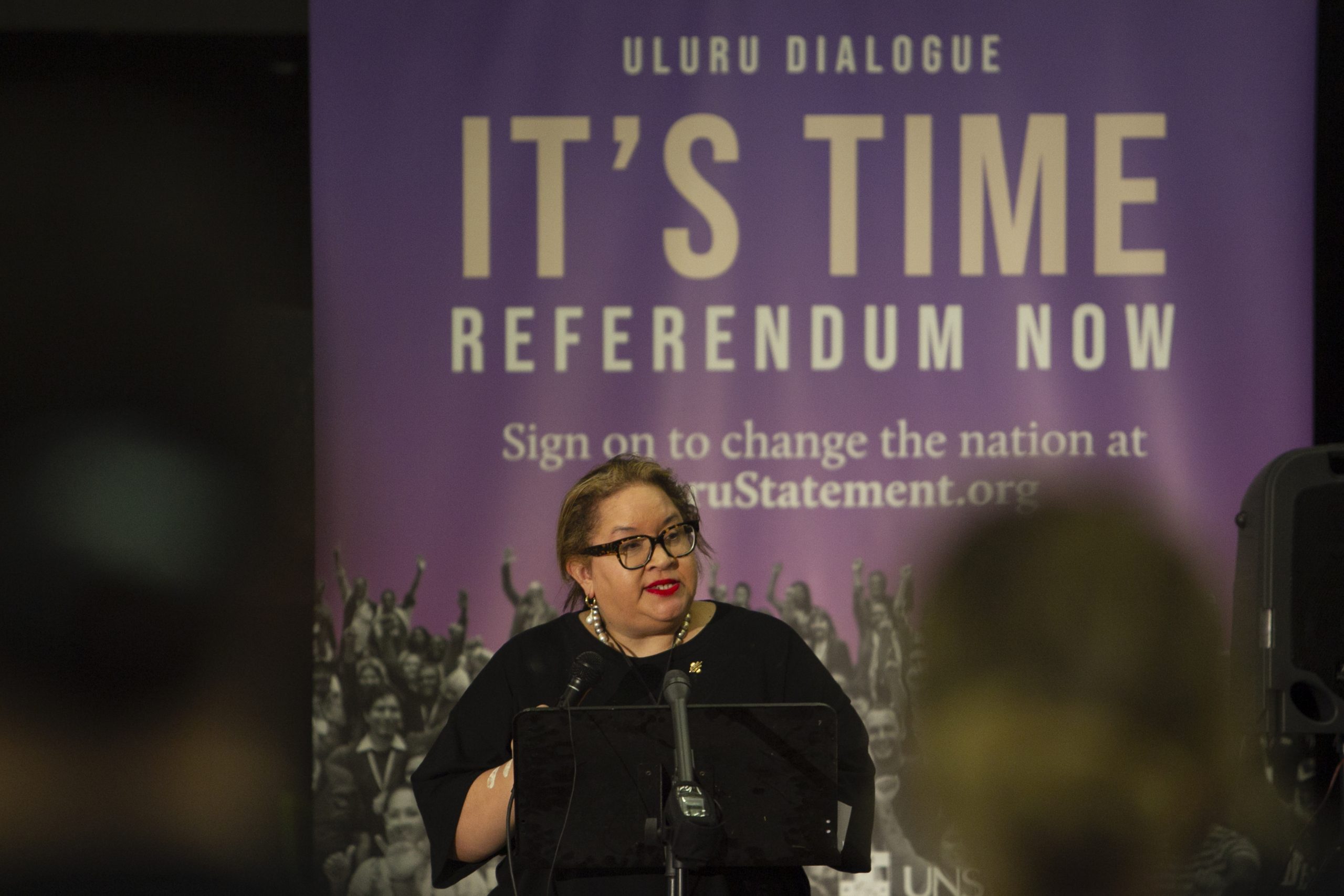 Human rights lawyer Megan Davis.
"The work is done, the time is now, it is time for referendum," she said.
"We have corporate sector, private sector, sporting groups, civil society and religions - we are ready for a referendum.
"The politicians were not ready for the Uluru statement in 2017, but now the Australian people are."
And on gaining the blessing of the Yarrabah community, Ms Davis said that famous activist spirit would bode well for the vote.
"We wanted the two campaigns to come together: '67, the most successful Australian referendum... and the Uluru campaign," she said.
Allira Davis, one of the young leaders behind the Uluru Statement, she she was optimistic Australia would vote yes at a referendum.
Ms Davis said her elders had fought hard for their rights, and it was now incumbent on her generation to ensure the next major step - the voice - was realised.



