




Nestled next to Redfern oval, in one of the most historic and culturally important inner-city areas for Aboriginal people in the country, the headquarters of the Aboriginal Legal Service (NSW/ACT) is unassuming.
Up the elevator, through some doors and into a small waiting area, the lack of grandeur belies its importance.
Like other Aboriginal community-controlled organisations, the importance of ALS goes beyond simple legal issues, casting its eye onto the bigger picture of Indigenous safety.
Criminal lawyer and Wiradjuri woman, Emma Hudson-Buhagiar, often appears in the Walama Court—an alternative sentencing procedure for Aboriginal and Torres Strait Islander people, who have criminal matters in the District Courts.
She told National Indigenous Times the importance of ALS was no better illustrated that in Walama.
"We understand the nuances for our clients, and we also understand how to create that culturally safe space," Ms Hudson-Buhagiar said.
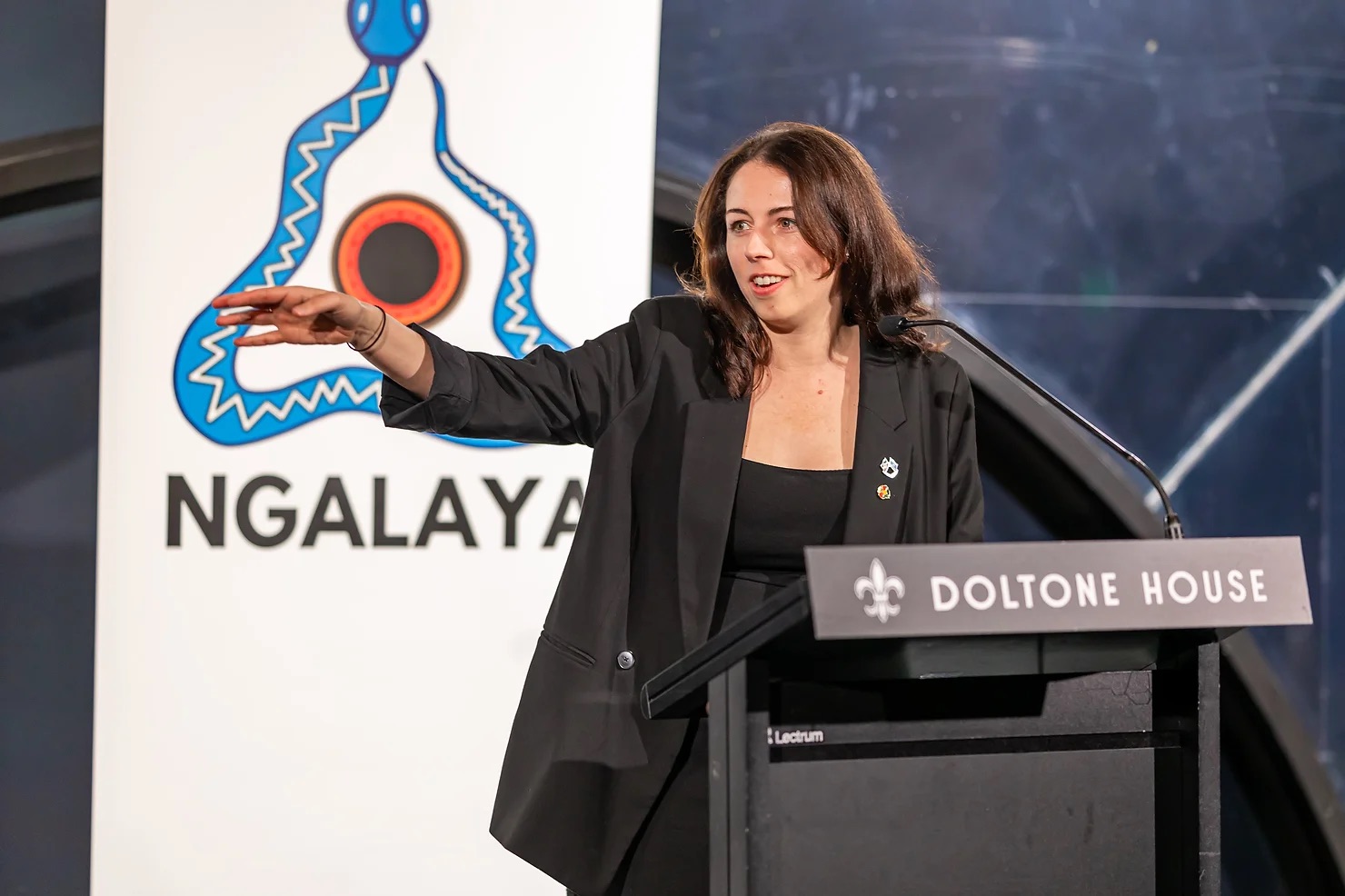
Redfern isn't the only ALS NSW/ACT office, with the organisation supporting First Nations people across the state and ACT in 21 cities, suburbs, and towns.
Last financial year, they provided 140,982 services and attended 117 courts—both for adults and for children. In a state where 30 per cent of incarcerated people are First Nations, and with new laws seeing Indigenous youth detention continue to increase, this service is beyond vital.
Sometimes it is the difference between life and death.
The organisation has been front and centre in the media, criticising a wide range of laws and police action which have negatively impacted First Nations people.
At the end of the September quarter, despite accounting for less than 4 per cent of the population, 32 per cent of the adult custody population in NSW are First Nations - the highest proportion on record.
For juveniles, this number sits at 59 per cent.
It caused chief executive Karly Warner to argue the situation was a crisis which Premier Chris Minns needed to address.
"The Premier has serious questions to answer about how he is going to get Closing the Gap back on track in NSW and why his government has passed laws that have contributed to this growing inequality," Ms Warner said earlier this year.
Ms Hudson-Buhagiar said the laws were "worrisome," outlining the tangible impacts it has on community.
"They have created more young people going into custody [and] held on remand for longer times," she said.
"And then…it eventuates that they might not even be found guilty of those offenses or not serve a custodial sentence, so they just linger in custody, which compounds a lot of different issues for that young person."
ALS has a youth bail advocacy program. By implementing harsher bail laws, they note, it flies in the face of restorative justice which these programs are designed for.
"We are seeing time to time again, that this strategy of locking up young people is not just not working," Ms Hudson-Buhagiar said.
"It's not allowing for young people to rehabilitate in a safe way. It just increases the high rates of them coming in and out of custody."
%202.jpeg)
One of the biggest issues facing Indigenous people in the state, and across Australia, is the continual increase of child removals.
In NSW, almost half of all children put in out-of-home care (OOHC) are Indigenous.
"Family law is a mechanism to divert kids out of the child protection system," Louise Coady, the Principal Solicitor of ALS' Care & Protection/Family Law Practice, says.
It is the work on the ground that is important, away from the press conferences and media statements. Speaking to at-risk families and some of the most vulnerable people in the country.
"If we can get early intervention and there's no state involvement, it's the perfect mechanism for Aboriginal families to make their own decisions about their own kids; their own families," Ms Coady said.
She said if someone was able to get at-risk families to organisations like ALS earlier in the pipeline, before OOHC becomes a tangible reality, the benefits would be stark.
All the ALS team members National Indigenous Times spoke to, talked of the importance of culturally sensitive and safe programs. By utilising these, results are forthcoming.
By ignoring them, the results are retrograde; falling back on failed tactics that only lead to further incarceration numbers, and ultimately, a less safe community.
In the heart of Redfern, a small office can seem like one building in many. Hidden away from the depths of everyday life; a law office in a city of lawyers.
But for many in Indigenous communities - across the entire state - the work of the ALS is all that stands between many people and a lack of justice.



