




Aboriginal organisations across New South Wales are calling for the transfer of control of the child protection system in the state to Indigenous-led organisations.
Five years on from the Aboriginal-led and government-commissioned Family Is Culture Review, several organisations said on Wednesday there was frustration at the lack of meaningful progress and reform in the sector, with only 12 of the 126 recommendations from the report having been fully implemented.
The chief executive of AbSec, the NSW Child, Family and Community Peak Aboriginal Corporation, John Leha, said the delay only showed the urgent need for reform.
"We stand at a pivotal moment in our journey," Mr Leha said.
"The Family Is Culture Review offers us a clear path forward, but we must hold the government accountable. Let us continue to support Aboriginal leadership and ensure our children grow up strong, connected to their culture, and safe in their communities."
Founding member of Grandmothers Against Removals and former child protection caseworker, Aunty Debra Swan, said her experience at the Department of Communities and Justice (DCJ) was that "too many" families' experiences were different to what the department was saying.
"It wasn't bad luck, and it wasn't a bad caseworker on a bad day. Far too often, across too many offices, our families were not being supported, and our kids were being taken," she said.
"What I saw in my time at DCJ was that our families were not being heard and the Department was still pushing an agenda of assimilation."
In June, two reports found DCJ does not monitor the wellbeing of children in out of home care, failed to effectively safeguard the rights of Aboriginal children in contact with the child protection system, and were not complying with legislated principles for the protection of First Nations children.
In response, Mr Leha said it was a path "leading us down the path of another Stolen Generation".
Almost 40 per cent of the child protection sector is made up of Aboriginal children, and the latest Closing the Gap data revealed Indigenous children were 11.4 times more likely to be taken into out-of-home care (OOHC) than non-Indigenous children.
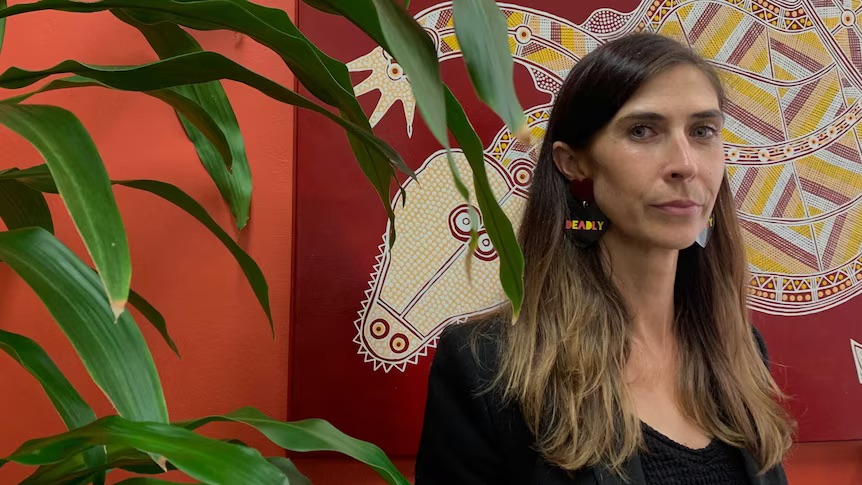
The Aboriginal Legal Service (ALS) chief executive Karly Warner said five years is an "eternity" for a child or young person.
"The past five years presented countless opportunities to take decisive action and protect Aboriginal children from the trauma and lifelong harm of being torn away from their families, but the NSW Government has willingly let another generation fall victim to bureaucratic inertia," Ms Warner said.
"Make no mistake: Aboriginal babies, children and families have been permanently harmed by this apathy."
Family is Culture: 'Five Years On' Community Report, a joint report by AbSec, ALS, UTS Jumbunna Institute for Indigenous Education and Research and the Justice and Equity Centre has called for the establishment of an independent Child Protection Commission as well as appointing a NSW Commissioner for Aboriginal Children and Young People.
"A Commission would consolidate currently complex and fragmented oversight and monitoring functions into a single, specialist, statutory body to hold the Government to account and serve as a convenient and accessible point of contact for children and young people to raise concerns and seek assistance," the report said.
A commissioner would mirror similar roles in ACT, Victoria, and South Australia, whilst a national commissioner for Aboriginal Children and Young People was recently announced by the federal government.
"We envision a future where our communities are empowered to keep our children safe and cared for—where they grow up connected to their cultures, on Country, and surrounded by love and support," Mr Leha said.
"Our systems must be self-determined, designed by us and for us."
Ms Swan said it wasn't enough for the child protection system to "claim to have good policies", but instead families needed to see policies "implemented effectively".
"Too often, families are left in the dark, unaware of their rights or the processes that affect them," she said.
"The only way to move forward is through self-determination. It's crucial that we include families in decision-making and assert our sovereignty over the care of our children."
The report also called for the redirection of funds to Aboriginal community-led support services, as well as "properly" resourcing AbSec and ALS to ensure they have the capacity to meet the needs of Indigenous children, families, and communities.
Dr Paul Gray from the UTS Jumbunna Institute for Indigenous Education and Research, said the Family is Culture report was a "testament to the strength and love of our communities," but one which has not been matched by adequate action.
"The evidence is clear - business as usual, or small tweaks at the margins, will not deliver the transformative change that children and families need," Dr Gray said.
"Urgent action is needed, empowering Aboriginal communities to lead this transformative change, investing in new initiatives to deliver support to families earlier, and establishing independent accountability to ensure that systems are delivering for our children."



