


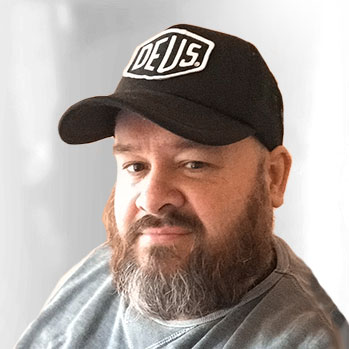

Charlie Maher has come a long way from the days in Alice Springs that included overcoming his own personal demons.
During the past 15 years, iconic Australian marathon runner, Robert De Castella, who almost by accident created the Indigenous Marathon Foundation, has held Maher up as the face of its project that proved many naysayers wrong.
He became the first Aboriginal man to run the New York City marathon before Caleb Hart, Juan Darwin and Joseph Davies later joined Maher across the line one fateful day.
Years have since passed that 2010 race and the 42-year-old is setting a new benchmark for mob, becoming the inaugural Aboriginal and Torres Strait Islander chief executive of the Indigenous Marathon Foundation.
The newly created position would never have happened for Maher, he says, had it not been for standing up and showing the resilience that has sustained his culture for more than 65,000 years.
"There was no Aboriginal or Torres Strait Islander that we know of that had run marathons. We were probably the first ones that had run the New York Marathon together and finished," he said.
"So, for me, what was the most important thing was the four of us actually crossed the finish line and finished because it was always about being a team.
"The struggles that we went through and overcame, and a lot of doubters said we couldn't do it, but we just focused and proved people wrong in a positive way by just getting it done.
"That's what I remember the most: that is my other three brothers, and I always thank them for helping me and each other to do that together. We didn't realise that at the time what was happening; we just wanted to finish a marathon, but it had a positive effect on the whole of Australia."
He thought that marathon was just going to be a one-off project, and that each of the four men involved would just "go back to our communities and play footy again".
Now Maher is running hard again, but to mentor others to follow in his marathon footsteps.
"It first changed my life just with the training," he said.
"So, I've seen the impact it's had. I've got a much healthier lifestyle with my health and wellbeing now.
"I mean I don't drink alcohol anymore. I've just completely changed my life for the better.
"You can get stuck in a culture where I was in it for a long time. Now that I'm out of it, I focus on what I need to do."
Maher already has helped people turn their lives around after working the past 17 years with Indigenous schoolchildren for the Clontarf Foundation.
The West Arrernte man, who currently lives in Port Macquarie, has watched while smiling at a further 152 First Nations men and women that have gone on each year to also graduate.
The heroic display in New York that turned into a documentary film got traction before hundreds of young men and women have applied to participate to run marathons around the world.
Maher is looking forward to the new chief executive role and the challenges ahead much like the number of marathons he has run over the past 15 years.
"That's changed my life for the better," he said.
"I was given such an opportunity, so for me to be able to stay heavily involved (in the Indigenous Marathon Foundation) has always been important to me, especially around helping others.
"I love to help other people – I am in a position now where I can help, and a lot of people turn to me because, obviously, they see my calming effect and they feel safe.
"Having that voice for them is important because some guys are too ashamed to ask for help."
Maher has been no stranger to the foundation over the years.
De Castella annually has brought Maher in during the training and education for participants every year to provide inspiration.
For around the past 18 months, Maher has been an IMF ambassador and has joined runners on some weekends while working with Clontarf.
The new role adds flexibility where he can work from home, but it also includes regular travelling to and from Canberra and around the country for one-on-one sessions with IMF class participants and prominent First Nations figures.
"Anything to do with IMF where we have a presence, I will go to and just to regular meetings like that in Canberra –so, there's still a fair bit of travel," he said.
"Rob and I have, looked at this young Aboriginal and Torres Strait Islander space of having a bit more of a presence and a guidance out there."
De Castella, a descendent of French and Swiss nobility a number of generations ago, has often turned to Maher to gather cultural advice over the past 15 years.
While that respect between the two men has always been there, Maher said there was a sense of something special by taking up the new chief executive position.
"I just wanted a change after being there from the start as its grown pretty rapidly and being able to see it all from the outside looking in," he said.
"Now I can have a look at things like cultural protocols, how we go about things with community, our graduates and our raw groups, so it's about just being on the ground more."
De Castella "can't be in two places at once" and that is when Maher will take charge.
He says the plan is to advocate for "our mob" and will go to all ends – where nor time or money is a hurdle – to meet people that are important to the integrity of the Indigenous Marathon Foundation.
"I obviously have lived a life, and you know I'm big on awareness and education, doing the right processes and procedures with the Elders, and our IMF staff, but also for people in general, as well, because that's pretty important," Maher said.
"I was lucky because my mum taught me to go to school every day, get an education and make sure you finish school, you know, Year 12.
"She was pretty hard on me in that regard, as all parents are, but having my strong culture and, also my language, having the best of two worlds, so I can walk in and talk to executives or any people to understand is important.
"For me, I have never changed who I am and where I've come from, and I have never lost sight of that because that has always been important to me to never change.
"I am also big on face-to-face contact rather than just phone calls or (Microsoft) Teams' meeting – no, I've really had to physically be there
"Some things like that I have been left to do, especially with Elders and people or things like that when you really can't do phone calls because that's not how it goes."
Maher has also adopted the well-worn adage that Indigenous people can't be what they can't see.
The appointment is not just about a way of adding more First Nations staff to take control of what is an Indigenous organisation, but to put Aboriginal leaders up front and personal.
"I think to have an Aboriginal person in this high position is important for the way that we have structure, processes and procedures, moving forward," he said.
"What Aboriginal and Torres Strait Islander people like to see is our people in these positions.
"I am in that position now, and I still can't read and write properly – that's just me, but for this position I'm about my work ethic.
"I'm a hard worker and I do things by actions."



