


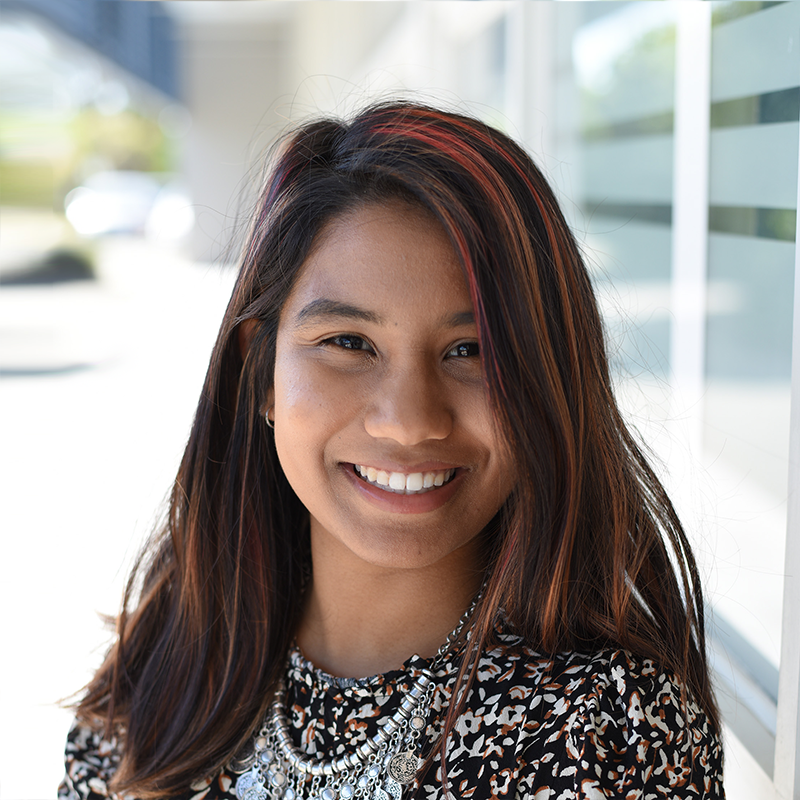

Founder and designer of Ngali, Wiradjuri woman Denni Francisco has previously spent time as a fashion director in Los Angeles, creating a children's clothing line before working in leadership training in the corporate world.
After missing the creative space and wanting to collaborate with remote artists, Francisco knew she wanted to jump back into the fashion space.
In 2018, Ngali was born out of a desire to change the mindset about fashion consumption, respect for Country and to celebrate Indigenous creativity across mediums.
Speaking at Afterpay Australian Fashion Week's discussion panel In Conversation With, Francisco said her new collection Miya was inspired by slowing down during COVID-19.
"During the last few years, when everything slowed down it seemed like the sky was bluer and the grass was greener and you can hear the birds somewhat more," she said.
"And being out on Country and just having that space for creativity to emerge is where the inspiration came from and so the prints in the collection really evolved to that.
"Basically everything Ngali does comes from Country in one form or another."
Francisco said a big part of her creative process is collaborating with other Indigenous artists such as Gija man Lindsay Malay who she first discovered at the Darwin Aboriginal Art Fair.
 A model from Ngali during the Indigenous Fashion Projects Runway at Australian Fashion Week. Photo: ausfashionweek
"I walked around on day one and we were just overwhelmed with it all because the artworks were so incredible," Francisco said.
"On the second day I walked past this booth and there were just these two paintings that actually stood out and I just thought I love that painting.
"There was a man and woman sitting there and I said 'could you tell me about these paintings' and Lindsay Malay stood up and said they're my paintings.
"And we just started to have this yarn about what I wanted to do."
Francisco said the process of co-design when working with Malay and other artists was really important to her as the designer.
"Even though we're both Aboriginal businesses, we all have our own stories or events and all of them are different and painful in their," she said.
"Together we select the paintings that I work with and then I look at how that will translate into some fabric prints respectfully, and then he agrees with that."
"It's a really simple, carefully considered process because there's so much respect that needs to be shown, there's so much that sits behind every First Nations artwork that we really need to be respectful and conscious of."
Francisco said no matter what she does, she's conscious of the fact that it's a collective journey.
"I'm really conscious that whatever it is that Ngali does, or whatever it is that I do, it's never individual it's always collective," she said.
"Even if you get an idea for a particular silhouette or where you get an idea of how to translate an artwork, that doesn't happen in isolation.
"If somebody said something to us or someone share something with us or there was something we saw or they turn up at an art gallery, it's all connected."
Francisco hopes to take Ngali internationally and continue to share the story of Country.



