



Warning: this story may contain images of people who have passed.
While much of the nation looks back on the dismissal of the Whitlam government 50 years on, another anniversary is being remembered in Western Australia's Pilbara region.
In Ieramugadu/Roebourne, 1500 km north of Boorloo/Perth, the Aboriginal community reflects on five decades since the closure of the Roebourne Old Reserve, known to locals as Goodjaralla.
Ngarluma Yindjibarndi Foundation has played an important role in recording their stories.
From the early 1900s, government policies forcibly removed Ngarda-ngarli (Aboriginal people) from their traditional Ngurra, relocating families to "Native Reserves". The Roebourne Old Reserve became one such place.
Yindjibarndi, Kuruma, Yaburrara, Marthudunera, Banjima and Kariyarra peoples were pushed onto Ngarluma Country, across the river from the colonial town of Roebourne; an act that violated both human rights and cultural law.
Under the extremely restrictive, racist policies of Western Australia's 1905 Native Welfare Act (also known as the Native Administration Act or Aborigines Act), Aboriginal people were banned from entering Roebourne town limits after dark and denied access to shops, schools and basic services.
Families who had lived on Country for millennia were confined to a flood-prone area two miles out of town, expected to live under supervision and apart from the non-Aboriginal population.
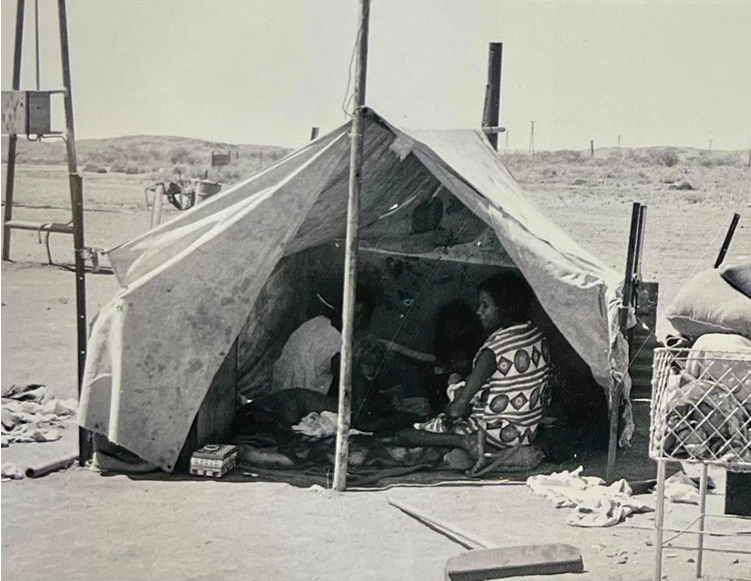
Throughout 1975 families were again forcibly moved; this time from Goodjaralla to The Village, a new State housing estate built behind the Roebourne cemetery. For many Elders, it was the second or even third forced relocation in a single lifetime; first from Country, then from the Reserve, and again when The Village was condemned and demolished in 2012.
Senior Ngarluma Elder Violet Samson remembers those years vividly. Her home on the Reserve was made of canvas.
"My house was a tent. Later I moved into a humpy. I raised six kids in that tent (her seventh child was born after the move to The Village). We had to walk to a well to get water; send down a bucket, pull it," she told Ngarluma Yindjibarndi Foundation.
"There was a shower and gurna-maya [toilet] in the middle of the reserve that everyone had to share."
Just eight kilometres away, the new mining town of Wickham was being built. The contrast, Ms Samson said, was impossible to ignore.
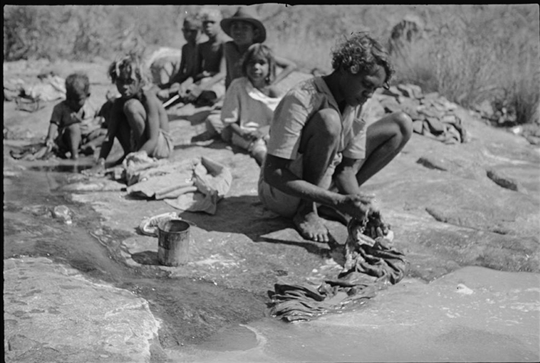
"It made you feel no good. Government never really looked at us. It was very hard. Dampier had been built, then Wickham - houses with green grass and people with boats - while we were still washing our clothes in the river. But there were good times too... kids swimming in the river. Lots of laughing. But later they built the Harding Dam and that blocked the river," she said.
Ms Samson reflected on the toll those years took.
"I only have two of my children left. Five of my children have passed away," she said.
Her story represents the strength of a generation who turned exclusion into endurance, and hardship into love.
Elders told the Ngarluma Yindjibarndi Foundation that while their Old People endured hardship on reserves like Goodjaralla, the community grew strong and culture was their bedrock.
When the Reserve closed, families were told The Village offered progress. Yet as Yindjibarndi Elder Stanley Warrie reflected, the move tore at the community's spirit.
"They pushed us out from Two Mile and said we had to move to The Village. It was hard, people didn't want to go, that was our home. But we had no say," he said.
The Village fell into disrepair and by 2012 it was condemned and demolished. Today, the site of the Old Reserve lies as a vacant tract of land with no plaque or sign to tell its story. Each year, the community returns to the site to honour their Elders.
Ngarluma Yindjibarndi Foundation said in a statement on Wednesday, November 12, that "only the collective memory of the Ieramugadu community keeps its spirit alive through stories, songs and gatherings".
Foundation CEO Sean-Paul Stephens said the anniversary is about both remembering the past and renewing the community's determination to build a fairer future.
"The Elders built strength out of hardship," Mr Stephens said.
"They have continued to turn exclusion into community, and pain into purpose. But the journey toward social and economic empowerment is far from over. There's still a long way to go.
The fight the Old People began - for equality, respect and opportunity - is the same one we continue today. Their resilience is the foundation we build on.
"Despite the community being dislocated and moved so many times, the number and quality of housing in communities like Ieramugadu remains woefully inadequate. We have many houses in Ieramugadu with fifteen or more people. And this is on the doorstep of billion-dollar resource industry. Our collective society needs to do better."
Mr Stephens said the solutions to the area's social and economic challenges lie within the First Nations community itself; provided the resourcing and empowerment are there to make it happen.
"Basic needs must be met, and human rights upheld," he said.
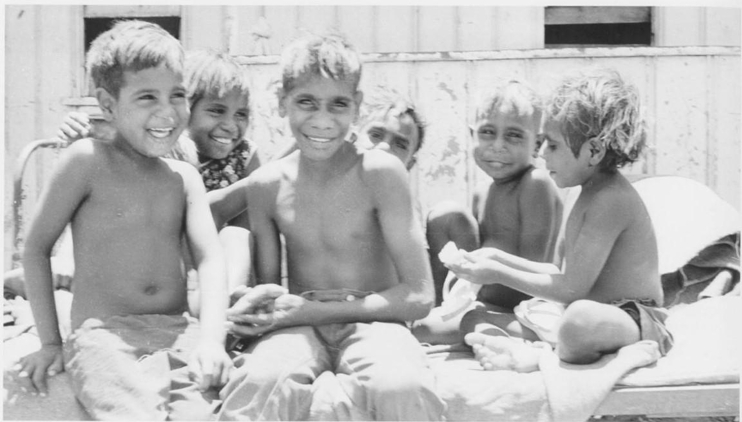
Many who grew up at Goodjaralla and The Village now sit on the boards of local organisations, including Ngarluma Yindjibarndi Foundation, Native Title bodies, and other Aboriginal Community Controlled Organisations, ensuring that the lessons of the past inform the progress of the future.
Ngarluma Yindjibarndi Foundation noted that while "the nation remembers the political turmoil of the Whitlam Dismissal, Ieramugadu remembers another kind of upheaval; one that speaks to survival, courage and the enduring strength of community".



