



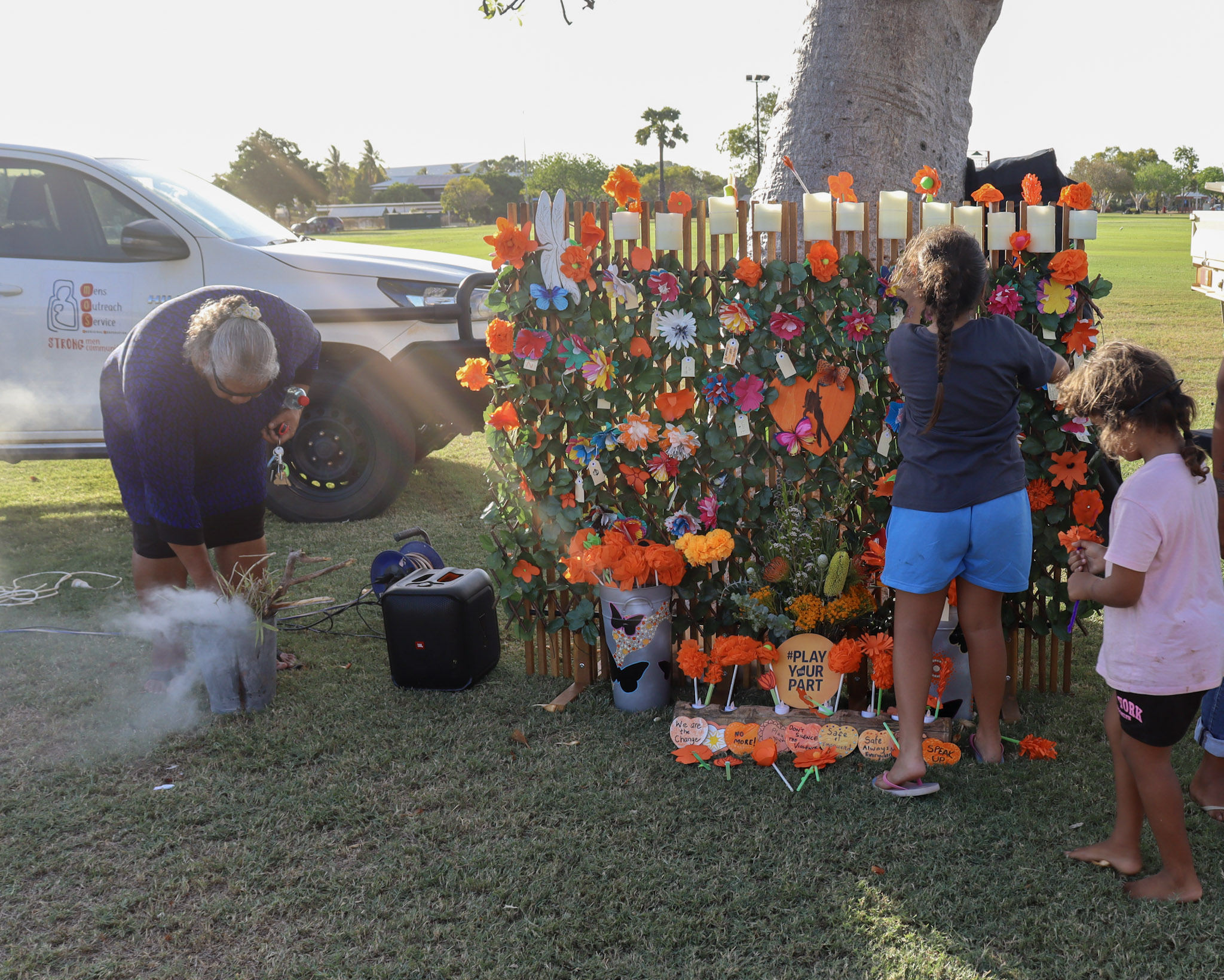
Children carrying orange flowers stood in stark contrast to the green grass beneath them on Broome's Male Oval on Wednesday at a vigil for women who have lost their lives to domestic violence.
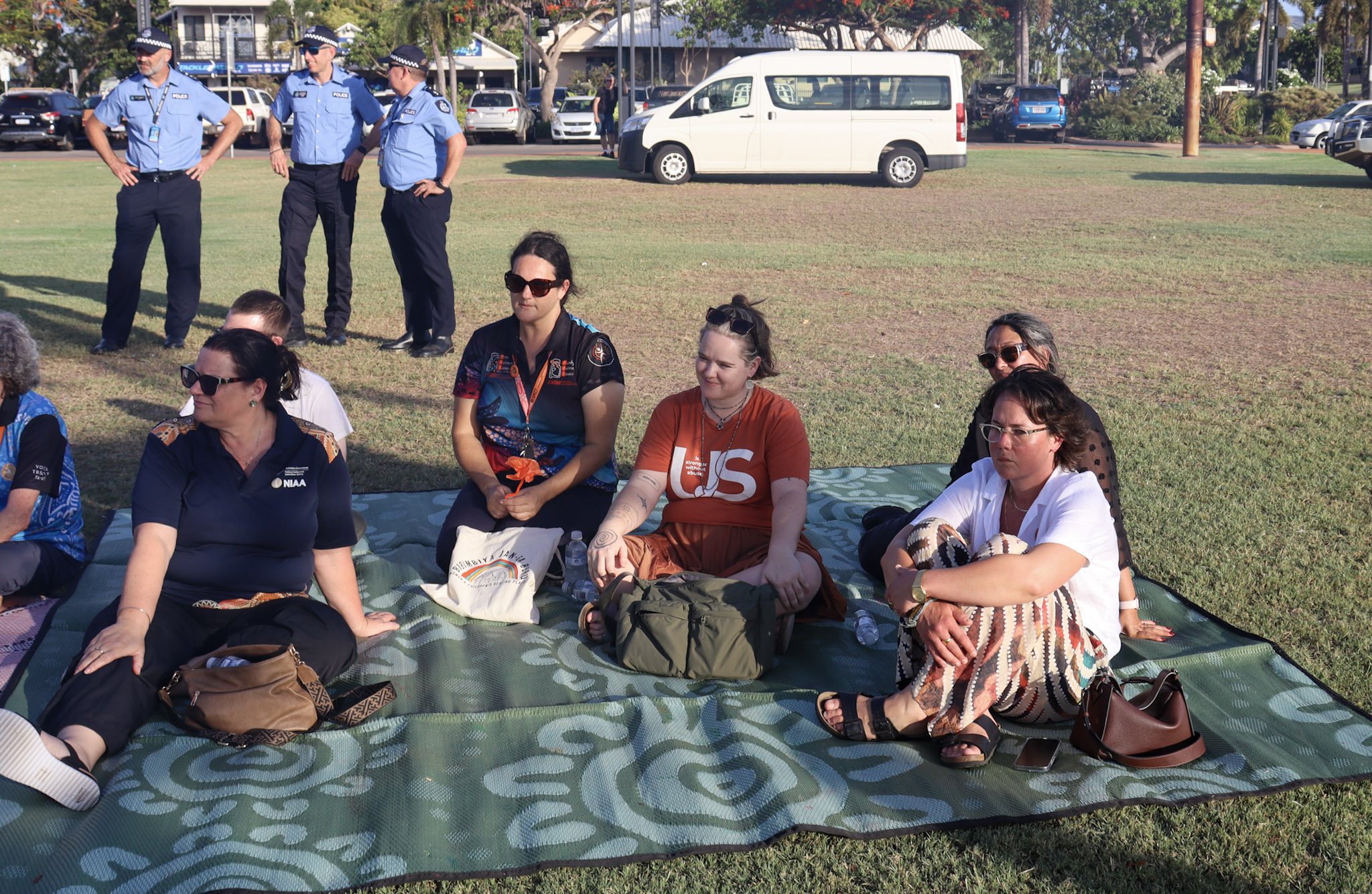
Dozens attended the event held by Men's Outreach Service Aboriginal Corporation (MOSAC), in collaboration with Bibmiya Jan-Ga Buru, Broome's family and domestic violence hub.
Change Em Ways partner support officer, Denise Cox, told attendees each flower was a quiet memorial.
The MOSAC program supports men who want to stop using violence.
"They represent the strength, the spirit and the lives of women who have been victims of violence," Ms Cox said.
"Most profoundly, they represent the lives that have been brutally, tragically lost to family and domestic violence this year."
While 2025 data is yet to be published, an Australian femicide watch study reported 14 women and four children had been killed by family violence as of mid-March.
Across Western Australia, the Kimberley region holds the highest rate of domestic violence.
In just three months this year, police recorded 1,107 family-violence offences across the Kimberley — a region of only 40,000 people — equating approximately to one offence for every 36 residents.
With the Kimberley's population being over 40 per cent Aboriginal, Ms Cox told the crowd: "Aboriginal women are 32 times more likely to be hospitalised due to violence than non-Aboriginal women."
"This region carries a heavy burden of trauma, violence and loss that demands our immediate, unwavering response," she said.
In November, Police Commissioner Col Blanch attributed the rise in domestic violence in regional areas such as the Kimberley to more reporting.
"I think in regional WA, particularly in Aboriginal communities, we are seeing more and more victims willing to come forward to police," Commissioner Blanch said.
"Which, traditionally, was not done."
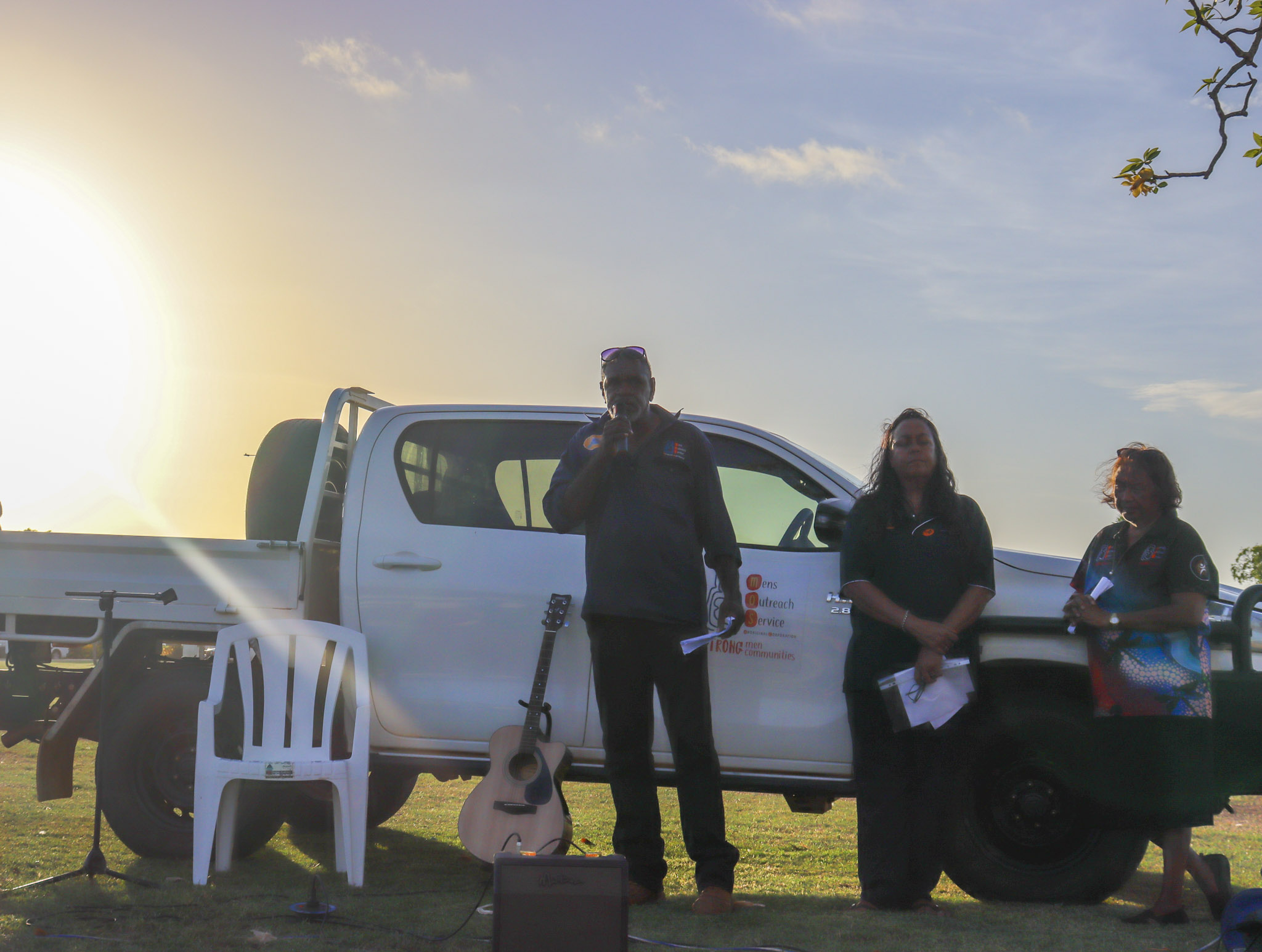
Change Em Ways cultural guidance worker Nelson Bieundurry wants to eliminate such reports being made by ending family violence.
He says men play an integral role in extinguishing the scourge of family violence across the Kimberley.
"For too long, domestic violence has been framed as a woman's problem, when the truth is this: we cannot end violence unless men are part of the solution," he said.
"We need men speaking up in the workplace, at the pub, at the fishing spot, around the campfire. We need men to challenge disrespect and controlling behaviour. We need men to lead — not stand back, not stay silent."
Mr Bieundurry emphasised the importance of beginning change in family relationships, without waiting for policy to enforce it.
"Change doesn't start in Parliament or in policy documents. It starts at home, on Country, in community, around kitchen tables," he said.
"Every woman, every child, every family deserves to live safe, strong and free."



