


Few can turn down the advances of Andrew Forrest, the West Australian mining magnate with a foothold in the state's rugby union team.
One of the few who did was Rugby Australia's board, when Forrest back in 2017 offered to fill the financially-strapped organisation's coffers that was near broke with a $70 million injection to ensure that a Forrest-backed West Australian club stayed in the Super Rugby competition.
However the Western Force's remarkable return to a remodelled and rushed Super Rugby AU competition during the pandemic of 2020 after two years of watching from the sidelines effectively put Forrest in charge.
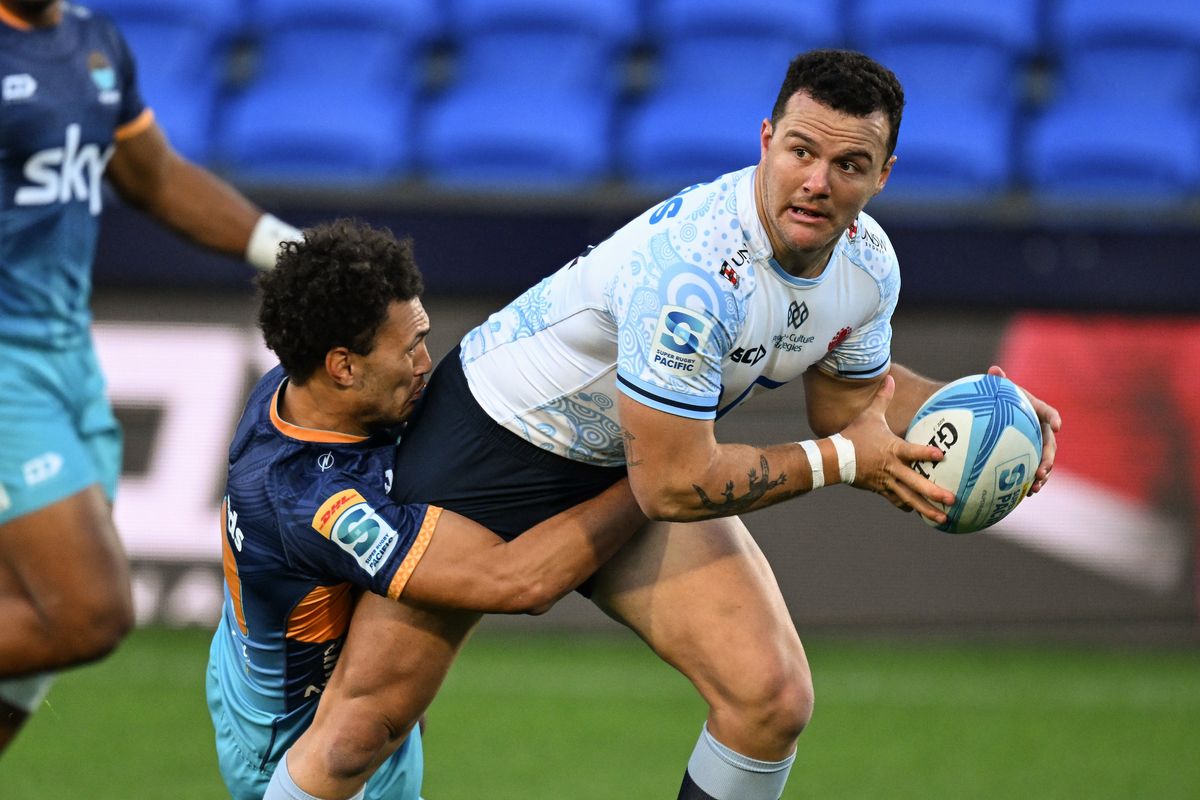
Years pass and a discussion between Forrest and rising Wallabies star Dylan Pietsch arose, and soon after the Wiradjuri man packed his bags for unfamiliar Noongar Country after singing with the Force.
But after Pietsch agreed to a new contract to switch from the New South Wales Waratahs to join the Force next year, the dollar figure is only in the hundreds of thousands rather than the immense wealth of Forrest's estimated $33 million.
But for Pietsch, who recently told National Indigenous Times he was too poor to travel from Leeton to Sydney to watch a Bledisloe Cup Test between Australia and the All Blacks in his former years, the move to Perth was not about money.
The financial remuneration was similar enough to stay at the Waratahs, after Rugby Australia chief executive Phil Waugh told Pietsch the 26-year-old should remain in Sydney.
It comes after Pietsch ran onto the field of the former 2000 Olympic Stadium in August to live out a childhood dream, ahead of playing back-to-back Test weekends and starting in the Wallabies run-on side in the New Zealand capital for the first time.
The decision to play for the Force for the Wiradjuri man was more about opportunity off the field.
"I'm super excited to head out West to be able to change things up," Pietsch said.
"I've been in Sydney for eight years now with my professional rugby, so to be able to change my environment is good for my career because I have only been playing in the one system.
"To get a different view of things, I am able to through Twiggy's programs and I am able to start up Indigenous pathways in rugby, which is a big thing for me.
"I have wanted to leave an imprint on rugby, on culture, and deliver a pathway.
"Having one Indigenous (Wallaby) in 14 years and only every having 15 (ever since 1899) is not good enough.
"There's plenty of talent out there and I want to play a big part in Indigenous lives."
Pietsch is talking about the historic and systematic lack of Indigenous rugby union players in the frame to be selected for the Wallabies.
Only two Aboriginal players – Cecil Ramalli and Lloyd McDermott – represented their nation before Mark Ella next did in 1980.
None had since Matt Hodgson, the 841st Wallaby, who was the 14th Indigenous man and only ex-Force captain to become a capped Wallaby before the last of his 11 Test appearances in 2017.
"I want to do the right things with these planned pathways and that will set me up after footy as well, which will be good," Pietsch said.
"It is something I am really passionate about, creating more pathways, but also more career opportunities for kids in rugby union and not just rugby league or AFL because union is such a good game for Indigenous kids to play."
But changes are afoot in rugby circles and Pietsch is joining Forrest in wanting to be part of the Indigenous rugby union solution.
More than a decade ago, Forrest was the first Australian billionaire to pledge the majority of his wealth to charity.
The Minderoo Foundation, one of a long list of charitable organisations under Forrest's name, focuses on providing education for Indigenous Australians.
While separate from the Force's own operations, Pietsch said the opportunity to influence fellow First Nations youngsters was integral to leaving the Waratahs.
"It's more so just the pathways of getting more Indigenous kids into rugby and try to provide them with another option that isn't just one way and about going through private schools," he said.
"It is through other avenues because you don't want kids moving from the country all the way down to Sydney to make it in rugby.
"You want them to play the game wherever they can.
"It's a big thing, it's a cultural thing as well because it is hard but hopefully, we can find a nice balance of both."
Pietsch knows this only too well after leaving the very comfortable surrounds of Leeton High School to take on a rugby scholarship at The Kings School in Parramatta.
The rugby aficionado that lives, breathes and sleeps rugby union followed in the footsteps of his dad, Troy, a very affable bush player from nearby Narrandera, but felt attending an elite private school was the only way he could make the grade.
"I want them to do the right things with these pathways and that will set me up after footy as well, which will be good," Pietsch said.
"It is something I am really passionate about, creating more pathways, but also more career opportunities for kids in rugby union and not just rugby league or AFL because union is such a good game for Indigenous kids to play."
But Pietsch found the environment testing among the sons of Sydney's social elite.
The prestigious institution at Kings inadvertently begun to suppress his own cultural diversity that he was taught growing up on Wiradjuri country.
Initially, celebrating Aboriginal culture never evolved in Pietsch's time away from home, leading to him sitting isolated on his bed crying to the mirror, hiding his lost identity.
His complexion led to bullying and the lack of education across NAIDOC and Reconciliation Weeks further compounded his assimilation away from his culture.
That disconnect had the student almost feeling the needing to prove his Aboriginality to his peers, to the point the brave footballer on the field contemplated suicide.
However Pietsch swore that his Country, his mob, his culture and his ancestral links "is something that is a part of my life and it's who I am".
His compassion for the community extends through his ambassadorship role with The Ronald McDonald House where he is the restaurant chain's Aboriginal ambassador, helping mob during tough times.
He is also an ambassadors for Movember and The Black Dog Institute, where he visits schools in New South Wales to share his story about his mental health battles.
On his website the Wiradjuri artist says his art mirrors his strong connection to his heritage, and his work away from rugby is inspired by family and connection to country.
It's those kind of thoughts that has the former Tokyo Olympian in rugby sevens excited at ahead of taking on the Indigenous pathway with the foundation.
"The whole point (in the switch) is about being a role model for kids and give them the tips of what to do and not to do in life, not just in rugby," Pietsch said.
"I want to give them a pathway just to make it easier for them so they have an environment where they grow and evolve in that area.
"A lot of times they might feel isolated and not good enough, and that they just want to go back home.
"So it will be good for kids to come in and feel like they belong here and feel like they are enjoying their football and that people are enjoying them being there."



