


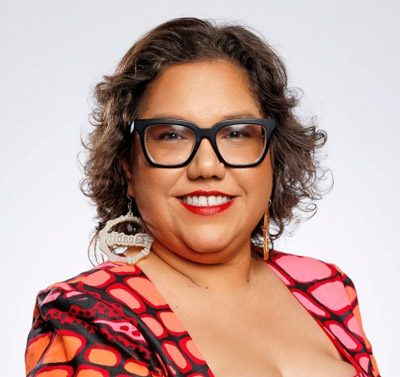

Perception can be a dangerous thing.
Not because people see us, but because too often they stop there.
We live in a world that encourages quick judgments. A photograph becomes a personality. An outfit becomes a measure of professionalism. A moment becomes an entire story.
For Aboriginal women, those assumptions can be particularly limiting, especially when we refuse to fit neatly into the boxes others have created for us.
Throughout my life, I have learned that people often mistake visibility for simplicity. Some know me as the woman attending events across Darwin, always smiling, always connecting with people. Others know me through Welcome to Country and cultural engagements. They see the public moments and assume that is the whole picture.
What they do not see is the work that exists beyond the photograph. They do not see the late nights spent writing speeches, developing strategy, reviewing governance papers, or helping organisations navigate complex conversations about reconciliation, accountability and Indigenous engagement. They do not see the hours spent mentoring emerging leaders, advocating for community behind closed doors, or creating opportunities that may never carry my name.
Like many Aboriginal women, much of my work happens quietly. It happens in the conversations where someone needs encouragement to apply for a role they do not believe they are qualified for. It happens when a young person needs reassurance that their voice matters. It happens when community members call seeking support, advice or connections because they know you will answer.
The truth is that leadership often looks very different from what people expect.
Most of the strongest leaders I know are not seeking recognition. They are carrying families, communities, businesses and cultural responsibilities simultaneously. They are solving problems, creating opportunities and making sacrifices that rarely make headlines.
Yet despite all of this, Aboriginal women continue to be underestimated. We are often judged by appearance before capability. Too loud. Too visible. Too outspoken. Too ambitious. Society remains more comfortable when women, particularly Black women, make themselves smaller. When we stay within the boundaries others have defined for us.
But many of us were never taught to shrink.
We come from generations of women who survived against extraordinary odds. Women who protected language, culture, families and identity despite systems designed to erase them. Their strength was not always loud, but it was unwavering. Because of them, many of us stand confidently in spaces our grandmothers could never have imagined entering.
I often hear comments that attempt to minimise cultural work, particularly Welcome to Country and ceremonial responsibilities, as though they are symbolic gestures rather than significant acts of leadership.
What many fail to understand is that carrying culture into contemporary spaces is not a small responsibility. It is the continuation of a story that stretches back thousands of generations. It is ensuring our old people's voices remain present in rooms where they were once excluded. It is truth-telling, education and cultural continuity all at once.
The same assumptions are often made about joy.
There remains an expectation that Aboriginal people, and Aboriginal women in particular, should only be seen through the lens of struggle. Yet joy is one of the most powerful forms of resistance we possess. Our laughter, our celebrations, our confidence and our visibility do not diminish our credibility. They are evidence of survival.
I can stand in ceremony and stand in a boardroom. I can celebrate with community one evening and negotiate contracts the next morning. These things are not contradictions. They are reflections of the many dimensions Aboriginal women hold every day.
What concerns me most is not that people misunderstand women like me. It is that too many extraordinary Aboriginal women are still being overlooked because of those misunderstandings.
Across this country are women leading organisations, supporting families, driving economic development, preserving culture and creating change, often without the recognition they deserve. Their impact extends far beyond what people see on the surface. That is why we need to become better at supporting one another.
We need to speak highly of women when they are not in the room. We need to recommend them for opportunities, celebrate their successes and create pathways for those coming behind us. Our old people understood that strength came from community, not competition. Progress was never meant to be carried by one person alone.
The deadliest women I know are not defined by titles, followers or public recognition. They are defined by what they build.
And every time someone thinks they have figured us out based on what they can see, they miss the deeper story entirely.
Behind the smile is strategy. Behind the visibility is responsibility. Behind the woman they underestimated is often someone quietly creating opportunities, opening doors and making change for others.
We are not here to meet expectations. We are here to expand them.



