



The TAAM project (Transformational Aboriginal Agricultural Methods) works with traditional owners and farmers in regional communities to address drought resilience, exploring ways we can improve soil health and help the natural environment flourish.
Coming up soon, the TAAM project team will be releasing a documentary to highlight their discoveries and reflect on their processes.
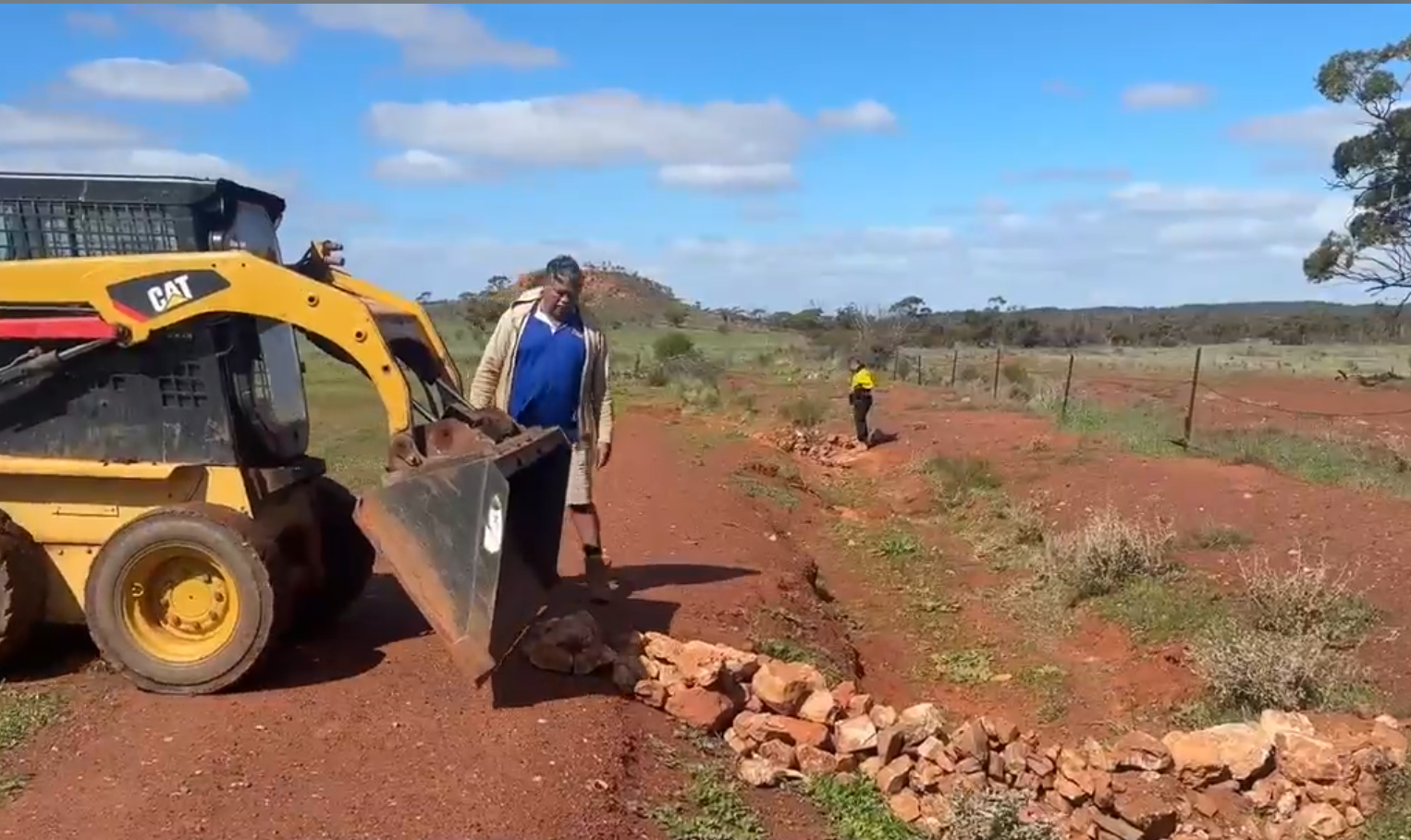
One of the participants in the project is Mr Clint Hansen, a Wilman Ballardong Noongar maaman, an Elder and an experienced carer for Country.
He is the founder of Maaman Marra Boodja which means 'man's hand on the land', or 'man's hand working the land'.
He told National Indigenous Times that he was a plumber and gas fitter by trade when he began lecturing in 2000 on conservation and land management, with a specific focus on water quality, rehydrating and erosion.
"Also, into the agricultural sector, where we taught people in the region to get them job ready through TAFE," he said.
A monumental wealth of knowledge and experience
Mr Hansen founded Maaman Marra Boodja to share the wisdom of 50,000 years of agriculture before settlement.
"So, things Aboriginal people did, all these practices. They did all the holistic, regenerative and Aboriginal agricultural methods," he said.
He noted that modern farming practices use chemicals and pesticides.
"Back in the older days, before all these chemicals and that were produced, everyone was healthy and wealthy then, but the wealth came from the country, not from what we produce now in terms of material stuff," he said.
"Aboriginal people had always looked at fire and water as a tool. Now fire is seen as an enemy, because we're not allowed to use those practices anymore. We used it correctly, because it was all part of the system, using carbon and all the rest. We always did slow burnings and clear the land and looked after the land because we knew what it gave to us."
The importance of right way fire
Mr Hansen said Traditional knowledge of the land's great wealth informed where and when slow burns would be conducted.
"We knew where the bush potatoes, we knew where the onions, we knew where all our fruits and all the animals would move about. When we ... did a slow burn, we knew that a new growth was coming, new areas for food, for us to hunt and gather," he said.
"Then we had colonisation, where agriculture changed and we saw different dynamics of wheat and all that, even though Aboriginal people already ground seeds and made damper and things like that.
"But now we've got a different agricultural practice ... different dynamics and different ways and different products, and it's more and more of it."
Guided by nature's signals
Mr Hansen noted Aboriginal people were able to travel along the land, read it and understand it from the basis that we are all part of the natural cycle, relying on the six seasons to guide their work.
He has lectured in a range of places, with a strong focus on teaching on-Country.
"I would show them ... so that they understood and knew how it worked, in the eyes of an Aboriginal person, not just looking at a whiteboard or in the classroom," he said.
Mr Hansen said it was invaluable for people learning about the land to see things with their own eyes.
"You get people going out on Country, and they're not too sure what they're looking for. Certain times of the year, plants are flowering and seeding... And then during the dry summer months, there's nothing around, so people walk past them, they wouldn't even know what bush they're looking at."
The growing influence of Indigenous agricultural knowledge
Mr Hansen said farmers and pastoralists are increasingly receptive to using traditional knowledge to better look after land.
"A lot of them are starting to get it," he told National Indigenous Times.
"They look at it, and then look at the academic side of it, and I give them another dimension in terms of a perspective; 'Now, why is that? Why is this? What was it like before?'."
He noted there is much to learn with regards to conservation from traditional knowledge.
"Look at all the wastage of water. When I was a kid, we were told to cherish water and look after it. Now ... we're just wasting it. Not only that, we're not giving it time to filter through the ground and the land - and look at the quality of our water; we're all buying bottled water," Mr Hansen said, adding that the quality of tap water has deteriorated because "so many industries are sucking the groundwater out like a straw".
"It's not giving it time to actually filter - a lot of it's washed down into the ocean, and then you're taking all your pollution with it, your chemicals, your top soils, your nutrients, your debris, the rubbish and all the rest.
"I can see what my Country is doing, and I can see my Country suffering, and I can see myself suffering for my Country because I am Aboriginal. People are country. That's the important thing, and that's what I explained to a lot of people.
"If we don't look after country, we won't have anything."
Let nature lead
Mr Hansen said his work has a strong focus on regenerative farming, rehydrating land and managing water, adding that by doing the right thing people allow nature to "fix itself".
"The colonial governments told everyone they had to clear the land before they can actually own it. So, look what we've done to it. We've cleared so much land, and so much of it's just wasted, and so much of it's not even used," he said.
He noted that introduced species had caused harm to the land and to native animals, and settler society had then taken action against native animals to protect their own livestock, upsetting the natural balance.
"I've been flogging my guts out for the last 10 years, trying to get the Agricultural Departments to understand that there was another race of people that did all this work before their time, and were easily and quickly flowing; and knowing all about it," he said.
"I use eyesight, reading the land, looking at the land, and understanding it. Everyone can do that if they are willing to stop and ask it."



